8 Unforgettable Styles of Funny Rhymes for Birthdays (2026 Edition)
Stuck in a rut writing the same old birthday message? This year, ditch the clichés and learn how to create genuinely funny rhymes for birthdays th


Jan 12, 2026 | 23 Min Read
Welcome, educators! In a world where connection is more vital than ever, fostering a strong sense of belonging is no longer a 'nice-to-have' – it's the foundation of effective learning. A classroom that feels like a community is one where students are empowered to take academic risks, collaborate meaningfully, and support one another's growth. The psychological safety built through intentional connection directly impacts engagement, motivation, and overall academic success. This guide moves beyond theory to provide a comprehensive collection of actionable classroom community building activities.
This listicle is designed as a practical blueprint for educators in the United Kingdom, United States, Australia, Canada, India, and Africa. We provide ten detailed activities to transform your learning environment into a supportive, collaborative, and engaged community. Each entry includes clear objectives, step-by-step instructions, material lists, and crucial adaptations for different age groups and learning formats, including hybrid and remote settings. We will explore how simple, structured interactions can build trust and develop empathy. For concrete strategies to kickstart your efforts, delve into these 10 Transformative Classroom Community Building Activities that are designed to foster connection and safety from day one.
Furthermore, we'll demonstrate how modern digital tools can amplify these efforts, making appreciation and celebration seamless and inclusive. Integrating a group greeting card for milestones or using a collaborative online leaving card for departing students can reinforce the bonds you work so hard to build. These strategies are organised to help you cultivate a classroom where every student feels seen, heard, and valued. Let's begin building a community that lasts.
Icebreaker games are structured, low-pressure activities designed to help students learn each other's names and share personal information. These foundational classroom community building activities break down social barriers and establish psychological safety from the very first day. By using engaging formats like Two Truths and a Lie or Human Bingo, students introduce themselves in a fun, memorable way.
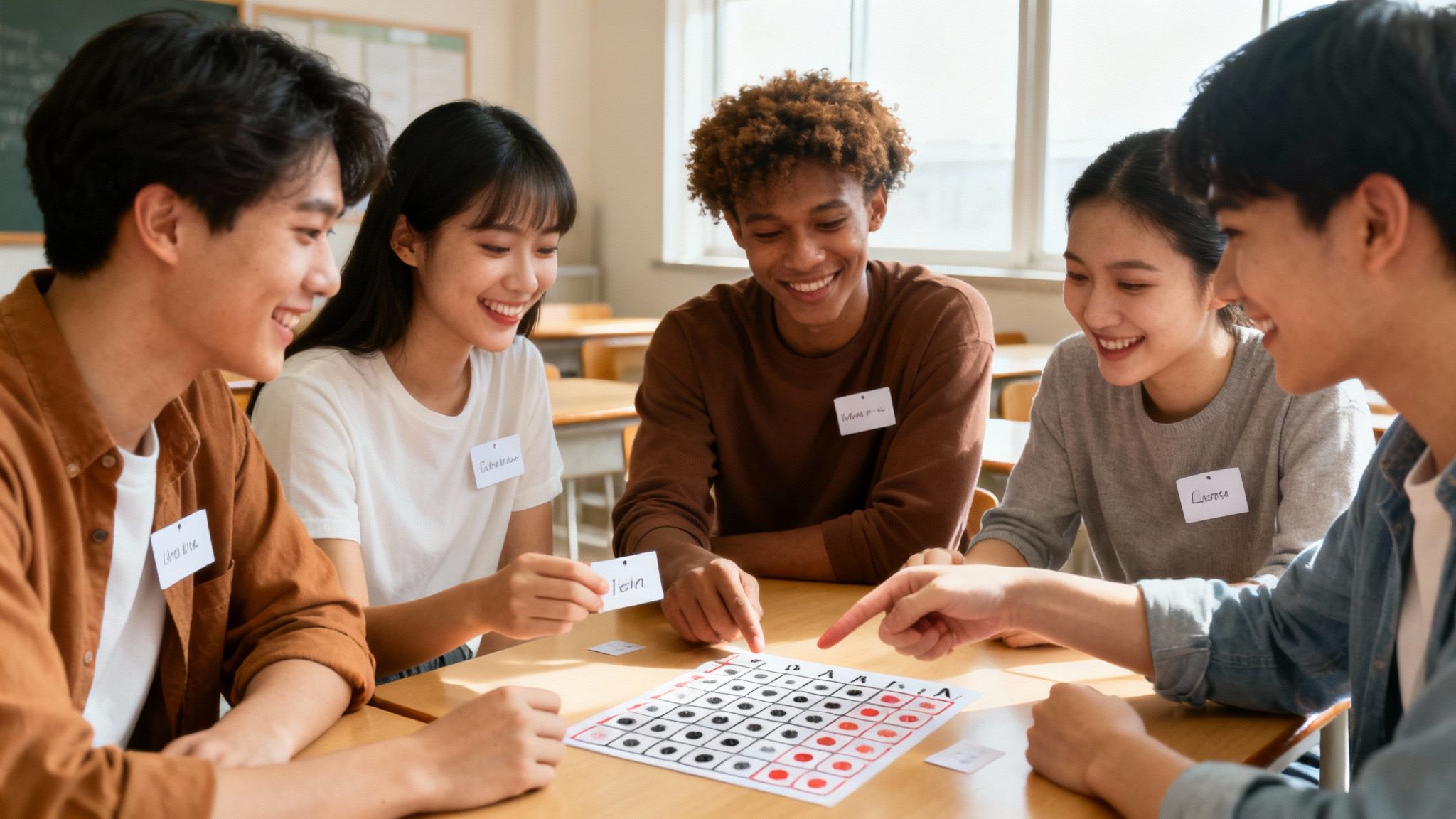
These games are more than just introductions; they are the first step in weaving a connected classroom fabric. They create shared experiences and reveal common interests that might otherwise remain hidden, setting a positive tone for future collaboration.
Pro Tip: Document the fun facts and shared interests discovered during these games. This information becomes a powerful tool for personalising a group greeting card or a birthday ecard later in the year, showing students that they were truly seen and heard. For example, discovering a shared love for a particular book series during an icebreaker can inspire a themed message on a Firacard, making the gesture feel deeply personal and authentic.
Cooperative learning is an instructional approach where students work together in mixed-ability groups to achieve shared learning goals. Unlike traditional group work, these classroom community building activities are intentionally structured to ensure positive interdependence and individual accountability. Methods like Jigsaw or Think-Pair-Share make success a collective effort, transforming the classroom into a supportive ecosystem where students depend on each other.
This methodology fosters community by making collaboration essential for academic success. It teaches vital social skills, builds mutual respect, and ensures every student has a voice and a role. To foster this sense of shared responsibility, exploring resources on effective team-building activities for children can provide a wealth of supportive ideas.
Pro Tip: Use collaborative tools to celebrate group achievements and reinforce the value of teamwork. After a successful project, create a group greeting card to acknowledge the team's hard work. On a Firacard, each member can write a message highlighting a specific contribution from a peer, turning recognition into another powerful, community-building moment.
Peer appreciation and recognition programmes create a structured way for students to regularly acknowledge and celebrate each other's contributions, character strengths, and achievements. These classroom community building activities foster a culture of gratitude and belonging by making positive reinforcement visible and frequent. Systems can include 'Caught Being Kind' initiatives, shout-out sessions during morning meetings, or anonymous appreciation boxes.
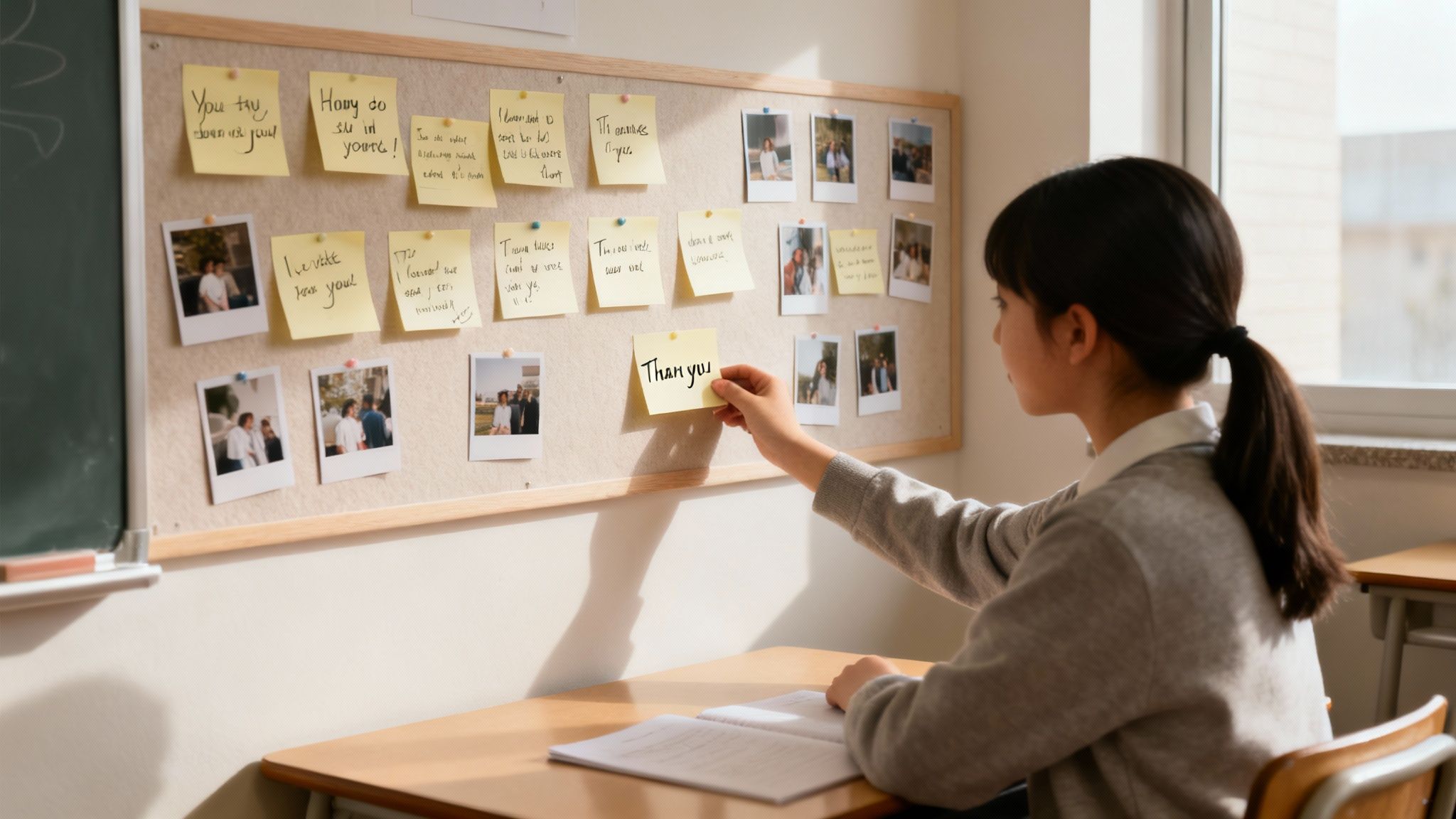
These programmes are more than just compliments; they are a powerful mechanism for reinforcing positive behaviours and social-emotional skills. By focusing on effort and kindness, they teach students to value character over just academic success, strengthening the entire classroom's moral fabric.
Pro Tip: Utilise digital tools to scale and preserve these moments of gratitude. A shared group greeting card can serve as a semester-end appreciation board where students leave messages for one another. You can learn more about how to set up effective peer-to-peer recognition programs that make every student feel valued. Archiving these digital cards from Firacard creates a powerful history of the community's kindness and support.
Circle discussions are structured, dialogue-based practices where participants sit in a circle to discuss topics, build relationships, or resolve conflicts. By ensuring everyone has an equal opportunity to speak and be heard, these classroom community building activities foster deep listening, empathy, and authentic connection. Restorative circles, a specific application, focus on repairing harm and rebuilding trust after a conflict.
These practices move beyond surface-level interaction to create a brave space for vulnerability and mutual understanding. They establish a classroom culture where every voice is valued, laying the groundwork for a truly supportive and cohesive learning environment. The trust built in these circles becomes the foundation for all other collaborative efforts.
Pro Tip: The powerful connections and shared appreciations that emerge from a circle discussion are worth preserving. After a particularly meaningful circle, capture those sentiments in a group online card. For instance, if a circle helps resolve a group project conflict, the team can create a Firacard to acknowledge the resolution and appreciate each member’s willingness to listen, reinforcing the positive outcome.
Shared class projects and community service initiatives unite students around a common, tangible goal that extends beyond the classroom walls. These collaborative classroom community building activities, such as organising a school food drive or creating a documentary on local history, foster interdependence and a profound sense of shared purpose. By working together, students learn to see themselves as a collective with the agency to make a real impact.
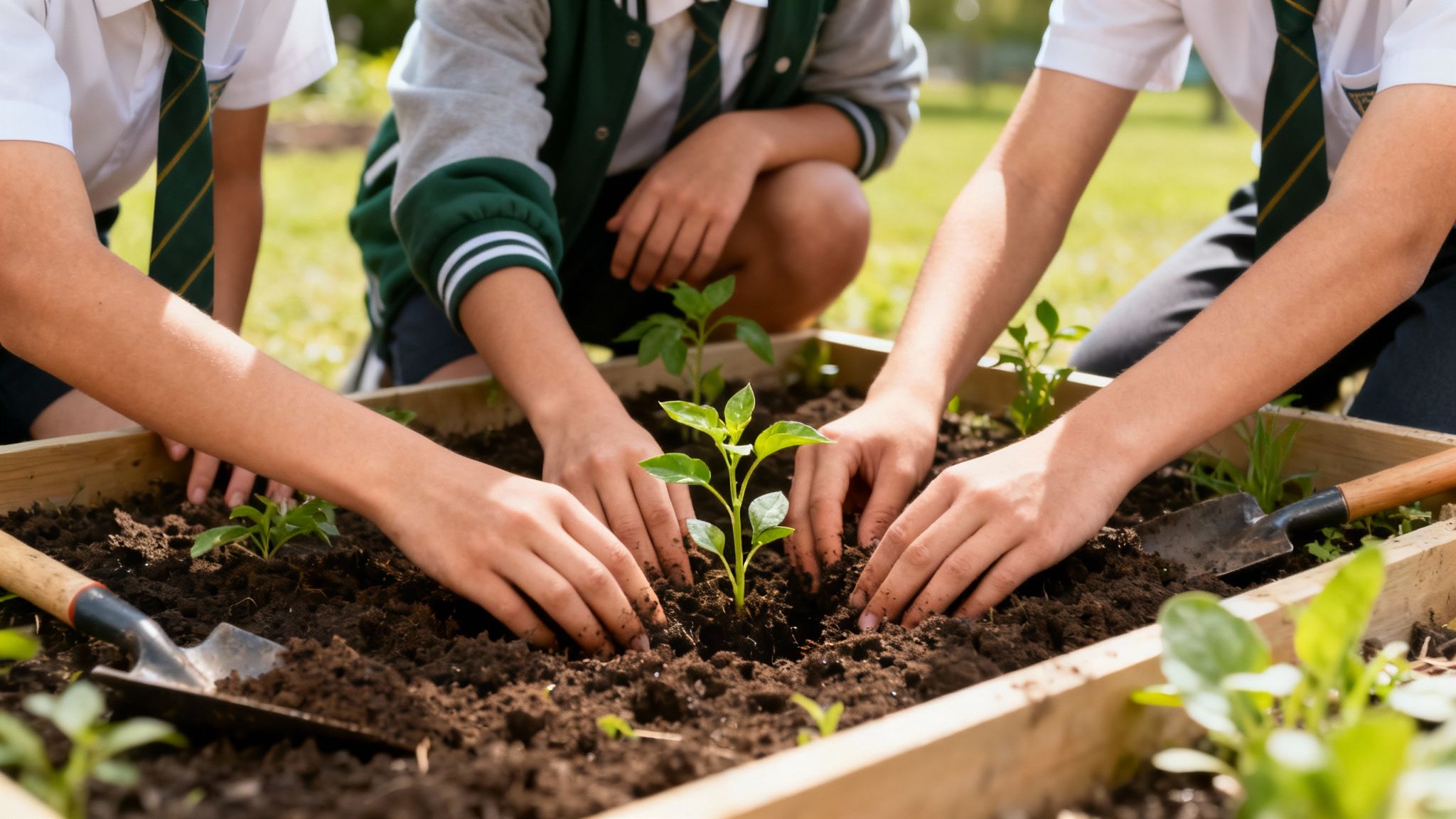
These projects are powerful because they shift the focus from individual achievement to collective success. When students collaborate on a community garden or publish a class literary magazine, they develop essential skills in communication, problem-solving, and mutual respect, solidifying their bond as a supportive and effective team.
Pro Tip: Use a group online card to create a lasting record of the project's success and appreciate everyone involved. Invite community partners or mentored students to add messages to a Firacard, creating a powerful keepsake that documents the project's impact. This transforms a simple 'thank you' into a shared celebration of collective achievement and is a great way to learn more about family-friendly charity activities for kids.
Celebration and milestone recognition events are intentional gatherings where the classroom community pauses to honour achievements, transitions, and important moments. These rituals, from birthday parties to project completion acknowledgements, mark time and create powerful shared memories that deepen students' sense of belonging and value. They transform the classroom from a place of learning into a place of shared human experience.
These events are more than just a break from academics; they are purposeful classroom community building activities that reinforce the idea that every individual's journey is important. Celebrating together communicates care, validates effort, and strengthens the social-emotional fabric of the group, making students feel seen and appreciated.
Pro Tip: Use a tool like Firacard to make celebrations inclusive and heartfelt, especially in busy or hybrid classroom settings. For a student's birthday, you can create a vibrant birthday ecard where classmates can add messages, GIFs, and photos at their own pace. Scheduling the card's delivery adds an element of surprise and ensures no one is forgotten, archiving a beautiful piece of your classroom's shared history. This approach simplifies the logistics of celebration while amplifying its emotional impact. To get inspiration for different occasions, explore the best events for group greeting cards.
Empowering students to lead and facilitate classroom activities shifts their role from passive recipients to active community builders. These classroom community building activities involve structures where students take charge of discussions, peer teaching sessions, or event planning, fostering a profound sense of ownership and belonging. By giving them the reins, you cultivate leadership, agency, and responsibility.
This approach transforms the classroom into a democratic space where every voice matters. When students are trusted with facilitation, they not only learn the content more deeply but also develop vital communication and organisational skills, strengthening the entire community's collaborative muscle.
Pro Tip: Publicly acknowledge the effort and skill of your student facilitators. A powerful way to do this is by organising a class-wide appreciation gesture. For instance, after a student successfully plans a class celebration, the rest of the class can collaborate on a group greeting card to thank them for their leadership. Using a tool like Firacard allows everyone to add a personal message of gratitude, reinforcing the value of their contribution to the community.
Community agreements are co-created guidelines that shape classroom behaviour, interactions, and culture. Rather than a teacher imposing a list of rules, this process involves students in defining the kind of community they want to build and the behaviours needed to support that vision. This collaborative approach fosters a profound sense of ownership and shared responsibility.
These agreements transform the classroom from a space managed by an authority figure into a community governed by its members. The resulting norms, born from collective input, are more likely to be understood, respected, and upheld, creating a foundation for trust, respect, and productive learning.
Pro Tip: Actively celebrate students who exemplify the community's values. When you notice a group consistently upholding an agreement, like "support each other's learning," acknowledge their efforts with a group greeting card. A message on a Firacard that says, "Thank you for so brilliantly living our 'collaboration' norm this week!" makes the agreements feel alive and valued, reinforcing positive behaviour across the entire classroom.
Inclusive representation involves systemic practices that ensure diverse student perspectives actively inform classroom decisions, content, and activities. These crucial classroom community building activities move beyond one-off events to embed student voice into the very fabric of the learning environment, from curriculum choices to classroom decor. By giving students agency, educators show that their identities, experiences, and opinions are genuinely valued.
When students see themselves and their cultures reflected in their surroundings and have a say in what happens, they develop a profound sense of belonging and ownership. This approach transforms the classroom from a space they simply occupy into a community they actively shape, fostering deeper engagement and mutual respect.
Pro Tip: Ensure that digital spaces also reflect diverse voices. When creating a group greeting card for a teacher or classmate, encourage contributions that reflect different languages, cultural symbols, or personal experiences. A Firacard can become a digital mosaic of the community's diversity, celebrating not just the recipient but also the unique voices of every contributor, making the gesture far more meaningful.
Mentoring and peer support relationships establish structured, supportive partnerships that foster growth, guidance, and a deep sense of connection. These classroom community building activities, such as cross-age reading buddies or peer-to-peer academic support, create belonging through consistent, personalised interaction. They go beyond simple friendships by formalising the act of helping, which teaches students the value of empathy and responsibility.
These programmes are powerful because they build a tiered support network within the classroom or school. Mentees receive guidance and encouragement, while mentors develop leadership skills and a greater sense of purpose. This dynamic strengthens the entire community fabric, creating a culture of mutual support.
Pro Tip: Publicly and meaningfully recognise the effort of your mentors. At the end of a programme or term, organise a celebration where mentees can share their gratitude. Use a group greeting card to collect messages of thanks from all mentees for their mentors. This creates a powerful keepsake and reinforces the value of their contribution to building a support system within your community.
| Practice | Implementation complexity | Resource requirements | Expected outcomes | Ideal use cases | Key advantages |
|---|---|---|---|---|---|
| Icebreaker Games and Name Games | Low — short, simple to run | Minimal — props or digital breakout rooms | Rapid rapport, name recall, lower social anxiety | Orientations, first meetings, remote introductions | Quick, energizing, easily adaptable |
| Cooperative Learning Structures | Medium — requires planning and roles | Moderate — time, rubrics, grouping logistics | Higher achievement, equitable participation, peer teaching | Group projects, Jigsaw activities, PBL units | Improves learning and social skills, builds interdependence |
| Peer Appreciation and Recognition Programs | Low–Medium — sustain regular cadence | Low — platforms (e.g., Firacard) or display space | Boosted morale, visible gratitude, cultural shift toward collaboration | Weekly/monthly recognitions, classroom culture initiatives | Scalable recognition, fosters ongoing belonging |
| Circle Discussions and Restorative Circles | High — needs skilled facilitation | Moderate — trained facilitators, extended time | Deep listening, conflict repair, stronger trust | Restorative justice, conflict resolution, identity work | Builds empathy, authentic voice, safe dialogue |
| Shared Class Projects and Community Service | High — complex logistics and coordination | High — time, external partners, materials | Authentic engagement, collective agency, real-world impact | Service learning, exhibitions, community partnerships | Tangible outcomes, leadership, sustained pride |
| Celebration and Milestone Recognition Events | Medium — event planning & scheduling | Moderate — multimedia, coordination, keepsakes | Shared memories, transition marking, strengthened bonds | Birthdays, farewells, end-of-year, achievement milestones | Emotional resonance, inclusive rituals, lasting artifacts |
| Student-Led Discussion and Facilitation Opportunities | Medium — coaching and scaffolding needed | Low–Moderate — teacher support, rotation systems | Increased ownership, leadership skills, peer credibility | Student seminars, councils, peer-led workshops | Builds agency, public speaking, peer respect |
| Community Agreements and Norm-Setting Processes | Medium — participatory facilitation | Low — time, visible documentation, review cycles | Clear expectations, shared responsibility, stronger adherence | First-day norms, remote team agreements, restorative contexts | Increases buy-in, supports equity and accountability |
| Inclusive Representation and Student Voice in Decision-Making | High — systemic commitment required | Moderate — surveys, committees, data analysis | Greater equity, trust, relevance of decisions | Curriculum choices, policy planning, celebration design | Improves outcomes for marginalized students, democratic practice |
| Mentoring and Peer Support Relationships | Medium — careful matching and oversight | Moderate — training, regular meeting time, supervision | Personalized support, improved retention, skill growth | Transitions (freshman), cross-age buddies, at-risk support | Deep one-on-one connection, leadership development |
The journey from a room full of individual students to a cohesive, supportive learning environment is built one intentional act at a time. The diverse range of classroom community building activities detailed in this article, from icebreaker games to student-led discussions and community service projects, are not merely isolated exercises. They are the essential building blocks for creating a classroom culture founded on trust, respect, and mutual support.
By weaving these strategies into the fabric of your daily and weekly routines, you move beyond one-off events and begin to cultivate a self-reinforcing system. A system where every student feels a genuine sense of ownership, belonging, and psychological safety. This is where the true magic happens.
The key takeaway is that consistency and authenticity are paramount. A single restorative circle or one peer appreciation session is a good start, but the cumulative effect of these practices over time is what transforms classroom dynamics. When students know they can rely on established routines for connection, celebration, and conflict resolution, they become more willing to engage, take academic risks, and support their peers.
This consistency fosters a predictable and safe environment. Students learn that their voice matters not just during a designated "community circle," but in how the class sets its agreements, makes decisions, and celebrates its collective achievements. This empowerment is a powerful motivator, leading directly to increased engagement and a more positive learning atmosphere for everyone.
A cornerstone of any strong community is the meaningful celebration of its members. Recognising milestones, achievements, and even simple acts of kindness reinforces the value of each individual and strengthens the bonds of the group. In today’s digitally-integrated classroom, tools that facilitate this recognition are invaluable.
This is where platforms designed for collective celebration can play a transformative role. Using a service for a group greeting card or a virtual leaving card allows the entire class to contribute to a shared message of support or appreciation.
Key Insight: Digital tools can amplify community-building efforts by making celebration more accessible, collaborative, and memorable. A shared digital card becomes a lasting artefact of the classroom's supportive culture.
For example, when a student achieves a personal goal, the class can collaboratively create a personalized ecard filled with messages of congratulations. This simple act makes the recognition tangible and creates a keepsake the student can look back on. As a versatile Kudoboard alternative, such platforms streamline the process, making it an easy and impactful addition to your toolkit for classroom community building activities. The investment you make in fostering this deep sense of community will pay dividends in student well-being, collaborative spirit, and academic success for years to come. Your classroom becomes more than a place to learn; it becomes a place to belong.
Ready to make celebration a cornerstone of your classroom community? Firacard makes it easy for your entire class to create and share beautiful, collaborative group cards for birthdays, achievements, and farewells. Explore Firacard today and see how simple it is to bring your students together through shared moments of appreciation.


Stuck in a rut writing the same old birthday message? This year, ditch the clichés and learn how to create genuinely funny rhymes for birthdays th
Saying goodbye to a teacher is a really big deal, and goodbye teacher cards are a fantastic way to show them how much you appreciate everything the
Graduation marks a monumental milestone, a culmination of years of dedication and hard work. But finding the right words to capture your pride and