8 Unforgettable Styles of Funny Rhymes for Birthdays (2026 Edition)
Stuck in a rut writing the same old birthday message? This year, ditch the clichés and learn how to create genuinely funny rhymes for birthdays th


Nov 10, 2025 | 23 Min Read

Digital transformation in HR is more than just swapping out filing cabinets for software. It’s a complete overhaul of how we think about and do HR, turning it from a traditional, administrative function into a strategic, data-driven powerhouse. It’s about using technology to reshape the entire employee journey, make smarter decisions, and genuinely improve the employee experience. This process turns HR into an efficient, insightful, and human-centric partner in the business.

Think of it like upgrading from a dusty old road atlas to a real-time GPS. The destination is the same—finding, engaging, and supporting great people—but the tools, speed, and insights you have to get there are worlds apart.
This isn’t just about buying new software. It’s a fundamental rethinking of HR's role. We’re moving away from being a reactive department buried in paperwork and becoming a proactive, strategic partner that uses data to drive real business success. In a world of remote and hybrid work, this evolution isn’t just nice to have; it’s essential.
To fully grasp this shift, let's break down the core pillars of HR's digital journey. The table below shows the move from old-school methods to modern, strategic approaches.
| Pillar | Traditional Approach | Digital Approach |
|---|---|---|
| Recruitment & Onboarding | Manual resume screening, paper-based onboarding, inconsistent first impressions. | Automated applicant tracking (ATS), digital onboarding portals, personalized new-hire journeys. |
| Performance Management | Annual, backward-looking reviews. | Continuous, real-time feedback, goal tracking, and forward-looking development conversations. |
| Learning & Development | One-size-fits-all training sessions, limited access to resources. | Personalized learning paths (LMS), on-demand microlearning, skill gap analysis. |
| Data & Analytics | Gut-feel decisions, basic headcount reports. | Predictive analytics for turnover, engagement metrics, data-backed talent strategies. |
| Employee Experience | Transactional interactions, slow response times for queries. | Self-service portals, AI-powered chatbots for instant support, seamless digital workflows. |
Each pillar represents a chance to stop doing things the way they've always been done and start adding real, measurable value.
Historically, HR teams have been swamped with manual, repetitive work. But the global shift to digital HR tools is changing everything. Research shows that HR managers can spend up to 73.2% of their time on administrative duties—tasks that technology can now handle effortlessly.
Freeing up HR professionals from this grind allows them to focus on what really matters: culture, talent development, and organizational strategy. This change is about building a better workplace for everyone.
Here’s where the transformation really shines:
It might sound strange, but technology actually lets HR be more human. When you implement powerful strategic LMS for HR solutions, for example, you can manage employee growth with personalized learning paths that help people truly thrive.
Digital transformation gives HR the tools to automate the transactional parts of the job, which ironically frees them up to be more human. It allows them to spend less time on processes and more time on people, coaching, and culture.
Ultimately, this is all about enhancing the entire employee lifecycle. From their first interview to their last day, technology helps create a cohesive and engaging experience. This focus on clear processes and communication is central to modern HR and reflects broader trends in how we all connect and collaborate.
To dig deeper into this, check out our guide on how digital communication is evolving. By embracing technology, HR can build a more responsive, supportive, and effective function that serves the needs of today's workforce.

Digital HR isn't about one magic piece of software. It’s an entire ecosystem of connected technologies. Think of it like a modern kitchen—you have a refrigerator for storage, an oven for the main event, and specialized tools like a blender or mixer. Each has its own job, but they all work together to help you cook up something great.
In the same way, different HR technologies are the engine room for modern people operations. Getting a handle on these core tools is the first step toward building an efficient, people-first strategy that actually adds to the bottom line.
At the heart of any digital HR department is the Human Resource Information System (HRIS). This is your single source of truth for all employee data—everything from contact info and payroll details to performance reviews and benefits enrollment.
Without a solid HRIS, that data is probably scattered across endless spreadsheets, paper files, and who knows what else. That’s a recipe for inefficiency and errors. An integrated HRIS pulls it all into one secure, accessible database that fuels every other HR function.
For any company that’s growing, sifting through a mountain of job applications is a huge challenge. An Applicant Tracking System (ATS) is designed to automate the entire hiring process, from posting jobs on multiple boards to scanning resumes and scheduling interviews.
Its main job is to stop great candidates from slipping through the cracks. By keeping applicants organized and making communication a breeze, an ATS helps you run a fair and efficient process. It saves recruiters tons of time and gives candidates a much better, more professional experience.
A Learning Management System (LMS) is the platform you use to deliver, track, and manage training and development programs. In HR, it’s the tool that keeps your employees growing and learning.
Forget those old-school, one-size-fits-all workshops. A modern LMS lets you create personalized learning paths based on an employee’s role, skill gaps, and career goals. This is how you keep your top talent engaged and make sure your entire team has the skills needed to move the business forward.
An effective digital HR strategy doesn't just automate old processes; it creates new possibilities. By integrating technologies like an LMS and performance tools, HR can move from tracking past performance to actively shaping future potential.
Maybe the biggest game-changer to come from digital HR is the power to make decisions based on data, not just gut feelings. People analytics platforms pull data from all your HR systems to spot trends and give you insights you can actually use.
These tools help answer the big questions:
By turning raw data into clear charts and predictive models, people analytics gives HR a seat at the strategic table.
When talking about HR innovation, you can't ignore the impact of AI in HR. Artificial intelligence isn't some far-off concept anymore; it's here now, automating repetitive tasks and making our decisions smarter.
For instance, AI-powered chatbots can give employees instant answers to common HR questions 24/7, freeing up your team to handle more complex work. In recruiting, AI can even scan job descriptions for biased language or help pinpoint the best candidates in a massive applicant pool.
Finally, a huge part of going digital is about keeping people connected, especially on remote or hybrid teams. Modern collaboration platforms and specialized tools are key to maintaining a strong company culture, no matter where people work.
For example, tools from Firacard let teams create collaborative greeting cards online, making it easy to celebrate milestones like birthdays, work anniversaries, or even send thoughtful farewell cards to colleagues who are moving on. Automating these small but meaningful gestures is vital for engagement. Check out our post on using automated reminders for group greeting cards to see how tech can support these human connections.
Let's get real for a moment. Technology for technology's sake is just a waste of budget. The true goal of a digital transformation in HR is to deliver results you can see and measure. Investing in HR tech isn’t just an operational line item; it's a strategic move that pays dividends across the entire organization.
The benefits go way beyond just automating a few tasks. When you get it right, this digital shift fundamentally reshapes how HR supports your people, strengthens your culture, and drives business forward. It turns HR into a powerhouse that gives you a genuine competitive edge.
One of the first things you'll notice is a massive boost in efficiency. Think of all the time your HR team spends on routine, administrative tasks—the paperwork, the manual data entry, the endless back-and-forth. By automating these processes, you free them up to focus on what really matters: strategic initiatives that move the needle.
This isn't just a win for the HR team. It creates a smoother, more responsive experience for every single employee.
Today's employees expect the same seamless digital experience at work that they get from their favorite apps. A clunky, paper-based HR system feels dated and frustrating, signaling that the company is out of touch. A digital-first approach creates a modern, accessible, and personalized journey for every employee.
A seamless digital employee experience isn't just a perk—it's a critical component of your employer brand. It tells current and future talent that you are a modern, efficient, and employee-centric organization.
This focus on experience has a direct line to engagement and retention. Self-service portals empower employees to manage their own information, find answers 24/7 with chatbots, and access learning resources on their own schedule. This sense of autonomy and instant access builds satisfaction and trust.
Engagement is also about keeping people connected, especially in hybrid and remote teams. Even simple tools can have a huge impact here. To see what I mean, check out these insights on the benefits of using group greeting cards in the workplace.
This might be the most powerful benefit of all: making strategic talent decisions based on data, not just gut feelings. Digital HR systems create a single source of truth for all your people data, and analytics tools can turn that raw information into actionable business intelligence.
Suddenly, you can ask—and actually answer—the big questions:
With solid analytics, HR can spot flight risks among top performers before they even update their LinkedIn, predict hiring needs with incredible accuracy, and finally prove the ROI of its programs to the C-suite. This is how HR evolves from a support function into a strategic partner that actively guides the business toward its goals.
Jumping into a digital transformation in HR can feel like a huge, intimidating leap. But it doesn't have to be. Think of it less as a chaotic scramble and more like a well-planned road trip with clear stops along the way. When you break the process down into manageable phases, you can build momentum, get everyone on board, and make sure your efforts lead to real, lasting change.
This roadmap lays out a practical, four-stage approach for leaders ready to modernize their HR operations. It’s all about balancing new technology with the people who will actually use it, guiding you from the initial "where are we now?" to "how can we make this even better?"
Before you can build the future, you need a brutally honest look at the present. This first stage is all about taking inventory of your current HR processes, tech, and headaches. You can't chart a course if you don't know where you're starting from.
Kick things off by auditing your existing systems. What tools are you currently using? Where are the biggest bottlenecks popping up? Are your teams losing hours to manual data entry that a simple automation could fix? Go talk to your employees and managers—find out what drives them crazy. Their insights are pure gold.
Once you have that clear picture, you can set your goals. And these goals need to be tied directly to business outcomes. Forget vague ambitions like "improve HR." Get specific. Aim for things like "reduce time-to-hire by 25%" or "increase new hire retention in the first year by 15%."
With a solid strategy in hand, it's time to pick your tools. It’s easy to get distracted by the newest, shiniest object, but resist the urge. The best technology is the one that solves your specific problems and actually fits your company culture. Get your end-users involved in the selection process—the HR team and other employees who will be in these systems every day. Their buy-in now is critical for adoption later.
Implementation is so much more than just flipping a switch. You need a detailed project plan with clear timelines, assigned responsibilities, and a solid communication strategy. A phased rollout, where you introduce new tools to a smaller pilot group first, is a great way to work out the kinks and gather feedback before going company-wide. It minimizes disruption and builds confidence.
The infographic below shows just how a well-planned digital HR strategy touches every part of the employee lifecycle, leading to better retention, smoother onboarding, and a more engaged team.
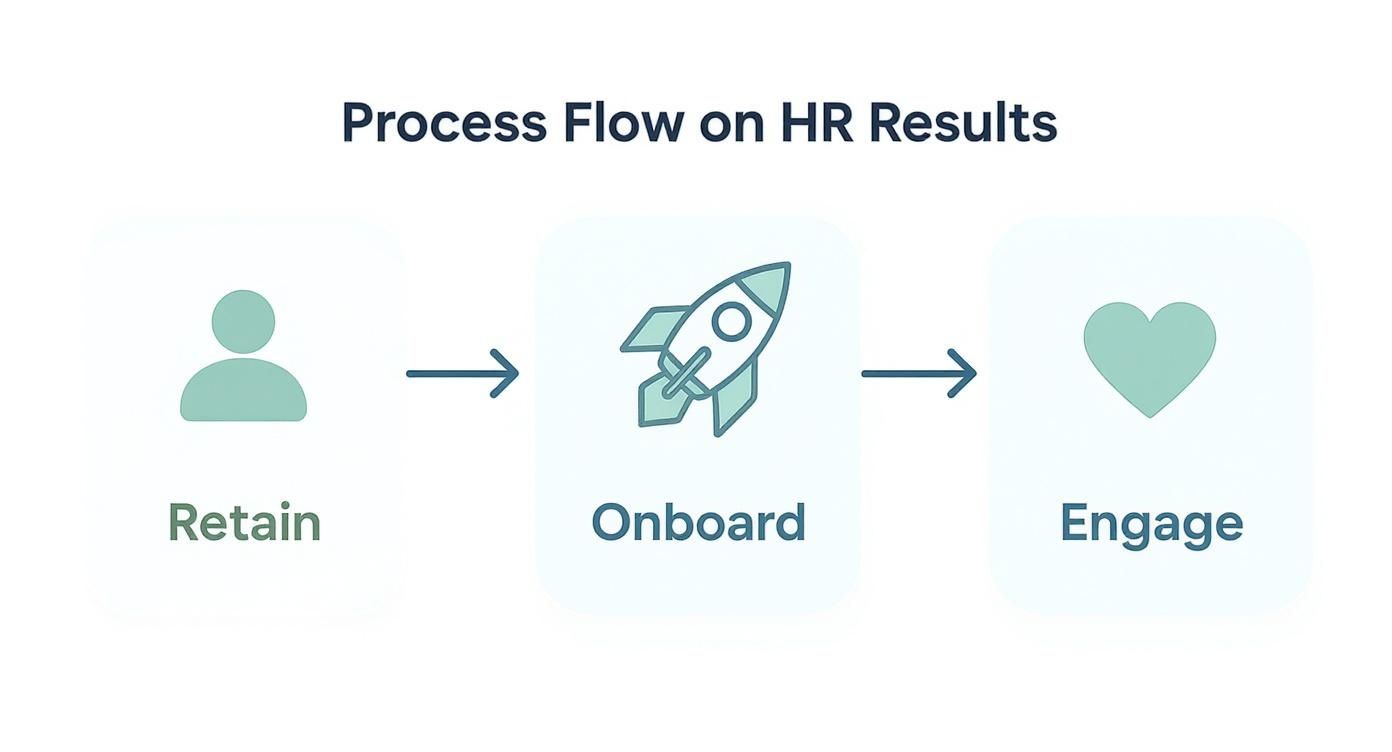
This visual makes it clear: digital tools aren't just about efficiency. They're fundamental to creating a positive employee journey from their first day to their last.
Even the most amazing technology is completely useless if nobody uses it. This stage is all about the people side of the transformation. Good change management means clearly communicating the "why" behind the new systems. You have to help employees see how these changes will make their jobs easier and more meaningful.
"Change is inevitable, but transformation is by conscious choice." – Heather Ash Amara
That quote nails it. You have to consciously choose to guide your people through this transition with empathy and real support.
Your change management plan should include:
Digital transformation isn't a one-and-done project. It's a continuous cycle of learning and improving. Once your new systems are up and running, the real work of optimization begins. Use the data and analytics from your new tools to see how you're tracking against the goals you set back in stage one.
Are you actually seeing that reduction in time-to-hire? What do the latest employee engagement scores look like? Use these insights to figure out what's working and where you need to make adjustments. Keep asking for feedback from users to understand their experience and spot new opportunities for improvement.
This iterative approach keeps your HR function agile and responsive. It’s also crucial to remember that technology should support human connection, not replace it. For example, as offboarding becomes more digital, keeping team bonds strong is still vital. This is where tools from Firacard, like their collaborative farewell cards, show how digital solutions can actually enhance the human touch by making it easy for teams to share heartfelt goodbyes. This focus on connection is a key part of building a great company culture. For more ideas on this, check out our guide on how to improve workplace culture.
Rolling out new tech is just step one. The real gut check for any digital transformation in HR is proving that it actually works. How do you know if your investments are paying off? You have to move beyond just reporting numbers and start telling a compelling story about your impact on the business.
This means shifting from tracking what you did to measuring what happened because you did it. Instead of just noting how many people finished a training module, you show how that training cut down on errors or boosted team performance. This is how HR moves from a support function to a strategic partner—by tying its work directly to business goals.
For years, HR metrics were stuck on things like headcounts and basic administrative tracking. While that data is useful, it barely scratches the surface. A truly modern HR function uses data to get a much deeper look into the health and performance of the entire organization.
It's like upgrading your car's dashboard. The old one just showed your speed. The new one has advanced diagnostics that can predict engine trouble before it even starts. That's what modern HR analytics does—it gives you the power to spot trends and fix problems before they become bigger issues.
The secret is to balance your metrics. You need a healthy mix covering efficiency, employee engagement, and direct business impact. When you bring these data points together, you build a powerful case for your digital strategy.
If you want to show real ROI, you need to track KPIs that the C-suite actually cares about. These are the numbers that connect HR activities to the bottom line and strategic goals.
Here are a few essential KPIs to keep an eye on:
Proving ROI isn't just about saving money. It's about showing how you're creating value. When you can draw a straight line from improved employee engagement to a measurable jump in customer satisfaction, you've officially connected HR to revenue.
Looking ahead, AI and advanced analytics are completely changing how HR measures success. Companies are now using AI-powered tools to automate data collection and get real-time insights into their workforce, which is a game-changer for tackling challenges like the Great Resignation.
These tools go way beyond basic KPIs. They can calculate things like Employee Lifetime Value (ELTV), analyze pay equity, and even conduct sophisticated engagement analysis using behavioral data. This arms HR leaders with the insights they need to align their talent strategy perfectly with business goals. If you want to dive deeper, you can explore how key metrics for HR success are evolving.
This data-first approach lets you build a rock-solid business case, secure funding for future projects, and prove that your HR strategy is a core driver of the company's success. By mastering these metrics, you shift HR's reputation from a cost center to a strategic value creator.
Taking on a digital transformation in HR can feel like walking through a minefield. The rewards are huge, but so are the risks. One wrong step can stall progress, burn through your budget, and leave your teams feeling completely frustrated.
The best defense is a good offense. If you know where the most common traps are, you can build a strategy to navigate right around them. This isn't just about rolling out new software; it's about creating real, lasting change that helps your people and the business thrive.
This is the big one. The single greatest mistake you can make is treating a digital transformation in HR like it’s just an IT project. It’s not. It’s a people project. You can have the slickest, most expensive software on the market, but if your employees don’t get why it’s there or just plain don’t want to use it, it will fail.
To get this right, you have to:
Jumping on the tech bandwagon without a map is another recipe for disaster. Buying the hot new HRIS just because everyone else is isn’t a strategy—it’s a shot in the dark. Your digital moves have to be tied to clear business goals, otherwise you’ll end up with expensive tools that don’t solve any of your actual problems.
A digital HR strategy should be less about the tools and more about the outcomes. The goal is not to 'go digital' but to use digital capabilities to become more efficient, data-driven, and human-centric.
Start by defining what success looks like in plain numbers. Do you want to slash your time-to-hire by 25%? Boost employee retention by 15%? These specific goals will be your North Star, guiding every decision you make.
So, you’ve got these powerful new tools. But does your team know how to drive them? The digital skills gap is a huge hurdle. Globally, a staggering 89% of companies are already facing skills shortages or expect to soon, and new tech only widens that gap. This can cripple your initiative, as your team won’t be able to unlock the full potential of your investment. You can explore key digital transformation statistics to get a better sense of the challenge.
You have to invest in your people just as much as you invest in the tech. This means dedicated training, easy-to-access resources, and building a culture where learning is an everyday thing. The goal is to build both competence and confidence with the new digital tools.
Diving into a digital HR strategy always kicks up a few questions. Getting clear answers is the best way to build the confidence you need to move forward. Let's tackle some of the most common things that come up when you're planning your transformation.
We'll keep the answers straightforward to help you navigate the journey, clear up key points, and settle any doubts you might have about the process.
For small businesses, the best place to start is with your biggest time-drain. Usually, that’s either recruitment or just managing basic employee data.
Bringing in a simple Applicant Tracking System (ATS) or a lightweight Human Resource Information System (HRIS) can give you a massive return right away. It cuts down on the manual grunt work and frees up precious time for things that actually move the needle. The trick is to start small, prove the value, and then build from there.
Not a chance. The real goal of a digital transformation in HR isn't to replace people, but to elevate them. By automating all the routine, administrative tasks, technology gives HR teams the freedom to shift their focus from paperwork back to people.
This means more time for big-picture initiatives like developing talent, shaping company culture, and actually being there to support employees. The human side of HR becomes more important, not less, as tech handles the repetitive stuff.
Getting people on board comes down to three things: clear communication, great training, and choosing software that doesn't feel like a chore to use. First, explain the "why"—show your employees how these new tools will make their own work lives easier.
Second, offer training that’s easy to access and makes sense for different roles. Most importantly, pick user-friendly tech. A fantastic way to make sure the tools you choose are loved, not loathed, is to get employees involved in the selection process from the start.
To keep your team feeling connected and engaged through every stage of your transformation, Firacard makes it easy to celebrate milestones together. See how our collaborative farewell cards and group greeting cards can strengthen your company culture, no matter where your team is.


Stuck in a rut writing the same old birthday message? This year, ditch the clichés and learn how to create genuinely funny rhymes for birthdays th
Saying goodbye to a teacher is a really big deal, and goodbye teacher cards are a fantastic way to show them how much you appreciate everything the
Graduation marks a monumental milestone, a culmination of years of dedication and hard work. But finding the right words to capture your pride and