Creative Goodbye Teacher Cards That Make an Impact
Saying goodbye to a teacher is a really big deal, and goodbye teacher cards are a fantastic way to show them how much you appreciate everything the


Nov 6, 2025 | 22 Min Read

In today's competitive landscape, attracting and retaining top talent requires more than just a competitive salary. A thoughtfully designed recognition program is the cornerstone of a thriving workplace culture, directly impacting engagement, productivity, and loyalty. But generic, outdated approaches no longer cut it. Employees crave authentic, timely, and meaningful appreciation that acknowledges their unique contributions and reinforces the behaviors that drive success.
This guide moves beyond the basics to provide a comprehensive roundup of powerful employee recognition program ideas, complete with actionable implementation steps, budget considerations, and tools to help you build a culture where every team member feels seen and valued. We'll explore a diverse range of strategies, from peer-led kudos systems to structured milestone celebrations, ensuring you find the right fit for your organization's unique needs and values.
You will learn how to implement practical programs that resonate with modern workforces, including remote and hybrid teams. For instance, you can elevate traditional farewells by using collaborative tools like Firacard to create a shared space for heartfelt messages, transforming a simple goodbye into a memorable team experience. This article provides the blueprint to transform appreciation from a simple gesture into a strategic business advantage. Let's explore how to build a recognition framework that not only celebrates achievements but also fosters a deep sense of connection and purpose among your employees.
Peer-to-peer recognition programs decentralize appreciation by empowering employees to celebrate each other's contributions directly. Instead of a top-down approach, this grassroots system allows colleagues to give kudos, points, or badges for achievements like outstanding collaboration, innovative thinking, or embodying company values. This democratization of praise fosters a more connected and supportive team environment, as recognition becomes an integral part of daily interactions.
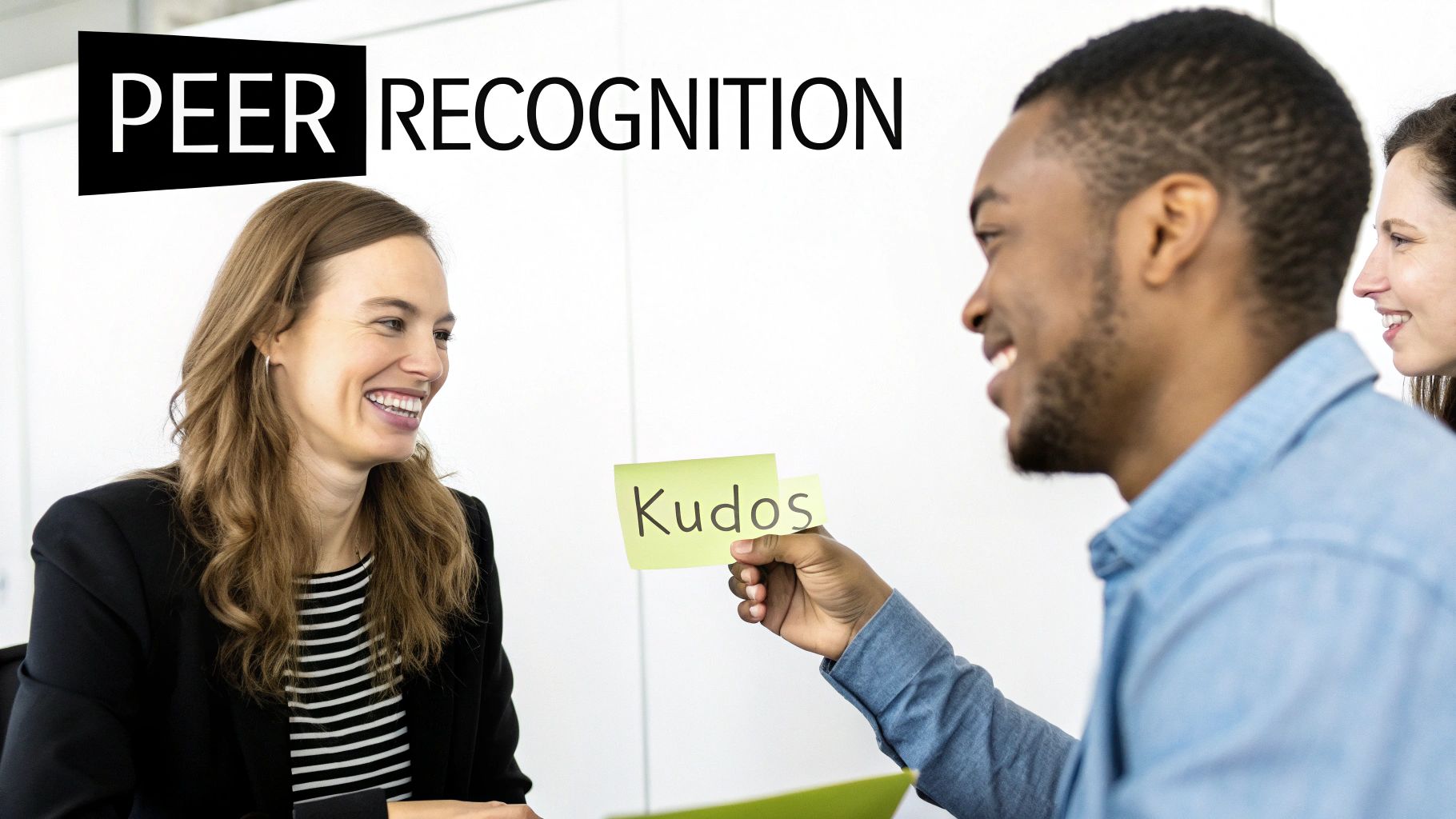
This model is particularly effective because it captures the small, everyday wins that managers might miss but that significantly impact team morale and productivity. It highlights the value of cross-functional support and acknowledges the collaborative efforts that drive success. Companies like Slack and HubSpot have successfully integrated these systems into their daily workflows, proving their value in modern workplaces.
Pro-Tip: Start small by piloting the program with a single department. Use their feedback to refine the process before a company-wide rollout. This helps identify potential issues and builds momentum for a successful launch.
Spot bonuses and other forms of monetary recognition offer immediate, tangible rewards for exceptional performance. Unlike annual bonuses tied to company-wide metrics, these on-the-spot financial incentives are given shortly after a specific achievement, directly linking an employee's outstanding contribution to a concrete reward. This quick, unexpected reinforcement has a high emotional impact, making employees feel truly valued for going above and beyond.
This approach is highly effective for recognizing project completions, customer-centric innovations, or exceptional client deliverables. Companies like Salesforce and Amazon leverage performance-based spot awards to motivate specific behaviors and drive results. The key is the immediacy, which creates a powerful association between the desired action and the reward, encouraging a culture of high performance. It's a standout among employee recognition program ideas for its directness and impact.
Pro-Tip: Create a simple nomination process where both peers and managers can submit recommendations for a spot bonus. A small committee can review submissions weekly to ensure fairness and consistency across the organization.
Employee of the Month/Quarter/Year programs are formal, structured awards that celebrate individuals who have demonstrated exceptional performance over a specific period. This traditional method creates a clear aspirational goal for employees by systematically recognizing outstanding contributions. Winners are typically chosen through a formal nomination process, management selection, or a combination of both, and receive public acknowledgment and often tangible rewards.
This approach is highly effective for setting a standard of excellence and highlighting behaviors that align with company goals. It provides a consistent cadence for celebration and gives high-achievers the formal recognition they deserve. Companies like Zappos and Whole Foods have successfully used similar structured awards to reinforce core values and celebrate team members who go above and beyond their roles.
Pro-Tip: Expand beyond a single "Employee of the Month" award. Create multiple categories like "Innovation Champion," "Customer Service Star," or "Core Values Leader" to recognize a wider range of contributions and include more employees.
Investing in an employee's future is one of the most powerful forms of recognition. This approach rewards high-performing individuals by providing access to premium training, certifications, mentorship programs, or conference attendance. Instead of a one-time bonus, it offers a gift that compounds over time: new skills, expanded networks, and a clear path for career advancement. This demonstrates a deep commitment to an employee's long-term growth and potential within the organization.
This method is highly effective because it aligns individual aspirations with company goals, creating a more skilled, engaged, and loyal workforce. It shows that the company values its people not just for their current output but for who they can become. Tech giants like Google and professional services firms like Deloitte have championed these employee recognition program ideas, building cultures where continuous learning is both a reward and a core value.
Pro-Tip: Tie these opportunities to significant milestones or promotions. When an employee is promoted, you can celebrate their achievement by funding a leadership course and announcing it to the team with a group e-card from Firacard, combining public praise with a tangible investment in their future.
Public recognition amplifies appreciation by taking it beyond internal channels and sharing it with a wider audience. This approach involves celebrating employee achievements on company social media profiles, in newsletters, or during all-hands meetings. By making recognition a public affair, you not only boost the recipient's morale but also reinforce your company culture and values to customers, partners, and potential new hires.
This method is highly effective for building a strong employer brand and showcasing the human side of your organization. It transforms individual wins into powerful stories that demonstrate your company's commitment to its people. Companies like Salesforce and Buffer have mastered this by consistently featuring employee spotlights and success stories, turning internal praise into an external marketing asset and a key part of their employee recognition program ideas.
Pro-Tip: Create a standardized and easy-to-use nomination form for managers to submit employees for public recognition. This streamlines the process and ensures you have a consistent flow of stories to share throughout the year.
Experiential rewards shift the focus from tangible goods to unforgettable memories, offering employees unique experiences like concert tickets, adventure activities, or exclusive dining. Unlike cash bonuses that are often spent on daily expenses, these rewards create a lasting emotional connection to the company. They demonstrate a deep investment in an employee’s well-being and happiness outside of the office, making the recognition feel more personal and significant.

This approach is highly effective for recognizing major milestones or outstanding achievements. Companies like Google and Virgin have championed this model, offering everything from travel incentives to unique local adventures. The social currency of sharing a memorable experience often outweighs that of a monetary prize, generating positive word-of-mouth and reinforcing a vibrant company culture. These unique employee recognition program ideas are powerful because they become cherished stories employees tell for years.
Pro-Tip: Include an option for the employee to bring a plus-one, like a partner or friend. Sharing the experience can amplify its positive impact and shows the company values their life outside of work.
In the modern workplace, time and autonomy are as valuable as monetary rewards. Flexible work and time-based perks recognize employees by granting them greater control over their schedules, a powerful motivator that supports work-life balance. This approach can include offering remote work days, flexible start and end times, extra paid time off, or first choice of vacation slots as a reward for exceptional performance.

This form of recognition demonstrates deep trust in employees to manage their responsibilities effectively, regardless of their physical location or hours worked. Companies like GitHub and Basecamp have built entire cultures around this principle, showing that focusing on outcomes rather than presenteeism boosts both morale and productivity. As an employee recognition program idea, it directly addresses the growing demand for a more adaptable and employee-centric work environment.
Pro-Tip: Introduce time-based perks incrementally. Start by offering a "half-day Friday" reward for a team that hits a major milestone. Use this to gauge employee interest and ensure project continuity before rolling out more extensive flexibility options.
Milestone and anniversary recognition programs are a cornerstone of employee retention, designed to honor long-term commitment and significant achievements. These structured initiatives celebrate key moments in an employee's journey, such as work anniversaries (1, 5, and 10+ years), major project completions, or personal life events. This approach formalizes appreciation for loyalty, making employees feel valued for their sustained contributions over time.
This type of recognition is powerful because it acknowledges the journey and growth of an employee within the organization. It reinforces the message that the company sees and appreciates their dedication beyond short-term wins. Companies like IBM and Patagonia have legendary service award programs that not only celebrate tenure but also share the stories of their long-standing employees, strengthening organizational culture and creating a sense of shared history.
Pro-Tip: For anniversaries, focus on storytelling. Encourage managers and colleagues to share specific memories or examples of the employee's impact over the years. This transforms a simple date on a calendar into a meaningful celebration of their unique contributions.
Values-based recognition programs directly tie employee appreciation to your company's core values. Instead of rewarding just performance, this approach celebrates employees who embody principles like integrity, innovation, or customer obsession through their actions. By highlighting specific behaviors that reflect the organization's ethos, you reinforce your culture and connect daily contributions to the company's mission.
This model transforms core values from abstract posters on a wall into a living, breathing part of the workplace. It provides a clear framework for what "good" looks like, guiding employee behavior and decision-making. For recognition to truly resonate, it should align with your company's core values, helping to foster values alignment in the workplace and build a purposeful organization. Companies like Zappos and Southwest Airlines have built legendary cultures by consistently recognizing and celebrating value-aligned actions.
Pro-Tip: Create a dedicated "Values Wall" (physical or digital) where you post stories and photos of employees being recognized for their value-aligned contributions. This creates a powerful, visible testament to your company culture in action.
Gamified recognition introduces elements of play and competition into employee appreciation, transforming it into an engaging and motivating experience. This approach uses game mechanics like points, badges, leaderboards, and achievement levels to reward desirable behaviors and accomplishments. Employees earn points for everything from hitting sales targets to demonstrating company values, which they can then redeem for tangible rewards.
This system makes recognition fun, interactive, and highly visible. It taps into our natural desire for achievement and progress, creating a continuous feedback loop that reinforces positive actions. Companies like Salesforce and Microsoft have famously used gamification to boost performance and engagement, proving that a little friendly competition can be a powerful driver for success. It's one of the most dynamic employee recognition program ideas for modern, tech-savvy teams.
Pro-Tip: Regularly update the challenges and achievement categories to keep the program fresh and exciting. Stagnant goals can lead to disengagement, so introduce new ways to earn points each quarter.
| Program | 🔄 Implementation (complexity · time) | ⚡ Resource requirements | ⭐ Expected outcomes · 📊 Impact | Ideal use cases | 💡 Key advantages & tips |
|---|---|---|---|---|---|
| Peer-to-Peer Recognition Programs | Low–Medium 🔄 · 1–3 months | Moderate (platform + admin) ⚡ | High ⭐ · ↑ engagement, frequent recognition 📊 | Collaborative teams; distributed orgs | Builds peer bonds; set clear guidelines; integrate with daily tools 💡 |
| Spot Bonus and Monetary Recognition | Low 🔄 setup · Immediate | High (budget + approvals) ⚡ | Very High ⭐ · Immediate morale & motivation 📊 | Sales wins, exceptional single contributions | Immediate impact; define criteria; track spend and fairness 💡 |
| Employee of the Month/Quarter/Year Awards | Low–Medium 🔄 · 2–4 weeks | Low–Medium (admin, small awards) ⚡ | Moderate ⭐ · Milestone recognition & company pride 📊 | Retail, hospitality, teams needing regular cadence | Creates milestones; ensure transparent selection and multiple categories 💡 |
| Professional Development & Learning Opportunities | High 🔄 · 1–2 months framework | High (training budgets, vendors) ⚡ | High ⭐ · Skill growth, retention, long-term ROI 📊 | High-potential staff; retention & succession planning | Tie to career paths; require sharing; measure skill outcomes 💡 |
| Public Recognition & Social Sharing | Low 🔄 · Immediate | Low–Medium (content & social mgmt) ⚡ | Moderate–High ⭐ · Employer brand lift & external reach 📊 | Employer branding, recruiting, big wins | Get consent; share authentic stories across channels 💡 |
| Experiential Rewards & Memorable Experiences | Medium–High 🔄 · 2–3 months | High (cost + logistics) ⚡ | High ⭐ · Strong emotional impact & memorable ROI 📊 | Top performers; milestone celebrations | Offer choices; plan logistics; consider accessibility and family options 💡 |
| Flexible Work & Time-Based Perks | Low 🔄 · 1–2 weeks | Low (policy + scheduling) ⚡ | High ⭐ · Better work–life balance and retention 📊 | Knowledge workers; remote/hybrid teams | Define policies; ensure fair access; measure by outcomes not hours 💡 |
| Milestone & Anniversary Recognition Programs | Low 🔄 · Immediate | Low–Medium (gifts, admin) ⚡ | Moderate ⭐ · Loyalty, tradition, predictable celebration 📊 | Tenure recognition; large enterprises | Personalize where possible; escalate rewards with tenure 💡 |
| Values-Based & Behavior-Aligned Recognition | Medium 🔄 · 2–3 months | Medium (training, comms, integration) ⚡ | High ⭐ · Strong cultural alignment and consistent behaviors 📊 | Culture-shaping initiatives; onboarding | Clearly define values; train leaders; link stories to behaviors 💡 |
| Gamified Recognition & Points-Based Systems | Medium–High 🔄 · 2–4 months | Medium–High (platform + maintenance) ⚡ | High ⭐ · Increased participation; actionable engagement data 📊 | Large orgs; frequent recognition; competitive cultures | Design to avoid gaming; vary rewards; monitor leaderboards and fairness 💡 |
We’ve explored a comprehensive array of employee recognition program ideas, from spontaneous spot bonuses to structured anniversary celebrations. The journey from understanding the why of recognition to mastering the how can seem complex, but the most powerful takeaway is this: there is no single magic bullet for employee appreciation. An effective strategy is not a monolithic program but a vibrant, multi-faceted ecosystem of recognition.
The most successful companies don’t just pick one idea and stick with it. Instead, they build a diverse toolkit, understanding that what motivates one employee may not resonate with another. A well-rounded approach artfully combines different recognition styles to create a culture where appreciation is a constant, flowing current rather than a rare, scheduled event.
As you move from inspiration to implementation, keep these core principles at the forefront of your planning:
Building a world-class recognition program is an iterative process, not a one-time project. Here’s how to get started today:
Ultimately, the goal is to create an environment where every single employee feels seen, valued, and understood. This investment is not just a "nice-to-have" initiative from HR; it is a fundamental driver of engagement, productivity, and long-term business success. The time, effort, and resources you dedicate to celebrating your people will always yield the highest returns.
Ready to make milestone celebrations and team acknowledgments truly special and effortless? Firacard allows you to create beautiful, collaborative group e-cards that everyone can sign from anywhere. It's the perfect tool for celebrating birthdays, work anniversaries, or even sending a farewell card that shows how much a departing colleague will be missed. Start creating memorable moments today at Firacard.


Saying goodbye to a teacher is a really big deal, and goodbye teacher cards are a fantastic way to show them how much you appreciate everything the
Graduation marks a monumental milestone, a culmination of years of dedication and hard work. But finding the right words to capture your pride and
Let's be honest, trying to find the perfect present from a UK gift shop online can feel like wading through a sea of options. It’s not just