8 Unforgettable Styles of Funny Rhymes for Birthdays (2026 Edition)
Stuck in a rut writing the same old birthday message? This year, ditch the clichés and learn how to create genuinely funny rhymes for birthdays th


Dec 23, 2025 | 20 Min Read

Saying goodbye to a valued colleague is never easy. Finding the right words and a meaningful way to express collective appreciation can be a challenge, especially with hybrid teams spread across the United Kingdom, United States, Australia, Canada, India and Africa. A generic card passed around the office feels outdated and often fails to capture the true spirit of a team's sentiment. Today's workforce needs a more personal, impactful, and collaborative way to celebrate a coworker's journey and contributions.
This guide explores eight innovative and heartfelt ideas for a farewell to coworker card that go far beyond a simple signature. We will provide actionable templates and practical tips for each concept. From dynamic digital experiences that include video messages to tangible keepsakes that honour a departing teammate's legacy, you will find formats that create a truly memorable send-off.
Throughout this list, we'll demonstrate how a modern group greeting card platform simplifies the process for everyone involved. Using tools like firacard, you can effortlessly create a sophisticated online leaving card, making it easy to gather messages, photos, and even gift contributions, no matter where your team members are located. Let's move beyond the standard "sorry for leaving card" and create something they'll genuinely treasure.
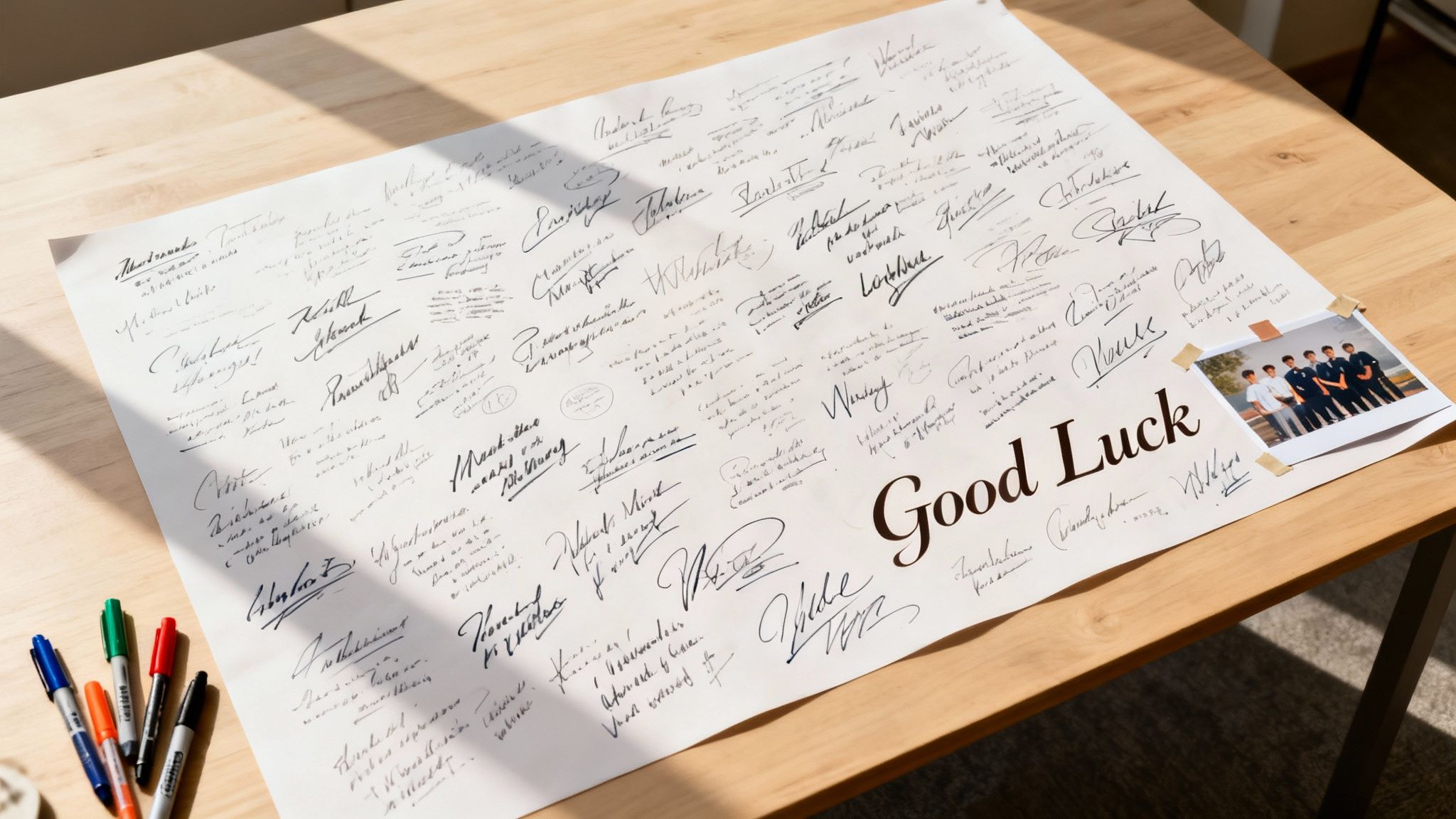
A collaborative digital memory board reinvents the traditional farewell to coworker card for the modern, often-remote, workplace. Imagine a classic leaving poster, but instead of just handwritten signatures, this digital canvas allows colleagues from any location to contribute a rich mix of content. Team members can add personal messages, inside jokes, memorable photos, animated GIFs, and even short video clips. This transforms a simple farewell into a dynamic, multimedia scrapbook.
This method creates a far more engaging and personalised keepsake than a physical card. Platforms like Firacard, a popular kudoboard alternative, are purpose-built for this. They provide a seamless interface for creating a virtual leaving card that captures the collective personality and shared history of your team. It’s an ideal solution for globally distributed or hybrid teams, ensuring everyone can participate equally.
To maximise the impact of your digital leaving card, consider these actionable tips:
A digital ecard offers a modern, streamlined approach to the classic farewell to coworker card. This format moves beyond a simple email, leveraging design tools to create a visually appealing, single-page electronic card that can be easily shared across platforms. Think of it as a professionally designed graphic sent via email, a dedicated Slack channel, or posted on a company intranet, combining heartfelt messages with polished aesthetics.
This method is perfect for organisations that value a clean, branded look. It allows for the inclusion of high-quality photos, company logos, and consistent design elements, making the farewell message feel official yet personal. Unlike a collaborative board, an ecard is often curated by one person or a small group, resulting in a cohesive and thoughtfully organised final product. It's an excellent way to deliver a powerful, unified message, especially in remote-first environments.
To create a memorable digital leaving card that stands out, follow these actionable tips:
A personalised photo collage card elevates the traditional farewell to coworker card by focusing on visual storytelling. This approach moves beyond simple text to create a nostalgic and emotional tribute through a curated collection of photographs. Imagine a montage capturing everything from formal team headshots and award ceremonies to candid moments from office parties, team-building retreats, and daily collaborations. It’s a powerful way to visually represent a colleague’s journey and impact within the organisation.

This method creates a deeply personal keepsake that visually celebrates shared history and accomplishments. While it can be done physically, integrating a photo collage into a digital leaving card on a platform like Firacard allows for greater collaboration, especially in remote or hybrid teams. Everyone can upload their favourite snapshots, building a collective visual farewell that captures the full spectrum of their time together. It’s a touching alternative to a standard card, showing the colleague they were a valued part of many memorable moments.
To create an impactful photo collage farewell card, follow these practical tips:
The Wish/Advice Card with Lined Pages offers a structured and deeply personal alternative to a standard farewell to coworker card. This approach transforms a simple sign-off into a meaningful collection of wisdom, encouragement, and fond memories. Instead of a large, open-ended card, colleagues are given lined pages in a notebook or a specially designed card to write down specific advice, career recommendations, or heartfelt wishes for the departing team member's next professional chapter.

This method creates a durable, book-like keepsake that feels more like a guide for the future than a simple goodbye note. It is particularly effective in environments where mentorship is valued, such as when a senior leader leaves a large corporation, or a founding member departs from a startup. The collected pages can be bound into a small volume, creating a powerful and organised repository of insights from the people who knew them best in a professional context.
To ensure your Wish/Advice Card becomes a treasured memento, follow these practical steps:
A charity or legacy donation card transforms a standard farewell into a gesture of profound meaning and positive social impact. Instead of a traditional gift, the team makes a collective donation to a charity, non-profit, or cause that is important to the departing colleague. The farewell to coworker card then serves as the announcement vehicle, celebrating both the individual's contribution and the shared commitment to a greater good. This approach creates a lasting legacy in their name.
This method is particularly powerful for colleagues known for their altruism or passion for specific social issues. For instance, many Fortune 500 companies establish 'Legacy Funds' for retiring executives, and it's common in consulting firms for partners to have donations made to their chosen charities upon departure. This idea turns the act of saying goodbye into an act of giving back, reflecting the values of both the employee and the organisation.
To ensure your charity donation card is received with genuine appreciation, consider these steps:
The time capsule is a uniquely thoughtful and forward-looking spin on the traditional farewell to coworker card. Instead of messages meant for immediate reading, colleagues write advice, predictions, and well wishes intended to be opened by the departing employee at a specific future date, such as in six months, one year, or even five years. This transforms the farewell from a single event into an enduring connection that bridges time.
This innovative approach creates a profound and lasting impact, offering a future moment of reflection and encouragement. It's a powerful way to show a colleague that their influence and the relationships they built will continue to be valued long after they've left. This concept has been successfully adapted in various settings, from military units sealing letters for comrades to academic institutions creating "decade later" messages for alumni.
To ensure your time capsule card is a memorable and meaningful gift, consider these practical steps:
A video message compilation elevates the farewell to coworker card into a heartfelt, cinematic experience. It involves collecting short video clips from colleagues, leadership, and team members, then editing them into a single, cohesive film. This format allows for a level of personal expression and emotional connection that static text and images cannot match, creating a truly memorable and dynamic tribute.
This approach transforms a leaving gift into a mini-documentary of the person's impact on the company. Imagine an award show-style tribute for a departing executive or a montage of well-wishes for a beloved team member. It's a powerful way to show appreciation and preserve memories in a format that can be cherished for years. This method is particularly effective for celebrating long-serving employees or key leaders, making their farewell feel like a significant event.
To produce a polished and impactful video compilation, consider these actionable tips:
An Achievement/Legacy Recognition Card shifts the focus of a farewell to coworker card from purely sentimental wishes to a formal celebration of professional impact. This approach documents and honours the departing colleague's accomplishments, key projects, and lasting contributions to the organisation. It serves as a tangible record of their professional legacy, making it a powerful and respectful send-off.
Instead of just well wishes, this card compiles specific data, testimonials, and milestones. Imagine a corporate farewell that includes a timeline of successful projects, quotes from senior leadership praising their work, and metrics showcasing their impact on revenue or efficiency. This transforms the farewell gesture into a valuable professional artefact the person can carry forward in their career.
This formal style of recognition is particularly suited for senior leaders, long-serving employees, or colleagues retiring after a distinguished career. It acknowledges their work with the seriousness and appreciation it deserves, creating a keepsake that is both meaningful and professionally validating.
To create a compelling and professional legacy card, follow these structured steps:
| Item | Implementation complexity | Resource requirements | Expected outcomes | Ideal use cases | Key advantages |
|---|---|---|---|---|---|
| Signature/Memory Page Card | Low — coordination to circulate | Low — cardstock, pens, coordinator | Tangible keepsake; team bonding | Long-tenured staff, managers, retirements | Cost-effective; collective sentiment |
| Digital/E-Card Format | Low–Medium — setup and distribution | Low–Medium — design tools, internet | Multimedia, easily shared archive | Remote/hybrid teams; dispersed orgs | Accessible, multimedia, eco-friendly |
| Personalized Photo Collage Card | Medium — curate and design photos | Medium — photo editing, quality printing | Emotional visual keepsake | Long-term employees; event-based farewells | Highly personal; strong visual impact |
| Wish/Advice Card with Lined Pages | Medium — collect long-form messages | Low–Medium — binding, prompts, collection | Thoughtful, practical guidance to revisit | Senior departures; mentorship relationships | Encourages depth and lasting advice |
| Charity/Legacy Donation Card | Medium–High — approvals and coordination | Medium–High — budget, nonprofit partnership, documentation | Community impact; honors values | Senior executives; values-aligned cultures | Meaningful legacy; CSR alignment |
| Time Capsule/Future Message Card | Medium — logistics and follow-up | Low–Medium — packaging, tracking, backup | Extended emotional connection; future surprise | Young professionals; close-knit teams | Novel, long-term engagement |
| Video Message/Testimonial Card | High — scheduling and editing | High — recording devices, editor, storage | Dynamic, emotive multimedia keepsake | Large orgs, remote teams, major departures | Captures emotion and expressions; inclusive |
| Achievement/Legacy Recognition Card | High — research and verification | Medium–High — data collection, design, leadership input | Formal record of accomplishments | Senior-level, formal corporate settings | Validates impact; supports succession planning |
Crafting the perfect farewell to coworker card is more than a simple administrative task; it is a final, meaningful act of professional courtesy and personal appreciation. Throughout this guide, we've explored a diverse range of farewell card formats, from the classic Signature/Memory Page to innovative multimedia options like Video Testimonials and interactive Time Capsules. We've delved into the nuances of tone, personalisation, and etiquette, providing actionable frameworks to ensure your message resonates, whether you're bidding adieu to a close friend, a respected mentor, or a distant colleague.
The core takeaway is that a truly memorable goodbye transcends a generic "sorry for leaving card". It is a curated experience that reflects the unique contributions and personality of the departing individual. By thoughtfully selecting a format, gathering specific memories, and framing your message with sincerity, you transform a standard farewell into a powerful affirmation of their impact on the team and the organisation. This deliberate effort is what turns a simple card into a cherished keepsake.
To put these concepts into practice, follow this simple roadmap to ensure a seamless and impactful farewell experience:
Ultimately, mastering the art of the farewell is about honouring professional journeys and strengthening the human connections that define a positive workplace culture. A well-executed farewell to coworker card serves as a final, tangible piece of evidence that a person’s time and effort were valued. It closes one chapter on a high note and reinforces the bonds that will endure long after they have moved on.
Ready to create a beautiful and memorable farewell experience for your departing colleague? With Firacard, you can easily design a collaborative online leaving card that gathers heartfelt messages, photos, and GIFs from the entire team, no matter where they are. Start creating your perfect group card today at Firacard.


Stuck in a rut writing the same old birthday message? This year, ditch the clichés and learn how to create genuinely funny rhymes for birthdays th
Saying goodbye to a teacher is a really big deal, and goodbye teacher cards are a fantastic way to show them how much you appreciate everything the
Graduation marks a monumental milestone, a culmination of years of dedication and hard work. But finding the right words to capture your pride and