
8 Unforgettable Styles of Funny Rhymes for Birthdays (2026 Edition)
Stuck in a rut writing the same old birthday message? This year, ditch the clichés and learn how to create genuinely funny rhymes for birthdays th


Nov 15, 2025 | 26 Min Read

When someone you care about is facing an illness or injury, the simple act of sending a message can make a significant difference in their recovery. Yet, staring at a blank card or an empty text box can be surprisingly difficult. How do you convey genuine care, offer comfort, and provide encouragement without falling back on generic phrases? Finding the right words is a challenge, as the ideal tone can vary dramatically depending on your relationship with the person, the severity of their condition, and your shared history. A light-hearted joke might be perfect for a close friend but inappropriate for a formal colleague.
This guide is designed to eliminate that uncertainty. We have compiled a comprehensive collection of get well soon messages categorized to fit any situation you might encounter. Whether you're writing a personal note for a family member, coordinating a group card for a team member, or looking for a faith-based message to share, this resource provides specific, actionable examples. Our goal is to help you move beyond a simple "feel better" and craft a message that is both meaningful and supportive.
You will find eight distinct categories of messages, from heartfelt and inspirational to humorous and professional. We will also provide practical tips on how to personalize these examples to make them uniquely yours. For those organizing group greetings, platforms like Firacard offer a seamless way to collect messages and deliver a collective show of support, a modern alternative to passing around a physical card. This listicle will equip you with the tools and confidence to send well-wishes that truly resonate and contribute a moment of brightness to someone's healing journey.
A heartfelt personal recovery message moves beyond generic "get well soon" wishes. It creates a powerful, genuine connection by focusing on the unique relationship you share with the recipient. This approach is ideal for close friends, family members, and cherished colleagues, as it demonstrates deep care and reminds them of their own strength and the love surrounding them. The goal is to make them feel seen, valued, and supported on a personal level.
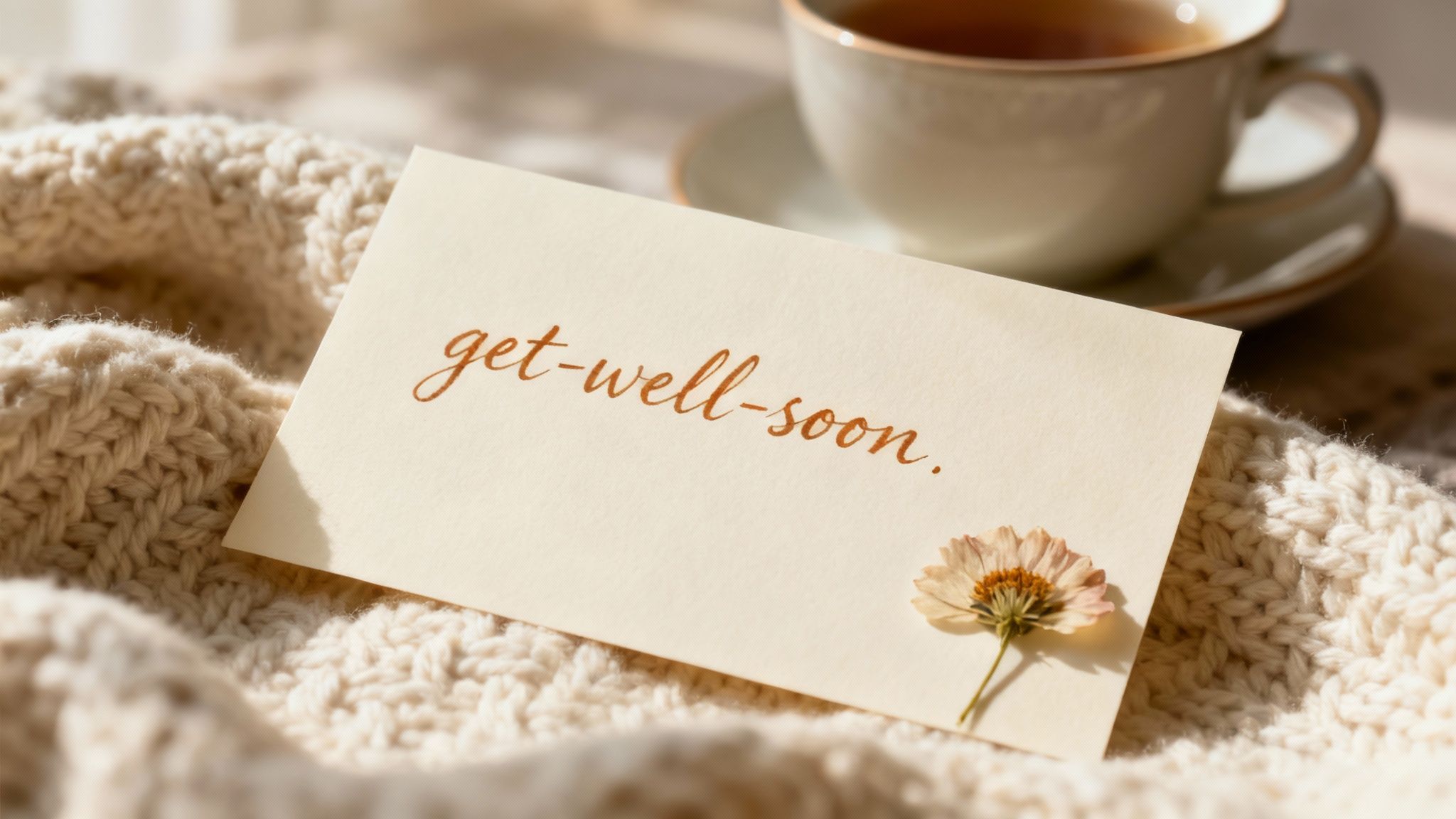
This type of message centers on authenticity. Instead of just stating you hope they feel better, you show them why you care and what they mean to you. This specificity transforms a simple note into a meaningful gesture of comfort and encouragement.
The key is to ground your message in your shared history and your genuine appreciation for the person.
Pro-Tip: Authenticity is more important than length. A few sincere, well-chosen sentences will have a far greater impact than a long, generic paragraph.
To take this a step further, consider the power of personalized video messages to convey your heartfelt wishes directly. Seeing your face and hearing your voice can be incredibly comforting. For more inspiration, you can explore a variety of heartfelt get well soon message ideas on firacard.com.
An inspirational and motivational recovery message serves as a powerful beacon of hope, designed to uplift the recipient's spirits and bolster their mental fortitude. This approach goes beyond simple well-wishes by focusing on the individual's inner strength, resilience, and capacity to overcome adversity. It is particularly effective for those facing a long or challenging recovery, as it acknowledges their struggle while instilling a sense of optimism and determination. The goal is to remind them of the warrior within.
This type of message acts as a verbal cheerleader, helping to shift the focus from the current illness to the future recovery. It validates their feelings while gently guiding their mindset toward positive outcomes, making them feel empowered rather than defined by their condition.
The essence of this message is to balance empathy with encouragement, creating a supportive tone that is both realistic and hopeful.
Pro-Tip: Avoid toxic positivity. Acknowledge that recovery is difficult. Phrases like "You're the strongest person I know, and I know this is tough, but you've got this" validate their struggle while still being motivational.
The right words can have a profound effect on someone's mindset during their healing process. Positive language is a key component of these get well soon messages. To better understand this, you can explore more on the silent impact of words and how positive language encourages and uplifts.
A humorous and light-hearted get well message aims to lift spirits and provide a welcome distraction from the discomfort of recovery. Laughter is a powerful medicine, and a well-placed joke or witty observation can bring a moment of joy and normalcy to someone who is feeling unwell. This approach is perfect for friends, family members, and colleagues with whom you share a playful rapport, as it can reduce stress and remind them of brighter days.
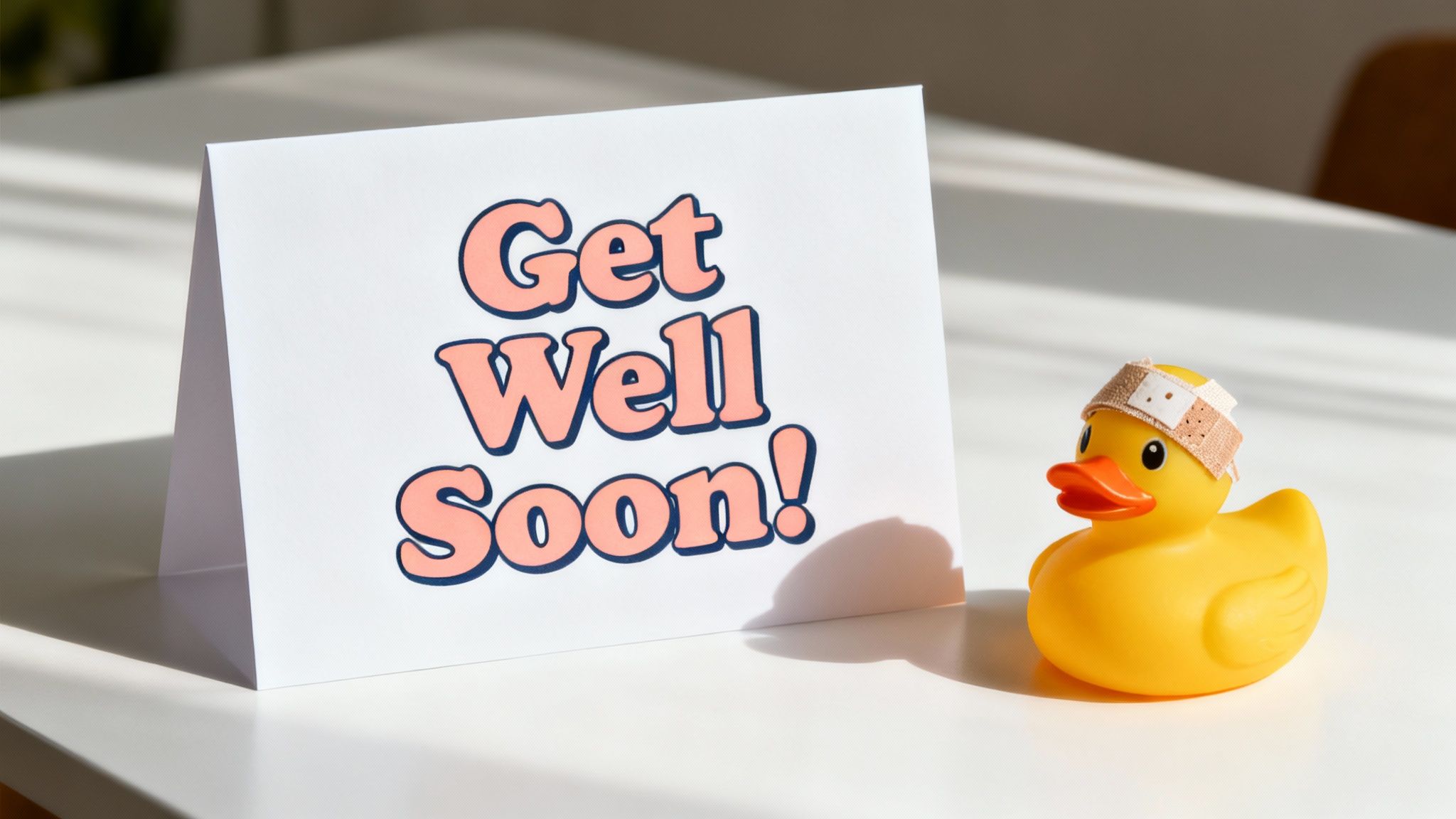
The goal of this type of message is not to make light of their situation but to offer a temporary escape through humor. It shows you care enough to want to make them smile, providing emotional relief and a dose of positivity when they need it most.
The key is to tailor the humor to the recipient's specific tastes while keeping the tone genuinely supportive.
Pro-Tip: Your relationship dictates the humor. A sarcastic joke that would be perfect for a best friend might not land well with a supervisor. When in doubt, keep it universally light and cheerful.
Crafting the perfect funny message involves creativity and a good understanding of the recipient. For more inspiration on witty one-liners, you can find great ideas in this guide to funny birthday card messages on firacard.com, which can easily be adapted for a get well soon card.
A professional and formal get well wish strikes a crucial balance between expressing genuine concern and maintaining workplace etiquette. This approach is perfect for colleagues, clients, managers, or any professional connection where a respectful and slightly more reserved tone is appropriate. The goal is to convey support and acknowledge their absence without crossing personal boundaries, reinforcing a positive and caring company culture.
This type of message shows that an individual is a valued member of the team, and their contributions are missed. It avoids overly personal details, focusing instead on well wishes for a speedy recovery and an organized return to work. It’s a gesture that fosters goodwill and demonstrates professional empathy.
The key is to be sincere, concise, and respectful of professional decorum. Your message should be supportive while remaining appropriate for the workplace context.
Pro-Tip: Always be mindful of privacy. Avoid asking for details about their illness or recovery timeline unless they have voluntarily shared that information.
For teams looking to send a collective, organized message, a group e-card is an excellent solution. Platforms like Firacard allow everyone to sign a single card, ensuring the message is both professional and heartfelt without overwhelming the recipient.
A spiritual or faith-based recovery message offers comfort and strength by connecting with the recipient's personal beliefs. For individuals who draw strength from their faith, a message rooted in prayer, scripture, or spiritual encouragement can be profoundly uplifting. This approach is best suited for friends, family, or community members whose faith is a known and important part of their life, providing a sense of peace and divine support during a challenging time.
This type of get well soon message demonstrates a deep understanding of what gives the person hope. It acknowledges their spiritual foundation and validates the role faith plays in their journey toward healing. The goal is to offer not just well wishes, but also a sense of shared faith and solidarity.
The key is to offer support that is respectful, genuine, and aligned with the recipient’s own spiritual or religious convictions.
Pro-Tip: If you are unsure of their specific beliefs but know they are spiritual, use more inclusive language like "sending healing thoughts" or "wishing you peace and strength."
For faith communities or groups wanting to send a collective message of support, a group ecard is an excellent option. Tools like Firacard allow everyone to contribute their prayers and well wishes in one beautiful, coordinated card.
An action-oriented message shifts the focus from passive well wishes to active, tangible support. While emotional encouragement is vital, practical help can be one of the most meaningful get well soon messages a person can receive, as it alleviates the day-to-day burdens that accompany illness or recovery. This approach is perfect when you want to do more than just send words, showing your care through concrete actions.
This type of message replaces the often-vague "Let me know if you need anything" with specific, actionable offers. It demonstrates foresight into the recipient's potential needs and a genuine commitment to easing their stress, allowing them to focus entirely on healing.
The key to an effective action-oriented message is specificity and reliability. Your offer should be clear, easy to accept, and something you are fully prepared to follow through on.
Pro-Tip: Always follow through on your commitments. The trust and relief you provide by being reliable is an immense gift during a difficult recovery period.
For coordinating help among a larger group, like a team or extended family, a group card from Firacard is an excellent tool. You can use it to centralize well wishes and organize a schedule for meal drop-offs or other assistance.
A collective or community support message demonstrates the power of numbers, showing the recipient that an entire group is thinking of them and wishing them a speedy recovery. This approach is perfect for colleagues in a department, members of a club, a church community, or a close-knit group of friends. Instead of just one person’s well-wishes, this message compiles the love and support of many, creating a powerful wave of positive energy. The goal is to make the individual feel connected to their community and uplifted by the sheer volume of care directed their way.
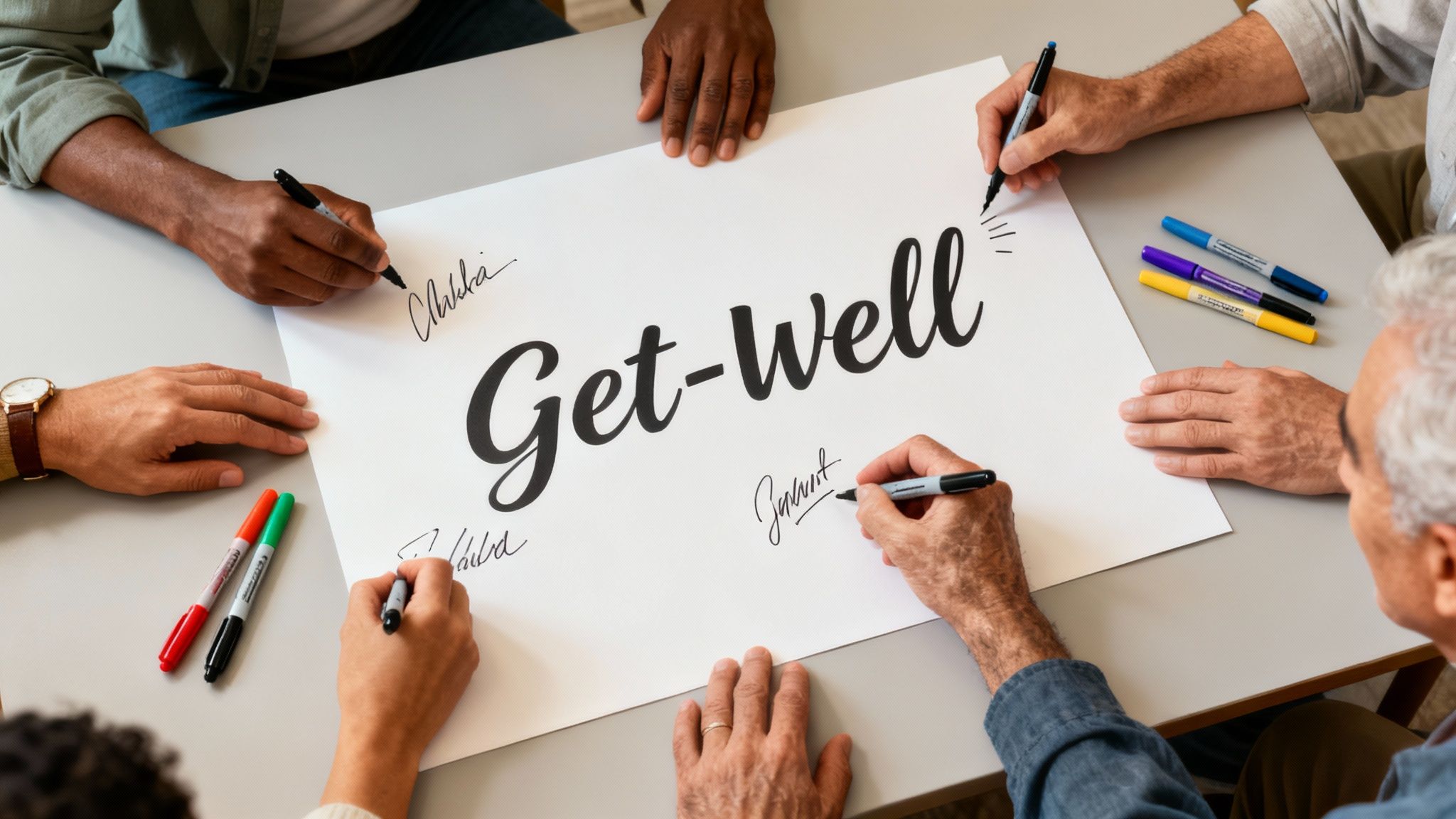
This type of message turns a simple "get well soon" wish into a communal event. It shows that the person's absence is deeply felt and that a network of people is eagerly awaiting their return. It’s a tangible reminder that they are a valued part of a larger whole.
Coordinating a group message requires a bit of organization to ensure it comes together smoothly and effectively.
Pro-Tip: Include a brief, warm introduction and closing from the organizer to frame the individual messages. This helps tie all the contributions together into one cohesive, heartfelt greeting.
Organizing group get-well-soon messages is simple with the right tools. You can learn more about how to send virtual get well soon cards with Firacard to easily collect messages from everyone, no matter where they are.
A simple, straightforward wishes message is direct, clear, and sincere. It cuts through complexity to deliver a core sentiment: you are thinking of someone and wishing them a quick recovery. This approach is perfect for situations where brevity is key, such as text messages or social media comments, or when your relationship with the recipient is more casual, like with a new colleague or an acquaintance. The power of this message lies in its immediate, uncomplicated warmth.
This type of message prioritizes speed and sincerity over elaborate prose. It confirms that you are aware of their situation and that you care, which can be a significant comfort in itself. It is a universally appropriate gesture that is always appreciated.
The goal is to be concise yet warm. Avoid overthinking and let your genuine good wishes come through clearly.
Pro-Tip: Sometimes, a simple message is the most powerful. It avoids putting any pressure on the recipient to write a lengthy response when they should be focusing on rest.
These direct get well soon messages are highly effective, especially when you need to send a supportive note quickly. For collecting multiple simple wishes from a team or group, a digital farewell card can be easily repurposed into a group get-well-soon card, allowing everyone to contribute a short, encouraging note.
| Message type | Implementation complexity | Resource requirements | Expected outcomes | Ideal use cases | Key advantages |
|---|---|---|---|---|---|
| Heartfelt Personal Recovery Message | Medium–High — needs personal knowledge and care | Low — time, memory of shared details | Strong emotional connection; highly memorable | Close family, best friends, long-term colleagues | Authenticity; deep bond strengthening |
| Inspirational and Motivational Recovery Message | Medium — balance optimism and realism | Low — thoughtful wording, examples of resilience | Boosted morale and hope; psychological encouragement | Anyone recovering, especially those with illness anxiety | Uplifting; broadly applicable and easy to personalize |
| Humorous and Light-Hearted Get Well Message | Medium — requires audience-aware humor | Low — creative effort, tone-checking | Mood-lifting and stress relief; risk of misinterpretation | People with strong sense of humor; less serious conditions | Reduces anxiety; memorable and entertaining |
| Professional and Formal Get Well Wish | Low — formulaic, concise | Low — appropriate phrasing, team sign-off if needed | Maintains boundaries; expresses respectful support | Colleagues, managers, clients, formal settings | Appropriate for workplace; easy to share broadly |
| Spiritual and Faith-Based Recovery Message | Medium — requires correct faith context | Low–Medium — appropriate scripture or prayers | Deep comfort and meaning for believers; spiritual support | Individuals whose faith is central; religious communities | Resonates with values; provides lasting spiritual encouragement |
| Action-Oriented Support and Practical Help Message | Medium–High — needs coordination and clear commitments | Medium–High — time, resources, scheduling | Tangible relief; reduced practical burden | Major surgeries, extended recovery, families with children | Concrete assistance; highly meaningful and actionable |
| Collective and Community Support Message | High — coordination of many contributors | Medium — organizing, deadlines, quality control | Strong sense of community support; visible network backing | Popular individuals, teams, schools, religious groups | Demonstrates wide support; shares emotional load |
| Simple, Straightforward Wishes Message | Very Low — quick and direct | Minimal — seconds to compose | Clear, sincere well-wishes; may feel brief | Acquaintances, time-sensitive situations, mass recipients | Fast, universally appropriate, low risk of offense |
Navigating the landscape of "get well soon messages" can feel complex, but as we've explored, the core principle is simple: show you care. Throughout this guide, we've broken down the art of crafting the perfect sentiment, from short and sweet notes to deeply heartfelt expressions, humorous quips, and professional courtesies. We've seen that the most impactful messages are those that are authentic, specific, and tailored to the recipient's personality and your unique relationship with them.
The true power of a get well wish lies not just in the words themselves but in the genuine emotion behind them. A simple "thinking of you" can mean the world to someone feeling isolated by illness or injury. Your message serves as a vital bridge, connecting them to their community and reminding them they are not alone on their road to recovery.
To ensure your get well soon messages always hit the right note, remember these fundamental takeaways:
Choosing the right words is the first step, but how you deliver them matters just as much. In today's digital and remote world, rallying support from a team, group of friends, or a large family can be a challenge. This is where a collective approach shines, making the recipient feel the warmth of their entire community at once.
Platforms like Firacard simplify this process, allowing everyone to contribute their personal messages, photos, and even video clips to a single, beautifully organized digital card. It transforms the classic 'pass the card around' tradition into a seamless experience, perfect for remote teams or friends spread across the globe. By using a Firacard, you're not just sending a note; you're creating a lasting keepsake of collective care. Imagine your colleague or friend opening a card filled with dozens of heartfelt messages—it’s a powerful, modern way to show you're all thinking of them.
For a similar group effort, like bidding farewell to a coworker, you can explore options like their farewell cards. Of course, for more traditional approaches, presentation still makes a difference. Investing in a thoughtful greeting card presentation can elevate even the simplest of handwritten notes. Ultimately, whether you choose a simple text or a comprehensive group card, the most important thing is the genuine care behind your get well soon messages. Your effort, big or small, is a testament to your support and a bright spot in their recovery journey.
Ready to bring your team or group together to send a wave of collective support? Organize all your get well soon messages in one beautiful, memorable place with Firacard. Create a collaborative group e-card in minutes and show them just how many people are in their corner. Visit Firacard to get started today.


Stuck in a rut writing the same old birthday message? This year, ditch the clichés and learn how to create genuinely funny rhymes for birthdays th
Saying goodbye to a teacher is a really big deal, and goodbye teacher cards are a fantastic way to show them how much you appreciate everything the
Graduation marks a monumental milestone, a culmination of years of dedication and hard work. But finding the right words to capture your pride and