10 Fun Employee Awards to Boost Morale in 2026
In today's dynamic workplace, particularly with teams spread across the United Kingdom, United States, Australia, Canada, India and Africa, tr


Dec 16, 2025 | 21 Min Read
If you want to improve your work culture, you have to start with an honest look in the mirror. First, you need to understand what your culture is right now through genuine feedback, and only then can you design changes that will actually stick.
This means you’ve got to move beyond assumptions and really listen to what your team is saying (and not saying) to figure out where you’re strong and where you’re falling short.
Before you can build a better culture, you need a firm grasp of the one you already have. Trying to make changes without a clear baseline is like navigating without a map—you might be busy, but you have no idea if you're heading in the right direction.
A proper culture audit gives you that starting point. It helps you uncover the unspoken rules, hidden frustrations, and genuine bright spots that define day-to-day life in your organisation. The goal here is to get an unfiltered picture of your team's real, lived experiences. This goes way beyond a generic annual survey that everyone clicks through. It takes a mix of methods to get the full story.
To get a true feel for your culture, you need to offer a few different ways for people to share their thoughts safely. If you only use one method, you'll only get one part of the picture.
A solid feedback strategy should include a mix of these:
The quality of your audit hinges on the quality of your questions. Vague questions get vague answers. You need to dig into specific behaviours and experiences.
Try questions like these:
These questions get you past simple satisfaction scores and into the daily realities of communication, appreciation, and psychological safety. That's the level of detail you need to understand what really needs to change.
A culture audit isn't about finding fault; it's about finding the truth. The insights you gather are the foundation for every meaningful improvement you make, helping you focus your efforts where they will have the most significant impact on employee experience.
Once you have this data, you can start to map your cultural landscape. Look for recurring themes and patterns. Maybe you'll discover that while your company talks a big game about collaboration, teams are actually working in silos because there are no good channels for cross-departmental communication. Or perhaps you'll find that people are proud of their work but frustrated by a lack of opportunities to grow.
This analysis is what turns feedback into an actionable plan. Pinpointing these issues early is vital for retention, because not understanding why people are unhappy is an expensive mistake. To dig deeper into this, it's worth exploring the common reasons why employees leave their jobs—you'll see how this audit process directly tackles many of those root causes.
So, you've done your culture audit and you have a much clearer picture of where things stand. What's next? It's time to turn those insights into a real, actionable plan. This isn't about creating some massive, intimidating document that gathers dust. It's about building a smart, strategic roadmap that actually guides your efforts.
The real trick is moving from vague observations like "we need to improve communication" to specific, targeted initiatives that your team will actually care about. When you focus on what they truly value, your efforts will hit the mark and create a meaningful impact.
This simple process shows how to get from raw data to pinpointing the most critical areas for improvement.
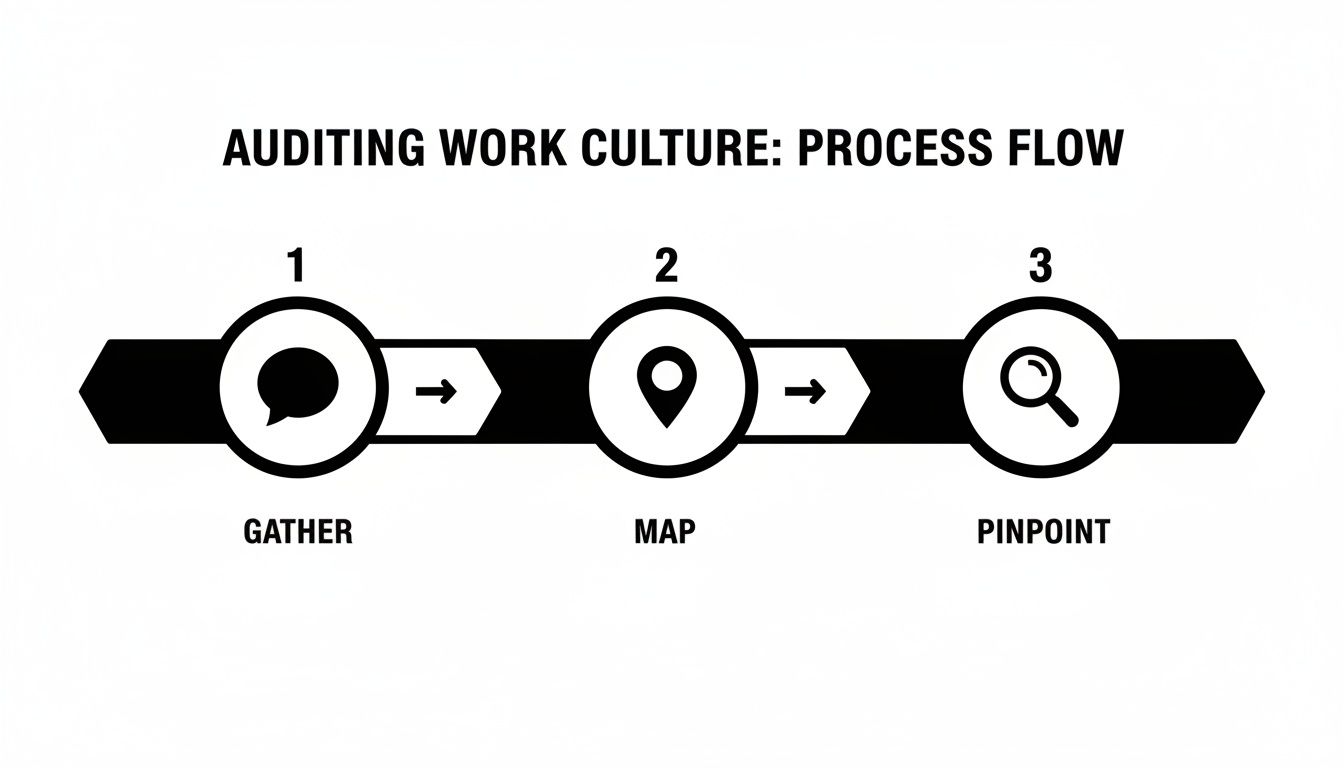
By systematically gathering feedback, mapping out what you find, and then zooming in on specific action areas, you create a solid foundation for your roadmap.
Let's be realistic: you can't fix everything at once. A classic mistake is launching too many initiatives at the same time, which just dilutes focus and burns everyone out. A much smarter approach is to prioritise using a simple Impact vs. Effort Matrix.
It’s a straightforward way to map each potential idea based on two things:
Your first port of call should always be the high-impact, low-effort items. These are your quick wins. They build momentum fast and show the team you’re serious about making a change. The high-impact, high-effort projects are your bigger, more strategic bets that need careful planning.
For instance, maybe your audit flagged that a lack of peer-to-peer recognition is dragging down morale. Launching a simple, low-cost digital recognition system like an ecard by Firacard for team wins is a perfect high-impact, low-effort move. On the other hand, a complete overhaul of your performance management system is definitely high-impact, but it's also high-effort and needs a much longer timeline.
Vague goals get you vague results. It’s that simple. To know if your roadmap is actually working, you need to define what success looks like with clear, measurable targets. This is how you connect your culture work directly to business outcomes.
So, instead of a goal like "improve morale," get specific:
These kinds of metrics give you tangible proof of progress and help justify the investment in your culture. The data from UK workplaces really drives this home; with only 65% of employees reporting engagement, there’s a massive opportunity for improvement. Research shows that UK workers prioritise job security (80%), working with great colleagues (73%), and development opportunities (70%)—all areas that your culture initiatives can directly shape.
The most effective culture roadmaps focus on small, consistent actions rather than large, infrequent events. A weekly shout-out in a team meeting often has a more lasting impact than an expensive annual party.
Embracing small, scalable changes is the key. A simple act like sending a collaborative group birthday ecard or a Christmas ecard reinforces that sense of community and makes people feel seen. These consistent rituals, backed by modern tools, are what your roadmap should be built on. As HR continues to evolve, understanding these tools is crucial, something you can read more about in our guide on digital transformation in HR.
For a deep dive into improving your company's environment from start to finish, check out these 7 practical steps to improve workplace culture. Ultimately, this roadmap isn't just a plan; it's your commitment to making your workplace better, one step at a time.
Once you've got your strategic roadmap sorted, it's time to zero in on what truly makes a difference: making your people feel genuinely valued. Recognition isn't just a fluffy extra; it's a core human need. When people feel seen and appreciated for what they do, their engagement, loyalty, and drive go through the roof.
The problem is, so many recognition efforts fall flat. They're too infrequent, feel impersonal, or are completely disconnected from what actually matters. An annual bonus is nice, sure, but it doesn't provide the daily positive reinforcement that builds a truly great culture. To get this right, you need to weave appreciation into the very fabric of your company's day-to-day.

For appreciation to land properly, it needs to be two things: immediate and detailed. A vague "good job" is okay, but it doesn't really reinforce the behaviours you want to see more of. The real power of recognition is in connecting someone's actions directly to company values or team goals.
Think about it. A team member stays late to help a colleague smash out a critical report before a deadline.
See the difference? This kind of detailed feedback shows you’re actually paying attention and makes it crystal clear what "good work" looks like in practice. The more specific you are, the more meaningful it feels, and the more likely you'll see that positive behaviour again.
Recognition shouldn't just be a top-down affair. When you empower employees to celebrate each other's wins, you create a powerful web of positive reinforcement that spreads across the entire organisation. Peer-to-peer shout-outs often feel more authentic because they come from colleagues who see the day-to-day grind up close. A culture where teammates regularly thank and acknowledge one another builds stronger bonds and smashes down silos.
If you're looking to get started, it’s well worth exploring the strategies behind effective peer-to-peer recognition programs which can completely transform team dynamics.
When employees feel appreciated, they don't just become more engaged; they are far more likely to go the extra mile. Consistent, meaningful recognition is one of the most cost-effective ways you can boost morale and retention.
Building a culture of appreciation also means celebrating the moments that matter in an employee's journey—both professional and personal. These rituals create a sense of belonging and show that the company cares about its people as individuals, not just cogs in a machine.
Even simple, consistent celebrations can have a massive impact:
For remote and hybrid teams, keeping these connections alive can be tough. This is where modern tools can be a game-changer. For example, a platform like Firacard makes it incredibly easy to create a collaborative group card. An entire team can sign a digital birthday ecard with personal messages, photos, and GIFs, creating a shared, memorable experience no matter where everyone is.
These small moments build genuine connection. When a colleague moves on, a group farewell card filled with heartfelt goodbyes becomes a treasured keepsake. Celebrating holidays together with something as simple as a personalised Christmas ecard, where everyone can add their own note, fosters a sense of belonging and shared joy.
Ultimately, these practices do more than just make people feel good. They reinforce the behaviours you want to see, strengthen team bonds, and make every employee feel like a valued part of the community. This consistent and heartfelt appreciation is a non-negotiable for improving your work culture for the long haul.
A great work culture is more than just hitting targets and celebrating wins; it's built on a real commitment to employee wellbeing and psychological safety. This means creating an environment where people feel genuinely supported, safe enough to speak up, and comfortable bringing their whole selves to work without fearing judgement. It's all about laying down a foundation of trust that allows for vulnerability and honest conversations.
Unfortunately, the data shows a worrying pattern. A major UK study reveals that workplace wellbeing has been sliding downwards since its peak in 2020. This dip is hitting younger employees under 35, frontline managers, and men the hardest. Digging deeper, the results show people are feeling less confident about decision-making processes, work pressure, and their own ability to take action—all things that link directly back to management behaviour and psychological safety.

This trend sends a clear message: superficial perks aren't cutting it. To genuinely improve work culture, companies need to rethink the very design of work to protect and support their teams' health.
Psychological safety is the bedrock of any innovative, resilient team. It's that shared belief that it's safe to take interpersonal risks—meaning people feel comfortable sharing ideas, admitting they've made a mistake, or raising concerns without the fear of being shamed or punished. A huge part of building this safety net is actively encouraging open dialogue.
Managers are your first line of defence here. They need to be trained to:
By nurturing this kind of environment, you unlock so much creativity and problem-solving. It’s crucial for leaders to focus on building a speak up culture where feedback is treated as a gift, not a threat.
Psychological safety isn’t about being nice all the time. It’s about creating a culture of candour where difficult conversations can happen productively, leading to better decisions and stronger teams.
Talk about work-life balance is cheap. Real support comes from concrete policies and holding managers accountable. Excessive pressure and burnout are cultural issues, not individual failings. Organisations have to tackle the root causes, which are often found in workload, communication norms, and what leaders expect from their teams.
Consider these practical steps:
Wellbeing initiatives must go beyond surface-level perks to address core cultural issues. The table below compares a few options to show how they can target different needs and impact your culture in meaningful ways.
| Initiative | Primary Target Group | Key Cultural Impact | Implementation Effort |
|---|---|---|---|
| Mental Health First Aid Training | Managers & Team Leads | Increases psychological safety and supportive leadership. | Medium |
| Flexible Work Policies | All Employees | Boosts autonomy and improves work-life balance. | High (Policy Change) |
| "No Meeting" Days | All Employees | Reduces burnout and protects deep work time. | Low |
| Mindfulness Workshops | All Employees | Improves individual resilience and stress management. | Low to Medium |
Choosing the right initiatives depends on where your culture needs the most support. True impact comes from integrating wellbeing into the fabric of how work gets done.
Ultimately, these initiatives show you value your employees as people, not just for their output. While a team might celebrate a big win with a group ecard, the real cultural victory is knowing they didn't have to sacrifice their health to get there. Similarly, celebrating with a group birthday ecard or a Christmas ecard from a service like ecard by Firacard is a brilliant way to build connection, but it has to be backed by a culture that truly respects personal time. The most powerful changes are the ones that weave wellbeing into the very design of work, creating a sustainable and supportive place for everyone to thrive.
A positive work culture isn’t real unless every single person feels they belong. It's easy to throw around buzzwords, but building genuine inclusion means taking a hard look at your daily routines—from team meetings to company parties. The goal is to create an environment where diversity isn't just a metric, but something that’s actively welcomed, respected, and baked into the way you work.
The truth is, a lot of well-meaning company traditions can accidentally leave people out. After-work drinks? That can exclude parents who need to get home or anyone who doesn't drink. Competitive team sports might sideline people with physical limitations. The trick is to stop and think about who might feel excluded, then design experiences that bring everyone into the fold and create a true sense of community.
How your company socialises says a lot about its real commitment to inclusion. A recent UK survey found that while employers host about three company socials a year, many people feel left out. Inclusivity ratings drop sharply for remote workers (71%), non-drinkers (72%), and neurodivergent staff (69%). That's a huge disconnect.
Bigger picture, we see other gaps too—women still hold only 7% of FTSE 350 CEO roles. On the flip side, companies that genuinely prioritise work–life balance have much higher inclusion scores. It proves that respecting people's time and lives is a non-negotiable part of belonging. You can dig into these findings and understand the full social culture report.
So, how can you make your events more inclusive? Start by mixing things up:
This mindset should carry over into your daily interactions, too. Are your meetings set up so introverts get a real chance to speak? Are your communication channels easy for everyone to access, no matter where they are? These small, intentional tweaks make a massive difference.
True belonging isn't about fitting into a pre-existing mould. It’s about creating a culture where every individual’s unique background and perspective is seen as an asset that strengthens the whole team.
Genuine inclusion can’t be a side project; it needs to be woven into the very fabric of your company, from hiring right through to everyday celebrations. This means looking at your core processes to spot and remove unconscious bias. For instance, standardising interview questions is a simple way to make sure every candidate is judged on the same criteria, keeping things fair.
Celebrations are a perfect opportunity to build community in an inclusive way. When a team member has a birthday, using a digital birthday ecard lets everyone—especially remote colleagues—chip in with personal messages. It creates a shared moment of appreciation that no one misses out on. The same goes for holidays; a collaborative Christmas ecard can bring the whole team together while respecting everyone's different traditions.
Tools like an ecard by Firacard make it easy to ensure no one is forgotten. A group ecard becomes more than just a card; it’s a tangible symbol of connection, reinforcing that every person’s milestones matter to the team. By embedding these kinds of inclusive practices into your recognition rituals, you're not just saying everyone belongs—you're proving it, day in and day out.
Diving into a project to reshape your work culture often brings up a ton of questions. Leaders and HR pros are always wondering about the real timelines, what kind of budget is needed, and where to focus their energy for the biggest impact. Let's tackle some of the most common queries with straightforward, practical advice to help you on your way.
Let's be honest: meaningful culture change is a marathon, not a sprint. While you can definitely see some encouraging shifts from new initiatives within a few months, getting those new behaviours and mindsets to stick usually takes about 18-24 months.
The real secret is consistency. Small, steady actions, like celebrating team wins with a group ecard, have a much bigger impact over time than a single, flashy event. Think continuous improvement and keep your finger on the pulse with regular surveys and feedback sessions.
While there are many moving parts to a great culture, if I had to pick one thing, it's this: leadership commitment and behaviour. Your leaders, and especially your middle managers, shape an employee's day-to-day reality more than anyone else. If they aren't living and breathing the values you're trying to build, any new initiative is dead in the water.
The very first step in any culture project should be getting genuine buy-in from your entire leadership team. If they don't live the culture, no one else will. This means giving them the training and support they need to lead by example.
You don't need a massive budget to create a brilliant culture. Some of the most powerful changes are completely free and hinge on behaviour, not expensive perks.
A peer-to-peer recognition programme is a fantastic low-cost, high-impact option. Simple tools like sending a group ecard by Firacard for a birthday or work anniversary can build powerful connections without breaking the bank. You can find some beautiful options for a birthday ecard or a Christmas ecard to get things started.
The return on investment for culture isn't just a warm, fuzzy feeling—it's something you absolutely can and should measure with hard business metrics.
Start tracking the before-and-after of things like:
Use pulse surveys to keep an eye on employee engagement and your eNPS (Employee Net Promoter Score). When you see these numbers trending up after putting culture initiatives in place, you’ve got a clear, quantifiable return on your investment. It’s solid proof that a great culture is great for business.
Ready to build a culture of appreciation, one celebration at a time? Firacard makes it easy to create shared moments that strengthen team bonds. Start creating a free group ecard today and see the difference it makes.


In today's dynamic workplace, particularly with teams spread across the United Kingdom, United States, Australia, Canada, India and Africa, tr
Wishing your manager a happy birthday can feel like navigating a delicate social tightrope. You want to be genuine and appreciative without soundin
Planning a baby shower involves many details, and the right visuals are essential for tying everything together, especially when celebrating with a