50th Birthday Wishes: 8 Meaningful Templates
Finding the right words for a 50th birthday can feel oddly difficult. You want to honour a major milestone without making the message sound like a


Dec 1, 2025 | 17 Min Read
Saying goodbye to someone you love is one of life's toughest moments. It’s a delicate process of sorting through your feelings, figuring out the best way to honor the relationship, and finding the words when your heart is full. It's really an act of closure that calls for emotional preparation, thoughtful communication, and a whole lot of self-compassion as you move through it, whether you’re parting because of distance, a breakup, or a final farewell.
We've all had to say goodbye at some point, but that doesn't make it any less personal or painful. The ache of a farewell is tied directly to the depth of the connection you share, which means every situation is completely unique. There's no script to follow, and whatever you're feeling—sadness, anger, confusion—is perfectly okay.
This guide is meant to be a kind, practical roadmap for this difficult journey. We'll walk through real-world advice to help you find a sense of peace and honor your relationship, turning something painful into a meaningful act of love and respect.
A proper goodbye isn't just a formality; it serves a huge psychological purpose. It’s the period at the end of a sentence, the closing of a chapter. It gives us a framework to process grief, share our final thoughts, and finally start to heal. Without that moment of closure, we can get stuck with nagging questions and feelings that never quite settle.
Across the globe, rituals around goodbyes and funerals are essential for helping people cope. A study covering 14 countries shows an incredible variety of traditions, from simple gestures like throwing flowers to elaborate, days-long ceremonies. While the customs differ, they all point to the same thing: our deep-seated need for formal closure. You can read more about these cultural practices on PMC.
A good goodbye is an act of honor. It acknowledges the value of the relationship and gives both people the dignity of a clear, compassionate ending. It's the final gift you can offer one another.
Ultimately, a farewell should bring a sense of peace to everyone involved. That means getting clear on what you need and also considering the other person’s needs. It really boils down to a few key things:
Navigating this is so much easier when you have people to lean on. For more on this, check out our article on building a support system for tough times.
Before you can say a meaningful goodbye to someone else, you have to get honest with yourself. This is arguably the most crucial part of the whole process because it sets the tone for everything that follows and helps you avoid future regrets. Think of it less as a single event and more as a journey that starts inside your own heart.
The emotions swirling around a big farewell can be a tangled mess—sadness, anger, confusion, maybe even a little relief. The first step is just to let yourself feel whatever comes up, without judging it. It's so common to get stuck in a loop of "coulda, woulda, shouldas." That's just our brain's way of trying to make sense of a painful, messy situation. Give yourself permission to feel it all.
Once you’ve had a moment to sit with your feelings, you can start to think about your intention. What do you actually hope this goodbye will accomplish? Having a clear goal will help guide your words and keep the conversation focused and healing for everyone.
Your main goal might be to:
For many, the toughest goodbyes are at the end of a life. In these moments, understanding options like compassionate in-home hospice care can bring a profound sense of comfort and dignity to a difficult time.
With a goal in mind, it's time to sort through all the thoughts racing through your head and decide what really needs to be said. Journaling is a fantastic tool for this. Just write it all down—your favorite memories, your regrets, your fears, and the words you’re struggling to find. The simple act of putting pen to paper can untangle a lot of emotional knots and show you the core message you truly want to share.
The point of preparing isn't to write a perfect script. It's to connect with your own feelings so deeply that when the moment arrives, you can speak from a place of genuine love, not from a place of panic or confusion.
This kind of self-reflection is what turns a painful moment into a final, powerful act of connection, honoring both you and the relationship you shared.
How you say goodbye is just as important as what you say. The right approach makes space for a real, honest connection, making sure your message lands the way you mean it to. The best choice really comes down to your relationship, the situation, and frankly, what feels right in your gut.
There’s an intimacy to an in-person farewell that you just can't replicate. It’s in the shared glance, the comforting touch—the little things words can’t always capture. But let's be real, that’s not always possible, or even emotionally doable.
When face-to-face isn't an option, a handwritten letter is a beautiful, timeless alternative. It gives you the quiet space to gather your thoughts, edit, and get it just right without the pressure of an immediate reaction. Plus, it becomes a tangible keepsake for the other person.
A phone or video call can be a great middle-ground, giving you that immediate back-and-forth even when you’re miles apart. Just seeing someone’s face on a screen can make a world of difference, bridging the physical distance in a way a text or email never could.
Getting clear on your goal for the conversation can help you choose the best way to deliver your message. Are you seeking closure? Offering forgiveness? Or simply telling them you love them?
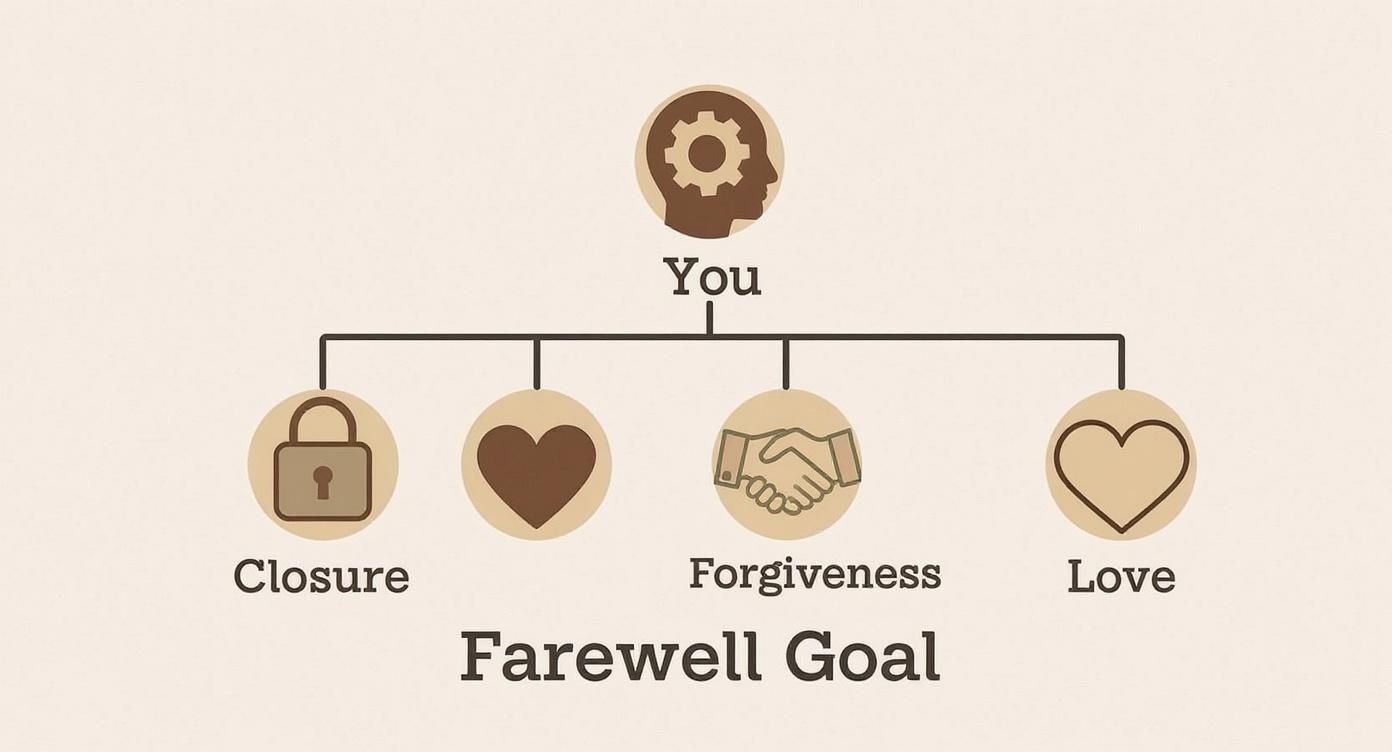
Knowing what you truly want to achieve is the first step toward saying goodbye with grace and compassion.
What about when a whole group needs to say farewell? Think of a beloved colleague leaving for a new job or a good friend moving across the country. Trying to get everyone to sign a physical card can be a logistical nightmare. That’s where a modern solution like a digital group card from Firacard comes in handy, letting friends and coworkers share memories, photos, and wishes all in one place.
This collective effort turns a simple goodbye into something much bigger—a beautiful, lasting tribute. It honors the connection and gives the person a powerful reminder of the mark they left on everyone's lives.
It's also worth remembering that different cultures have their own unique and powerful ways of saying goodbye. For example, the “lamay” in the Philippines is a wake that can last up to seven days, blending deep mourning with a community celebration of life. Learning about these traditions can offer a fresh perspective.
There’s no single "right" way to say goodbye; it's a deeply personal decision. This table breaks down the different methods to help you figure out which one might be the best fit for your situation.
| Method | Best For | Pros | Cons |
|---|---|---|---|
| In-Person | Deep, personal connections where you can speak from the heart and read body language. | Gives you immediate feedback and a powerful emotional connection. | Can be incredibly overwhelming; not always physically possible. |
| Handwritten Letter | When you need to get your thoughts out perfectly without interruption or pressure. | Creates a tangible memento; lets you carefully craft your words. | No immediate interaction; your tone could be misread. |
| Phone/Video Call | Goodbyes over long distances when you still want to see their face or hear their voice. | Offers real-time conversation and emotional expression. | Can be tough to find a private, quiet time to talk without interruptions. |
| Group Farewell Card | Colleagues leaving, friends moving, or group memorials and tributes. | Gathers messages from everyone in one place; creates a shared sense of community. | Less intimate and personal than a one-on-one conversation. |
In the end, whether you're creating a memorial card or preparing for another kind of parting, what matters most is sincerity. The method you choose is just the vessel for your message. To learn more about creating a meaningful tribute, check out our guide on how to honor loved ones with unique memorial cards.

Knowing what to say when a goodbye is on the horizon can feel completely paralyzing. The pressure to find the "perfect" words often leaves us speechless right when our hearts are the fullest.
But here’s the thing: your goal isn’t a flawless speech. It’s an honest expression of your feelings that truly honors the relationship. Think of these examples not as rigid scripts, but as gentle starting points to help you find your own authentic voice in some of life's toughest moments.
Goodbyes that come with distance are often bittersweet. The connection is still there, but the day-to-day reality of the relationship is about to shift. Your words should mirror that mix of emotions—excitement for their new chapter and the real sadness of seeing them go.
When a coworker is leaving, a group effort can be incredibly powerful. Creating a digital farewell card lets everyone chip in with a favorite memory or inside joke. It transforms a simple goodbye into a beautiful, collective keepsake they can look back on whenever they’re feeling a little homesick.
Ending a romantic relationship calls for a delicate balance of honesty, kindness, and clear boundaries. The aim is to give both of you closure without causing unnecessary pain or leaving the door open to confusion down the road.
"I will always cherish the memories we made and the person I became when we were together. I'm grateful for that time, even though our paths are heading in different directions now. I wish you nothing but happiness."
This approach validates the past while being firm about the future. It’s a way of saying, "what we had mattered, and now it is over." It’s about offering dignity to the relationship and the separation itself.
This is arguably the most difficult goodbye of all, one that’s stretched over time and filled with a universe of complex emotions. In these moments, your presence and simple, heartfelt words often mean far more than any grand declaration. It’s not about finding a magic phrase; it’s about being a steady, loving comfort.
Your words can offer reassurance and even permission.
These moments are about connection, not just conversation. Holding their hand, playing their favorite music, or just sitting together in comfortable silence can be the most profound way to say goodbye.
After someone is gone, your words shift to honoring their memory and offering comfort to those who are grieving. This is where sharing stories becomes a powerful act of love, a way to keep their spirit alive.
It’s completely normal to struggle to find the right words in these situations. If you need a little more help, you can find some thoughtful examples in our article on what to write in a sympathy message.
Here are a few ways to frame your thoughts:
Ultimately, the best way to learn how to say goodbye to someone you love is to speak from the heart. Authenticity, no matter how simple or imperfectly phrased, will always resonate more deeply than the most eloquent, rehearsed speech.
When the time finally comes to talk, knowing how to handle the conversation can make all the difference. You've done the prep work to get here, and the real goal now is to create a moment of genuine, compassionate connection, even when emotions are high. This isn't about having control; it's about being present and honest.
The trick is to speak from your heart, not just your head. Instead of just stating facts, try sharing how you feel using "I" statements. For example, saying, "I felt hurt when…" lands very differently than, "You hurt me when…" That simple shift keeps the focus on your own experience and opens the door for dialogue instead of defensiveness.
Your whole approach can set a gentle and respectful tone. The focus should be on validating feelings—yours and theirs—and making sure the conversation feels more like a healing moment than another source of pain.
Here are a few things you should definitely DO:
Just as important as what you do is what you DON'T do. Sidestepping these common traps will keep the conversation from turning into a blame game or rehashing old arguments, which only makes grieving harder for everyone.
It's crucial that you:
The global COVID-19 pandemic completely upended how we say goodbye, with so many restrictions preventing us from holding traditional rituals. This massive disruption really drove home how vital these farewells are for our mental health and our ability to process grief. To dig deeper into this, you can learn more about how death rituals affect mourning.

It’s easy to think of a goodbye as a final, painful ending. But it's also the start of a new chapter, even if the path ahead feels foggy and uncertain. Healing really does begin with the small, intentional steps you take just for yourself.
First, give yourself permission to feel everything—the good, the bad, and the messy—without any judgment. Healing isn’t a straight line. Some days will feel lighter, almost hopeful, while others might feel impossibly heavy with the weight of the goodbye. That’s a completely normal part of grieving and finding your footing in a new reality.
The key is to meet yourself with compassion, wherever you are. This is your journey, and there’s no right or wrong timeline to follow.
Building new routines or small rituals can bring back a sense of stability and purpose when everything else feels shaky. These aren’t about forgetting what happened, but about integrating the experience into your life in a healthy way. They help you carve out a new normal while still honoring what you’ve lost.
If you’re not sure where to start, try one of these gentle practices:
A thoughtful goodbye is a crucial first step, but the journey doesn't end there. It’s okay to feel a mix of emotions long after the final words have been said. Healing is not a destination but a continuous process of rediscovering yourself.
Ultimately, saying goodbye is a deeply personal journey. Learning how to let go of someone and heal is often the next step on that path. Be patient and incredibly kind to yourself as you figure out what comes next.
Each step forward, no matter how tiny, is a testament to your resilience. With time, you’ll find a way to carry the love you shared with you, creating a future filled with new hope.
When words are hard to find, a collective message can speak volumes. Firacard helps you gather heartfelt wishes, memories, and photos from everyone who cares into one beautiful, lasting tribute. Create a group farewell card to give them a goodbye they’ll never forget.


Finding the right words for a 50th birthday can feel oddly difficult. You want to honour a major milestone without making the message sound like a
You've just heard that someone you care about has lost a parent. The funeral is approaching, friends are scattered across cities, and nobody w
You can have hundreds of friendly contacts and still feel unsure who would answer when life gets messy, so what makes a friendship good, and how ca