8 Unforgettable Styles of Funny Rhymes for Birthdays (2026 Edition)
Stuck in a rut writing the same old birthday message? This year, ditch the clichés and learn how to create genuinely funny rhymes for birthdays th


Nov 26, 2025 | 20 Min Read
Effective employee appreciation is all about consistent, authentic recognition that makes your people feel seen and valued. It's not just about grand gestures; it’s woven into the daily fabric of your workplace, from a simple “thank you” in the hallway to formal programs celebrating major milestones. And to truly hit home, it has to be personal.
Let's cut to the chase: appreciating your employees isn't a "nice-to-have" HR initiative anymore. It's a core driver of business success. Think of it less as an expense and more as a strategic investment in the people who build your company every single day.
When employees feel genuinely valued, the ripple effects are massive and measurable. It’s not just about warm fuzzies; it's about building a resilient, high-performing team. The psychology is straightforward—acknowledgment validates effort, reinforces the right behaviors, and creates a powerful cycle of engagement and contribution.
When you get appreciation right, you'll see a direct impact on the numbers that matter most.
Despite all these benefits, the data shows a worrying trend: recognition is on the decline. A recent State of Recognition Report from Achievers found that weekly recognition dropped by a staggering 10% in just one year. Even more concerning, manager-led recognition fell from 20% to 15%.
These aren't just numbers on a page. Employees who get a shout-out every week are nine times more likely to feel a true sense of belonging and six times more likely to see a long-term future with their company. This data is a wake-up call for leaders everywhere. It's time to reverse this trend and put appreciation back at the top of the agenda.
Big, formal award ceremonies are nice, but they aren't what builds a great company culture. The real magic happens in the small, consistent moments—the everyday gestures that become a natural part of your team’s rhythm. This is how you shift from a once-a-year event to a genuine habit of recognition.
The idea is to make appreciation a reflex, not a task on a checklist. It's about catching people doing great things and acknowledging it right then and there. A culture of appreciation is built one sincere "thank you" at a time.
You don't need a huge budget to make people feel valued. In fact, some of the most powerful recognition tools are completely free and take just a few seconds. It’s all about shifting your mindset to spot these opportunities.
Think about a manager kicking off the morning stand-up by specifically calling out a team member for burning the midnight oil on a critical fix. That does more than just say thanks. It publicly validates their effort, sets a standard for the whole team, and shows everyone that hard work doesn't go unnoticed. That’s how you show appreciation in a way that feels authentic and immediate.
"Feeling appreciated is one of the top motivators for employees to do great work. It's not just about rewards; it's about being seen and acknowledged for the effort you put in every single day."
This approach also builds psychological safety, which is a cornerstone of any high-performing team. When people know their contributions matter, they're far more likely to speak up, share new ideas, and take creative risks. You can learn more about fostering this kind of environment by exploring ways to improve your workplace culture.
Making appreciation part of your daily workflow just takes a little intentionality. Here are a few simple but powerful things you can start doing today:
This image sums up the powerful business outcomes that come from a culture where employees feel consistently valued.
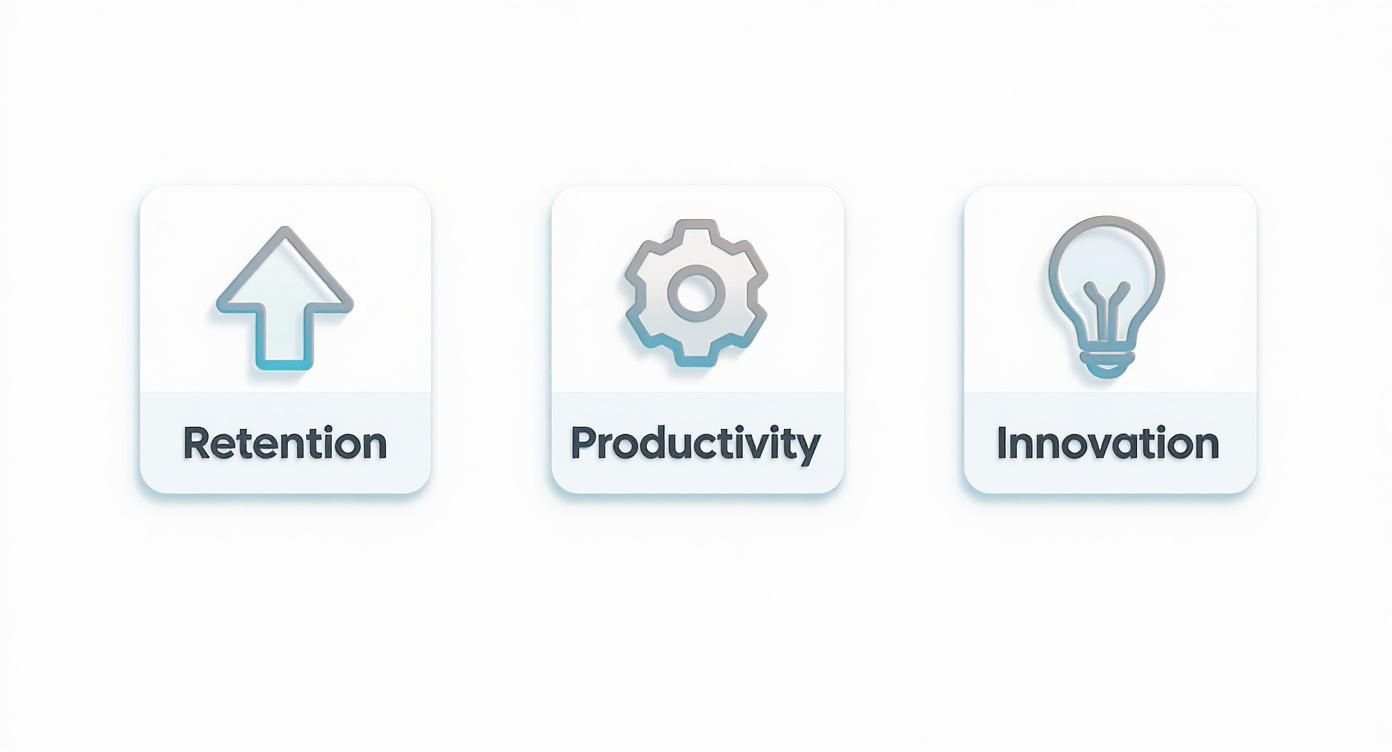
As you can see, consistent appreciation is a direct line to better retention, higher productivity, and a more innovative team.
A truly appreciative culture isn't just top-down; it flows in every direction. The best way to make it stick is to encourage peer-to-peer recognition.
Set up simple systems for employees to thank each other. This could be a dedicated Slack channel, a "kudos" corner in your weekly meeting, or even a physical "wall of fame" in the office.
When team members feel empowered to celebrate each other's wins, it strengthens bonds and creates a positive feedback loop. It reinforces that everyone's contribution matters, making appreciation a shared responsibility. Just make it easy, visible, and fun for people to join in.
While those small, daily thank-yous build the backbone of a great culture, formal recognition programs are what give it structure. They're how you consistently celebrate major wins and milestones. When done right, these programs stop feeling like a chore and start genuinely inspiring your entire team.
The trick is to create a system that’s fair, transparent, and actually means something to people.
We've all seen "Employee of the Month" programs turn into popularity contests or just rotate predictably among the usual suspects. To sidestep that trap, your entire framework needs to be built on clear, objective criteria that tie directly back to your company's core values. This makes sure you're rewarding specific, impactful work—not just office politics.
You don't have to throw out traditional programs entirely. Just give them a modern, inclusive refresh. The goal is to celebrate winners in a way that energizes everyone, showing them that exceptional work gets noticed and rewarded.
Here’s how you can breathe new life into some old concepts:
Fairness is everything. If your team smells even a hint of favoritism or fuzzy rules, the whole program will backfire and create resentment instead of motivation. The rules should be so clear that anyone in the company can look at a winner and understand exactly why they were chosen.
Start by defining what "excellent" looks like in different roles and departments. Tie your recognition criteria to measurable outcomes and behaviors that push your company forward. For example, if a core value is "Customer Obsession," a criterion could be "consistently high client feedback scores" or "developed a new process that boosted customer satisfaction."
It’s a bit shocking, but a striking 27% of employees said they’d want to replace their managers because of poor recognition. That stat alone shows just how critical fair, manager-led appreciation is for keeping your best people.
The data consistently shows a major gap between the appreciation people want and what they get. For instance, one survey found that only 31.5% of employees are recognized on a weekly basis. That lack of consistent, formal acknowledgment can really tank morale and push people out the door.
How you celebrate a winner is almost as important as the award itself. The celebration should lift up the whole team, not just one person. Make it a public and exciting event—shout it out in an all-hands meeting, a company-wide email, or on a dedicated recognition platform.
When you announce the winner, tell their story. Don't just say what they did; explain how they did it and the impact it had. This storytelling approach does two things: it makes the recognition feel way more personal and powerful for the recipient, and it gives everyone else a clear, inspiring example to follow.
Ultimately, a well-run formal program should work hand-in-hand with daily praise and peer-to-peer recognition programs to create a complete culture of appreciation.
If daily gestures are the foundation and formal programs are the structure, then personalization is what makes your employee appreciation strategy feel human. Let’s be honest, generic, one-size-fits-all rewards just don’t cut it anymore. To make someone feel truly seen, you have to show that you get what actually matters to them.
This is where you go beyond just checking a box and start building real connections. A company-branded mug says, "You work here." A gift card to their favorite local coffee shop says, "I listen when you talk, and I remember what you like." The difference in impact is huge.

So, how do you learn these personal details without being creepy? It’s way simpler than you might think. Most of the time, it just happens through normal, everyday conversations.
Pay attention during your one-on-ones. When an employee mentions they’re excited about a new book from their favorite author or that they're training for a marathon, make a mental note. These little details are absolute gold for planning future recognition.
If you want a more organized approach, try a simple "preference survey" during onboarding. You can ask things like:
This kind of information gives you a ready-made playbook for showing appreciation that will actually land. When recognition is tailored, its value skyrockets. The numbers back this up, too—one report found that 74% of employees say receiving personalized messages of thanks makes the recognition feel way more valuable.
Once you have these tidbits, you can start crafting appreciation that feels thoughtful and unique. It's all about matching the gesture to the person.
To make your appreciation more tangible, you could explore some unique employee recognition gift ideas. But remember, it's not always about spending money on gifts.
Here are a few examples of what this looks like in the real world:
Personalization is the difference between an employee feeling like a number and feeling like a valued member of the team. It’s a direct investment in the human connection that keeps people engaged and loyal.
These small, specific gestures show a level of care that money can't buy. For more inspiration, check out our guide on how to boost employee morale and productivity with personalized messages.
Personalization gets even better when it’s a team sport. Big moments like work anniversaries, birthdays, or farewells are the perfect chance to get everyone involved, turning a simple nod into a heartfelt, collective celebration.
This is where the old tradition of passing a card around the office gets a much-needed modern update. Instead of a paper card with a bunch of rushed signatures, digital platforms make it easy for everyone to join in, especially for remote and hybrid teams. A tool like www.firacard.com lets the whole team add personal messages, photos, and even GIFs to a single, beautifully designed digital card.
Imagine an employee leaving after several years. A group card filled with inside jokes, favorite memories, and sincere well-wishes from dozens of colleagues becomes a deeply meaningful keepsake. It captures the collective voice of the team, which is so much more powerful than a simple gift from the company. These collaborative farewell cards turn a departure into a true celebration of their contributions, making them feel appreciated right up to their last day.
Showing employee appreciation feels great, but let's be real—in business, what gets measured gets managed. If you want to prove the value of your recognition efforts, you have to connect them to real results.
This isn't about slapping a dollar sign on a "thank you." It's about showing how a genuine culture of appreciation can become a strategic driver for the entire organization. When you can draw a clear line from your recognition programs to positive, tangible changes, it stops being a "nice-to-have" expense and becomes an essential part of your business strategy.
To really understand the impact of how you show employee appreciation, you need to look at both the hard numbers and the human stories. The data tells you what's happening, and the feedback tells you why.
Here are a few of the most important things to keep an eye on:
A study by Great Place to Work found that feeling appreciated is the single top motivator for employees to do great work. That tells you the ROI isn’t just about the money; it’s about tapping into what truly drives people to perform at their best.
Numbers only paint half the picture. To really get what’s working (and what’s not), you need to talk to your team and gather some qualitative feedback.
This is where you'll find the nuances—the little details that tell you why one form of recognition landed perfectly while another fell flat. These conversations add much-needed color and context to your data.
How to Gather Real Feedback
| Method | Description | Example Question |
|---|---|---|
| Exit Interviews | When someone is leaving, they're often at their most honest. Ask them directly about the recognition culture—it’s a goldmine for spotting blind spots. | "Did you feel like your hard work was consistently seen and valued during your time here?" |
| Small Focus Groups | Pull together small, diverse groups for an informal chat about appreciation. It’s a safe space for people to open up and give candid feedback. | "What's the most meaningful recognition you've received at this company? What made it stand out?" |
| Performance Reviews | Bake it right into your existing processes. Add a section to performance reviews to talk specifically about recognition. | "Let's talk about how you prefer to be recognized. What actually motivates you and makes you feel valued?" |
When you combine hard data with real human stories, you get a 360-degree view of your recognition strategy's ROI. This balanced approach not only proves its value to leadership but also gives you the insights you need to keep making it better. After all, when you show employee appreciation in a way that is both heartfelt and measurable, you build a stronger, more connected company from the inside out.
Alright, we've talked a lot about the why and the what of employee appreciation. Now it's time to roll up our sleeves and get to the how. This is where the rubber meets the road—turning all those great ideas into a real, tangible plan that actually works.
Genuine recognition is one of the most powerful tools you have to build a team that's resilient, successful, and genuinely happy to be there.

The trick is to make this feel manageable, not like another mountain to climb. We've covered the essentials: consistency, formal programs, personalization, and measuring your impact. Let's put it all together into a straightforward strategy.
Before you start adding new things to the mix, you need a clear picture of what's happening right now. A quick, honest audit can shine a light on surprising gaps and easy wins. Grab a notepad and ask yourself a few questions:
This isn't about judgment; it's about getting a baseline. This quick self-assessment will show you exactly where to focus your energy first.
If you don't plan for it, it won't happen. Appreciation can easily become an afterthought buried under deadlines and urgent tasks. A simple calendar is your secret weapon for staying consistent and making sure important moments get the celebration they deserve.
Building a culture of appreciation doesn't happen by accident. It requires intentionality, consistency, and a genuine desire to see and celebrate the people who drive your business forward every single day.
For team milestones like work anniversaries or saying goodbye to a valued colleague, a tool like Firacard can be a total lifesaver. Their group farewell cards make it incredibly easy for the whole team to pitch in with messages, GIFs, and photos. It turns what could be a simple goodbye into a shared, heartfelt experience that people actually remember.
Your action plan is simple: start small, be consistent, and always make it personal.
As you start weaving more appreciation into your company culture, some questions are bound to pop up. Let's tackle some of the most common ones managers and HR leaders ask when they're getting serious about recognition.
There’s no magic number here, but a solid rule of thumb is to set aside 1-2% of your total payroll for recognition efforts. But honestly, the best strategies don’t just rely on a big budget. They masterfully blend low-cost rewards with completely free, heartfelt gestures.
Your first move should always be to build a culture where free recognition flows naturally—think consistent verbal praise, shout-outs in team meetings, and a lively peer-to-peer recognition channel.
When you do spend money, start small and see what resonates before you go big. A small, thoughtful monthly reward often lands better than a massive, impersonal annual bonus. Consistency trumps extravagance every time.
I've seen a few common pitfalls completely derail well-intentioned programs. The top three are definitely inconsistency, a lack of personalization, and perceived favoritism.
If recognition only happens once a year during performance reviews, it feels forced and empty. Similarly, giving every single person the exact same generic gift card sends a clear message: you haven't really been paying attention to who they are as individuals.
And finally, if the same handful of people get all the praise, it's a huge demotivator for everyone else. You can sidestep this by creating clear, transparent criteria for recognition that everyone understands. Make a real effort to spot and celebrate great work from every corner of the company, not just the usual suspects.
With remote teams, you have to be intentional. You don't have those spontaneous water-cooler moments or casual hallway chats, so being deliberate is everything. Make their wins visible by giving them public kudos in shared digital spaces like Slack or Microsoft Teams.
Digital tools are your best friend here. Sending a group e-card from a service like Firacard for a birthday or work anniversary lets the whole team chime in with personal messages, no matter where they're located. It’s a simple way to recreate that "passing the card around the office" feeling.
Sending personalized gifts or curated care packages straight to their homes also makes a massive impact. But most importantly, schedule regular one-on-one video calls just to give praise and connect. That personal touch goes a long way in bridging the distance.
Ready to make appreciation a team sport? With Firacard, you can create beautiful group greeting cards that everyone can sign from anywhere. It’s perfect for making birthdays, work anniversaries, or even goodbyes feel special and collaborative. Check out their farewell cards to see how easy it is to send someone off with warm wishes from the whole crew.


Stuck in a rut writing the same old birthday message? This year, ditch the clichés and learn how to create genuinely funny rhymes for birthdays th
Saying goodbye to a teacher is a really big deal, and goodbye teacher cards are a fantastic way to show them how much you appreciate everything the
Graduation marks a monumental milestone, a culmination of years of dedication and hard work. But finding the right words to capture your pride and