8 Unforgettable Styles of Funny Rhymes for Birthdays (2026 Edition)
Stuck in a rut writing the same old birthday message? This year, ditch the clichés and learn how to create genuinely funny rhymes for birthdays th


Nov 3, 2025 | 19 Min Read
The transition to hybrid work has unlocked flexibility, but it has also created a new, complex challenge: building genuine team cohesion. When some colleagues share an office space while others collaborate from home, the spontaneous interactions that forge strong bonds can easily disappear. This leaves remote employees feeling disconnected and in-person staff siloed, threatening the very fabric of a unified company culture. Standard video call happy hours often fall flat, failing to bridge this physical and psychological divide. The key isn't just to connect people online; it's to create shared experiences that are equitable and engaging for everyone, regardless of their location.
This guide moves beyond generic advice to provide a curated list of actionable hybrid team building activities. We will detail specific, creative ideas designed to intentionally include both your in-office and remote team members in a meaningful way. You’ll find practical steps, facilitation tips, and tool recommendations to execute everything from collaborative design workshops to hybrid volunteer days. For teams that are heavily remote, it's also useful to consider how to adapt these concepts. To move beyond simple video calls and truly engage remote participants, exploring dedicated virtual team building activities can provide fresh inspiration. This list is your blueprint for fostering a truly integrated, resilient, and connected hybrid team.
Virtual escape rooms are one of the most immersive and exciting hybrid team building activities available. In this activity, remote and in-office employees collaborate in real-time to solve a series of puzzles and challenges within a digital, story-driven environment. The goal is to "escape" a themed room before time runs out, requiring sharp problem-solving skills and seamless communication.
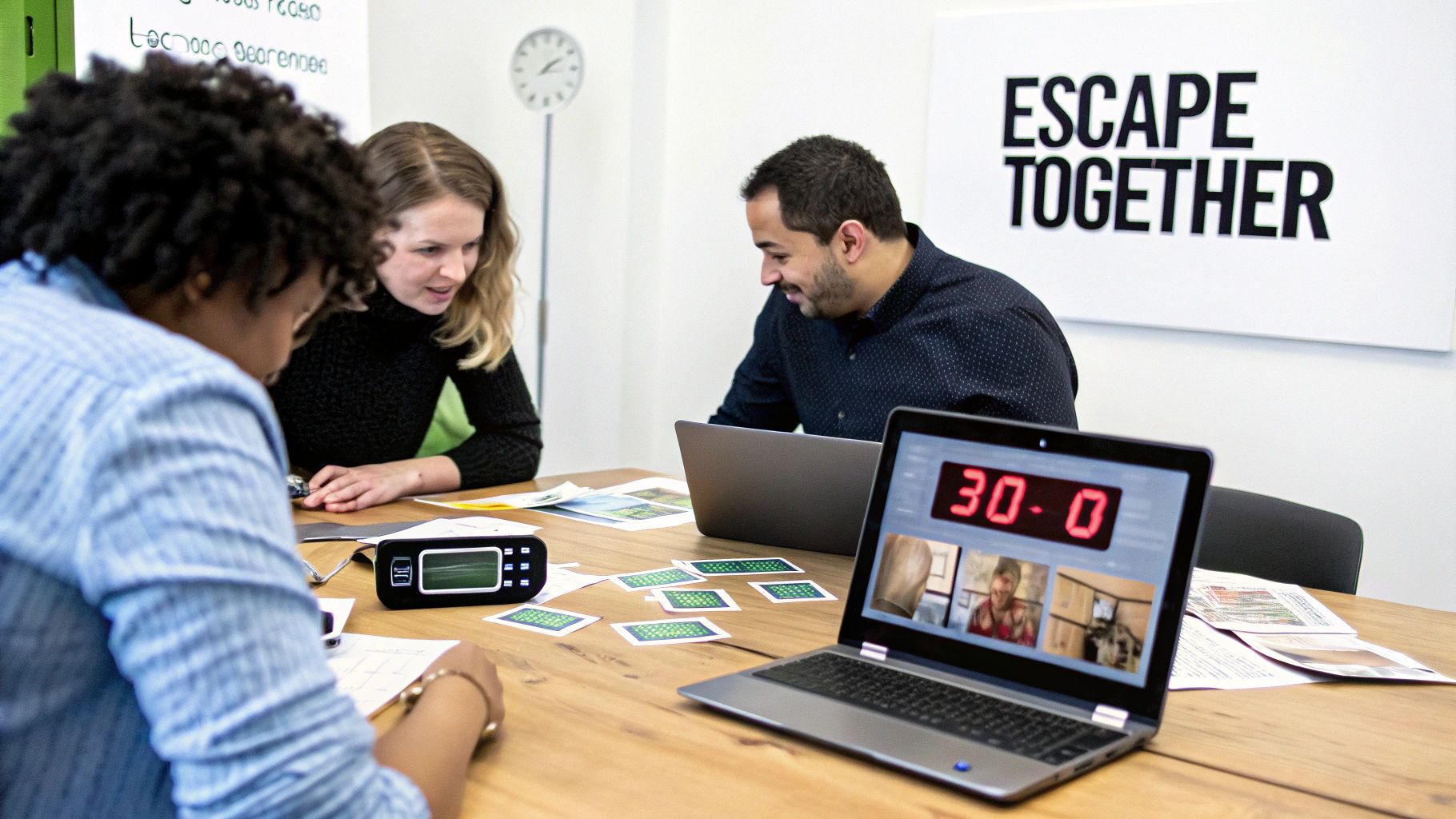
This format excels at breaking down the physical barriers between team members. In-office staff can gather in a conference room, projecting the game onto a large screen, while remote colleagues join via video conference. Everyone sees the same clues and interacts with the same digital objects, creating a unified and engaging experience. Platforms like The Escape Game Remote Adventures use a live host with a camera, allowing the team to direct a real person through a physical escape room.
Hybrid cooking classes are engaging and delicious hybrid team building activities that bring colleagues together over a shared culinary experience. In this format, both remote and in-office employees receive ingredient kits and follow a professional chef in real-time via video conference. The activity fosters creativity and patience as everyone learns a new recipe, shares their final creations, and enjoys a meal together, regardless of their location.
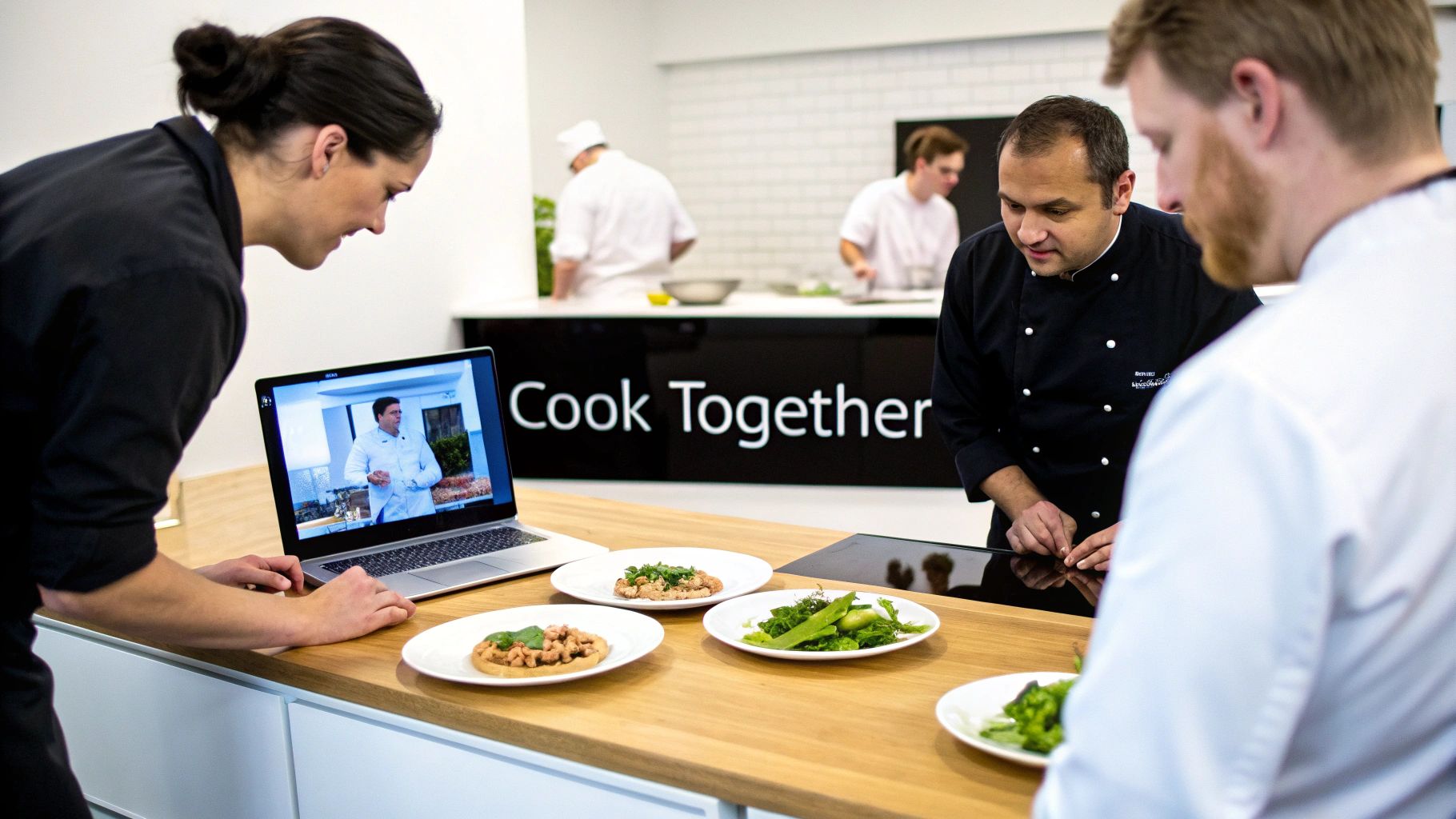
This activity excels at creating a relaxed, social atmosphere that breaks down formal workplace hierarchies. In-office teams can set up in a kitchen or large conference room, while remote workers join from their home kitchens. Companies like Salesforce have partnered with services such as Cozymeal to host these events, demonstrating their effectiveness in boosting morale and connection. The shared sensory experience of cooking and tasting the same food creates a powerful and memorable bond.
Online trivia tournaments are classic, high-energy hybrid team building activities that foster friendly competition and shared knowledge. In this format, remote and in-office employees form mixed teams to answer questions in real-time over a video conferencing platform. The game can be structured as a single event or an ongoing league, building excitement and consistent engagement.
This activity seamlessly unites participants regardless of their location. In-office staff can gather in a common area to collaborate as a team, while remote workers join their designated breakout rooms. Platforms like Kahoot! or Water Cooler Trivia allow everyone to submit answers from their own device, ensuring an equal and fair playing field. This format is excellent for encouraging quick thinking and reinforcing a sense of shared team identity.
Hybrid fitness challenges are fantastic long-term hybrid team building activities that promote wellness and sustained engagement. In this initiative, both remote and in-office employees track physical activity over several weeks or months, competing individually or in teams. Participants log everything from step counts and workout minutes to specific exercises, fostering a sense of shared progress and healthy competition.
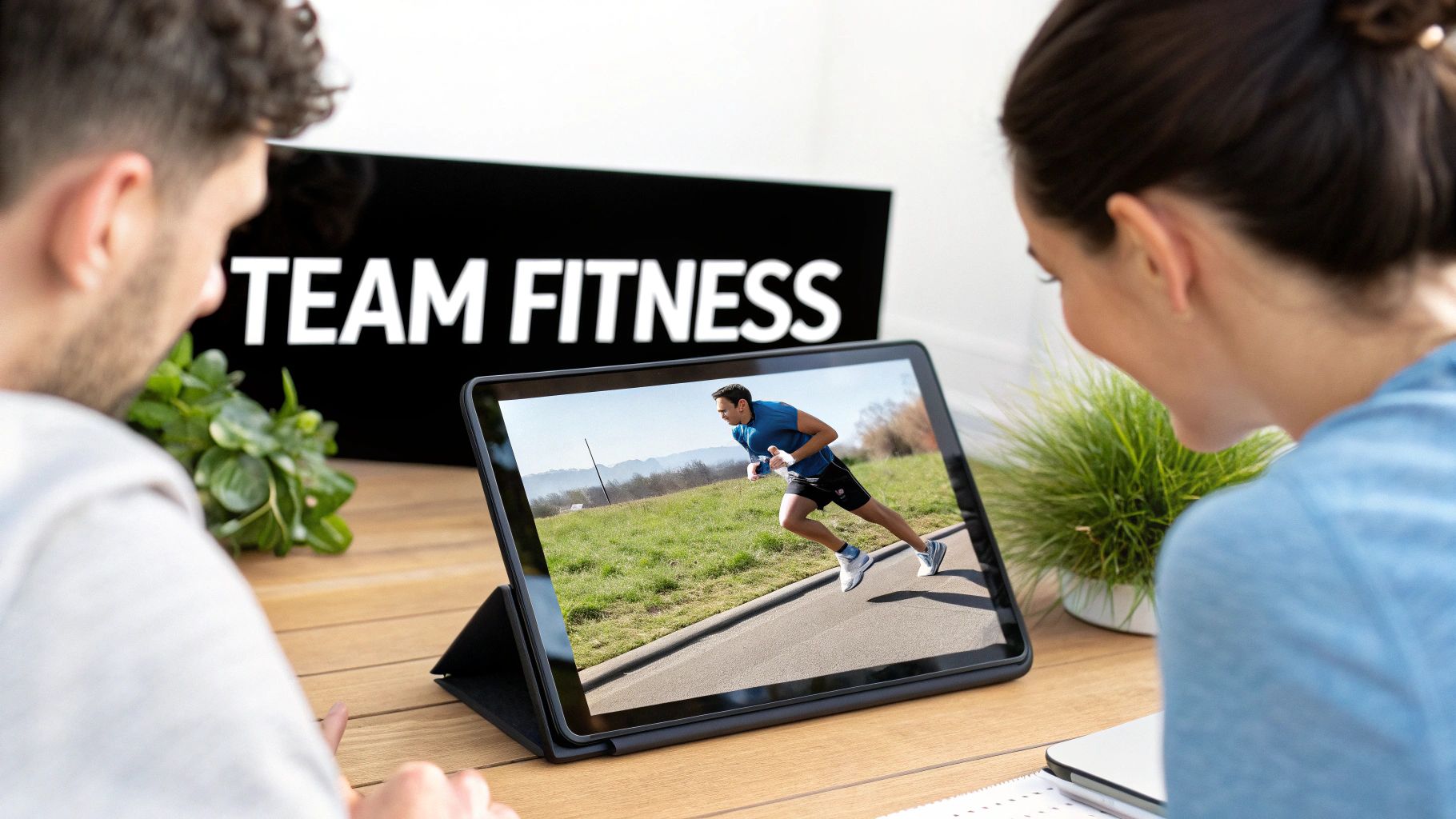
This activity bridges the physical divide by creating a common goal outside of typical work tasks. By using a shared app or platform, everyone's contributions are visible, encouraging daily interaction and mutual support. Companies like Accenture have successfully run global challenges, uniting employees across countries. This format allows for flexible participation, as colleagues can contribute anytime, anywhere, making it ideal for different time zones and schedules.
A hybrid book club is one of the more intellectually engaging hybrid team building activities that fosters deep conversation and shared learning. In this format, both in-office and remote employees read the same book or article over a set period and then gather for a facilitated discussion. This activity builds a strong intellectual and cultural connection by creating common ground outside of daily work tasks.
This setup effectively bridges the physical gap between team members. In-office staff can meet in a conference room, while remote colleagues join via a video conferencing platform. By discussing shared ideas from the text, everyone participates on an equal footing, regardless of their location. This model has been successfully used by companies like Microsoft to promote dialogue around diversity and inclusion and by Amazon to instill leadership principles.
Virtual hackathons are intense, collaborative events where hybrid teams come together to build innovative solutions to a specific problem within a set timeframe. These high-energy competitions are among the most productive hybrid team building activities, as they challenge participants to pool their technical and creative skills to develop a prototype, app, or new process from scratch. The format naturally fosters cross-functional collaboration and rapid problem-solving.
In a hybrid setting, remote employees connect via platforms like Slack and Zoom, while in-office colleagues can work together in dedicated "war rooms." This setup allows for focused development while ensuring everyone, regardless of location, contributes to the final project. Major companies like Google and Meta use internal hackathons to drive innovation, demonstrating their power to unite global teams around a shared, time-sensitive goal.
Hybrid Volunteer Service Days are purposeful hybrid team building activities that unite colleagues around a shared cause. In this model, in-office employees might engage in hands-on local projects like community gardening or sorting donations, while remote team members contribute through virtual opportunities such as online mentoring, digital advocacy, or skills-based support for non-profits. The focus is on creating a collective impact, regardless of physical location.
This activity fosters a deep sense of purpose and strengthens company culture by aligning team efforts with corporate social responsibility goals. It allows everyone to contribute meaningfully, bridging the gap between distributed colleagues. For example, a company could partner with a national charity, allowing local offices to support regional chapters while remote staff assist with the organization's national digital campaigns.
Hybrid design thinking workshops are structured, collaborative sessions where remote and in-office employees unite to solve real business challenges. This activity guides teams through a creative problem-solving process that includes empathy, ideation, prototyping, and testing. It transforms a standard meeting into one of the most productive hybrid team building activities by focusing collective brainpower on innovation.
The hybrid format thrives with digital collaboration tools. In-office teams can gather in a room with a large screen displaying a shared digital whiteboard, while remote team members contribute to the same board from their homes. This ensures everyone, regardless of location, can add sticky notes, sketch ideas, and vote on concepts equally. Organizations like IDEO and Stanford's d.school have pioneered these workshops, proving their power to align teams and generate tangible solutions.
Hybrid Mentorship Speed Dating is a structured and dynamic networking activity designed to build cross-organizational relationships. In this event, employees rotate through brief, timed one-on-one conversations with colleagues from different departments, locations, and experience levels. This format rapidly expands internal networks and encourages knowledge sharing between junior and senior staff.
This is one of the most effective hybrid team building activities for breaking down silos. In-office employees can pair up in person or rotate between dedicated video conferencing stations, while remote participants are matched into a series of breakout rooms. The quick, five-to-ten-minute rotations ensure high energy and allow everyone to meet multiple new people. Companies like LinkedIn and McKinsey & Company use similar models to foster mentorship and internal mobility.
A Hybrid Talent Show is one of the most personal and engaging hybrid team building activities for celebrating your team's unique skills and personalities. In this event, both remote and in-office employees are invited to share a talent, skill, or passion with the entire group. It’s a powerful way to foster connection by showcasing the diverse individuals who make up the team.
This format is highly adaptable to a hybrid model. In-office employees can perform live in a common area, which is streamed to remote participants. Meanwhile, remote team members can perform live via video conference or submit pre-recorded videos. Everyone watches the same show together, cheering on their colleagues and creating a unified, celebratory atmosphere that boosts morale and reinforces a positive company culture.
| Activity | 🔄 Implementation Complexity | ⚡ Resource Requirements | ⭐ Expected Effectiveness | 📊 Expected Outcomes | 💡 Ideal Use Cases / Tips |
|---|---|---|---|---|---|
| Virtual Escape Rooms | Medium — platform setup, breakout coordination | Medium — 60–90 min, platform + facilitator | ⭐⭐⭐⭐ — Highly engaging | Problem-solving, cross-location collaboration, short-term cohesion | Test tech, assign roles, best for small to mid teams |
| Hybrid Cooking Classes | High — logistics for ingredient kits & dietary needs | High — chef, kits delivery, 90+ min session | ⭐⭐⭐ — Strong social bonding | Shared experience, wellness, tangible takeaways (meals) | Send kits 3–5 days early, include setup tutorials |
| Online Trivia Tournaments | Low — simple setup and host | Low — 30–60 min, basic platform | ⭐⭐⭐ — Fast engagement | Quick morale boost, repeatable traditions | Rotate categories, use small teams, offer prizes |
| Hybrid Fitness Challenges | Medium — ongoing coordination and tracking | Medium — tracking app/wearables, admin time | ⭐⭐⭐⭐ — High long-term impact | Sustained engagement, wellness improvements | Offer varied activities, protect privacy options |
| Hybrid Book Club Discussions | Low — selection + facilitation | Low — reading time, facilitator | ⭐⭐⭐ — Moderate, builds thinking | Improved communication, shared culture | Provide guides, allow 2–3 weeks reading time |
| Virtual Hackathons | High — intensive coordination and tooling | High — dev tools, mentors, 24–48h commitment | ⭐⭐⭐⭐ — High innovation potential | Tangible prototypes, cross-functional outcomes | Define scope, provide APIs and mentoring |
| Hybrid Volunteer Service Days | Medium — nonprofit partnerships & logistics | Medium — coordination, scheduled time | ⭐⭐⭐⭐ — Strong purpose-driven impact | Community impact, employee satisfaction | Survey causes, partner with established nonprofits |
| Hybrid Design Thinking Workshops | High — skilled facilitation, multi-day format | High — facilitators, digital whiteboards, time | ⭐⭐⭐⭐ — Strong strategic outcomes | Prototypes, alignment, customer-centric solutions | Use Miro/FigJam, assign roles, create next steps |
| Hybrid Mentorship Speed Dating | Medium — matching algorithm + schedule | Low–Medium — platform + 60–90 min event | ⭐⭐⭐ — Efficient networking | Fast relationship building, knowledge transfer | Provide prompts, create follow-up mechanism |
| Hybrid Talent Show & Celebrations | Low–Medium — scheduling + AV setup | Low–Medium — streaming/AV, host | ⭐⭐⭐ — Good morale and recognition | Boosted belonging, memorable moments | Keep participation voluntary, provide AV guides |
The era of one-size-fits-all team building is over. As we've explored through activities ranging from collaborative virtual escape rooms to community-focused hybrid volunteer days, the modern workplace demands a more intentional and inclusive approach. Successfully engaging a distributed team isn't about finding a single perfect activity; it's about building a versatile toolkit that prioritizes connection, equity, and shared experience, regardless of physical location.
The key thread connecting all successful hybrid team building activities is a commitment to bridging the gap between remote and in-office participants. It requires a deliberate shift in mindset from simply tacking on a video call to redesigning the experience from the ground up. This means ensuring technology serves as a bridge, not a barrier, and that every voice, whether in the room or on the screen, is heard and valued equally.
As you plan your next event, remember these core takeaways from the ideas we've covered:
Ultimately, the goal of investing in these hybrid team building activities is to cultivate a resilient, adaptable, and deeply connected culture. It’s about proving that distance doesn't have to mean disconnection. By thoughtfully selecting and facilitating experiences that cater to your team's unique dynamic, you lay the foundation for improved communication, enhanced creativity, and a stronger sense of belonging. To ensure your next team building event is a resounding success and fosters genuine connection, consider exploring these impactful team building activities ideas to further expand your repertoire.
Embrace the challenge of the hybrid model as an opportunity to innovate. Your efforts will not only boost morale but also build a more cohesive and effective team ready to tackle any challenge together.
Ready to celebrate your team's milestones and strengthen connections in a memorable way? Firacard makes it easy to create and share beautiful, collaborative group greeting cards perfect for hybrid teams. Get everyone to sign a card for a birthday, work anniversary, or just to say thanks, no matter where they are. Visit Firacard to start your free group card today
Article created using Outrank


Stuck in a rut writing the same old birthday message? This year, ditch the clichés and learn how to create genuinely funny rhymes for birthdays th
Saying goodbye to a teacher is a really big deal, and goodbye teacher cards are a fantastic way to show them how much you appreciate everything the
Graduation marks a monumental milestone, a culmination of years of dedication and hard work. But finding the right words to capture your pride and