Creative Goodbye Teacher Cards That Make an Impact
Saying goodbye to a teacher is a really big deal, and goodbye teacher cards are a fantastic way to show them how much you appreciate everything the


Nov 23, 2025 | 22 Min Read

Peer to peer recognition is simple: it’s a way for employees to publicly give a shout-out to their colleagues for their hard work, big wins, and everyday contributions. It flips the script on traditional top-down feedback, empowering everyone in the company to celebrate the moments that make a workplace feel like a community.

We’ve all seen it happen. A developer quietly fixes a critical bug over the weekend, a project manager stays late to help another team hit their deadline, or a salesperson shares a lead that wasn't theirs to close. These moments of everyday heroism are the lifeblood of a great team, but they often fly under the radar of formal performance reviews.
That’s exactly where peer to peer recognition programs come in. They’re built to catch these moments.
Letting your team celebrate each other isn't just a "nice-to-have" anymore; it’s a must for building an engaged and resilient culture. Instead of generic praise from the top, you get authentic, real-time validation that weaves appreciation right into your company's DNA.
While getting a kudos from a coworker certainly feels good, the benefits go way beyond morale. A well-designed recognition program has a direct and measurable impact on the bottom line, from retention to revenue. When people feel seen by their peers, it creates a positive feedback loop that reinforces the exact behaviors you want to see more of.
The numbers don't lie. Companies with peer-to-peer praise are 35.7% more likely to see better financial results compared to those stuck with manager-only recognition. What’s more, these programs can lead to a 23.3% jump in employee engagement and a 31% lower voluntary turnover rate.
Peer recognition isn’t just about making people feel good; it’s about making your business better. It amplifies the small wins that lead to big results, ensuring that every employee feels seen, valued, and connected to the company's mission.
A thriving company culture is built on a foundation of mutual respect and acknowledgement. Peer recognition is the framework that makes it happen. It formalizes the informal "thank yous" and gives credit to the cross-functional collaboration that so often goes unnoticed.
Here’s how peer recognition really changes the game for your culture:
A strong recognition culture is a huge part of your employee value proposition. You can round it out with other fun employee appreciation activities or use a group ecard from a platform like FiraCard for farewells to give the whole team a chance to share memories and well wishes. It all works together to build a place where people genuinely want to be.
A truly great peer recognition program isn't something you can buy off the shelf. It has to be custom-built to run on your company's unique culture. If you just drop a generic system into your organization, you're trying to run a sports car on diesel—it might sputter along for a bit, but it’s never going to perform the way it should. Think of this design phase as your chance to build a framework that feels authentic, drives the right behaviors, and lines up perfectly with your business goals.
First things first: you need to define what success actually looks like. Are you trying to finally bring those core values off the poster on the wall and into daily work? Maybe your main goal is to break down silos and get different departments talking and collaborating more. Or perhaps it's as simple as boosting morale and making the office a more positive place to be every day. Each of these goals needs a completely different program structure.
A recognition program should be a mirror, reflecting the best parts of your culture back at the team. If the reflection looks unfamiliar, the program won't resonate, and engagement will falter.
Figuring out your objectives upfront gives you a compass for every other decision you'll make, from the rewards you offer to the way you talk about the program at launch. This clarity is essential for building a cohesive strategy to improve your workplace culture and ensures recognition is more than just another short-lived initiative.
Once you know your "why," you can get to the "how." Peer to peer recognition programs come in all shapes and sizes, and each one is suited for different needs and budgets. The trick is to match the model to your company's culture and what you're trying to achieve.
A fast-paced startup, for example, might get the most bang for its buck with a simple, non-monetary kudos system built right into Slack. It’s fast, public, and keeps the energy high without adding a ton of admin work. On the other hand, a larger, more established company might see better results with a points-based system where employees can bank points from recognition and redeem them for actual rewards.
There's no single "best" model here, only what’s best for you. This decision is a big one because it sets the foundation for how much people participate and how valuable they perceive the program to be. And it's not a trivial matter—employees who feel regularly recognized are 56% less likely to be looking for another job, according to insights from Xceleration.com. That's a direct line between appreciation and retention.
With your model picked out, it's time to build the scaffolding. This means setting up clear, simple guidelines so that everyone knows how to participate without any confusion. Vague rules are a recipe for inconsistent recognition, and the whole thing can quickly start to feel like a popularity contest instead of a genuine celebration of great work.
Your framework should clearly outline:
Building this structure ensures your program isn't just another piece of software but becomes a living, breathing part of your culture that consistently encourages positive behaviors and makes people feel genuinely seen and valued.
Let's be honest: even the most brilliantly designed peer recognition program will fall flat if the tech behind it is a pain to use. A clunky or confusing platform is the fastest way to kill adoption. The right tools, on the other hand, make giving props a seamless and even fun part of everyone's day.
Your first big decision is whether to bake recognition right into a platform your team already lives in, like Slack or Microsoft Teams, or go with a dedicated, standalone application. An integration is amazing for making recognition feel like a natural extension of everyday chatter. But a standalone platform often brings more firepower with deeper analytics, robust features, and a focused space just for appreciation.
When you start looking at different platforms, it’s easy to get lost in feature lists. To see a good example of what a modern platform offers, check out Wishmate's platform features. Not all tools are built the same, so knowing your must-haves will keep you from getting distracted by bells and whistles you'll never use.
Here are the non-negotiables you should be looking for:
This decision tree can help you map your goals to the kind of tech that will best support them.
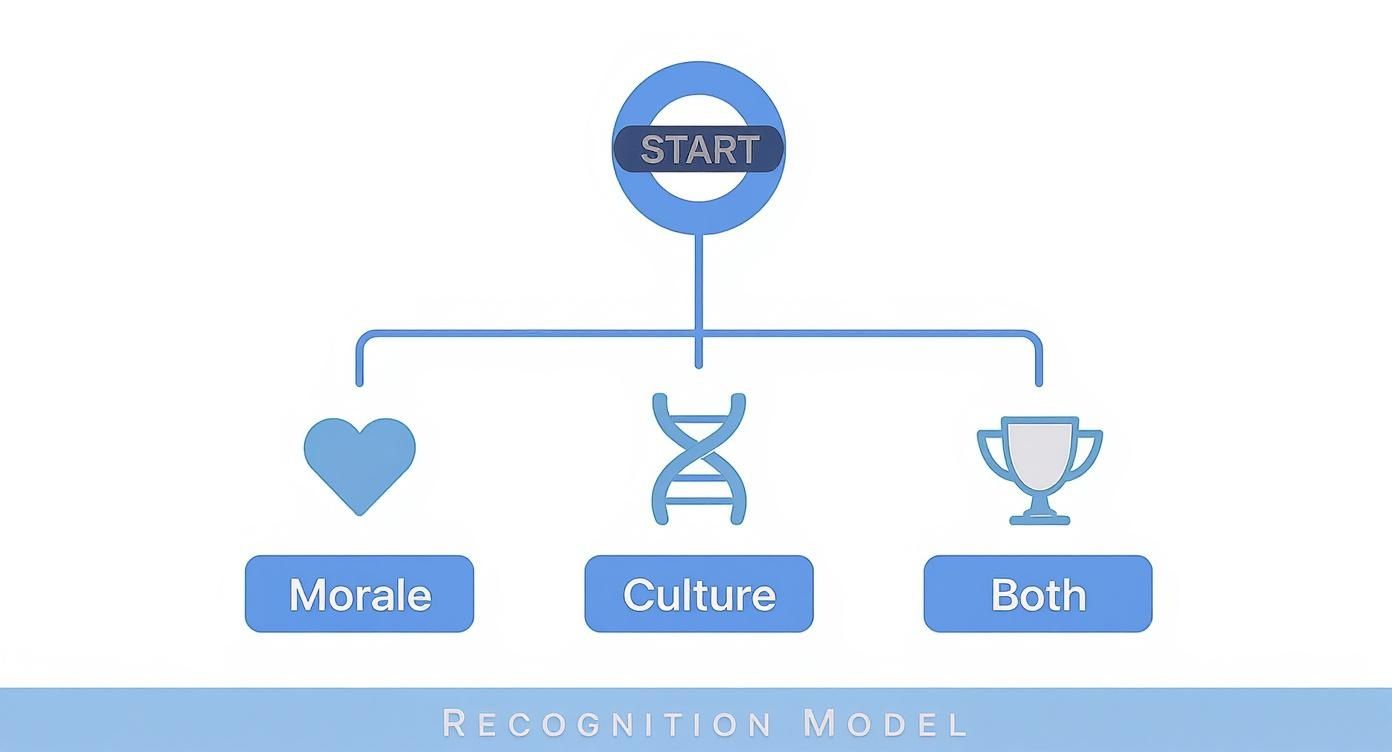
As you can see, letting your main goal—boosting morale, embedding your culture, or both—drive your program design makes choosing the right tools much simpler.
Once you’ve got a shortlist, it’s demo time. Come to these calls prepared with questions that cut through the sales pitch. Remember, you’re not just buying software; you’re choosing a partner who will play a role in your company culture.
Get straight to the point and ask about:
My best advice? Before you sign a contract for a full company-wide rollout, run a small pilot program with a single department. This is a low-stakes way to get honest feedback on the user experience and iron out any wrinkles before everyone is onboard.
The feedback from that pilot group will be gold. The goal is to find a tool that feels less like another mandatory HR system and more like a genuinely enjoyable way for your team to connect and celebrate each other's wins.
And for those special occasions that might fall outside your main platform, it's always good to know how to use digital cards for work to add an extra personal touch.
You've designed a killer recognition program. But how you launch it is just as important as how you designed it. A big, energetic launch is your best bet for getting people on board early and building the momentum to carry it forward. This is way more than just a single all-hands email—it's about creating a communication playbook that gets everyone excited to participate from day one.
The real goal here is to move beyond just announcing a new tool. You need to tell a story. Clearly communicate the "why" behind it all. This isn't just another HR thing; it's a new way for everyone to celebrate the awesome work that happens every day and to strengthen the connections that make your company a great place to work.
If you want your message to stick, you can't just toss it into one channel and hope for the best. A phased approach that builds a little anticipation works wonders. A week or two before the official launch, start a teaser campaign to get people curious and talking.
Think about a staggered rollout of information across the channels people actually use:
This pre-launch phase gets your team warmed up, so when the official announcement finally drops, they're already paying attention. To make sure your program isn't just a flash in the pan, it's a good idea to implement change management strategies that help new habits stick.
The easier it is to participate, the more people will actually do it. Don't bury your team in dense user manuals—that’s a surefire way to get ignored. Instead, create bite-sized, accessible resources that get straight to the point.
Your training toolkit should be simple and scannable:
The golden rule for a successful launch is clarity over complexity. Your team should know how to send their first piece of recognition within 60 seconds of hearing about the program. If it takes any longer, you've overcomplicated it.
For those special moments that fall outside daily shout-outs, like a colleague's farewell, you can supplement your program. Platforms like www.firacard.com make it easy for teams to create and sign group farewell cards, ensuring those goodbyes feel personal and genuine.
While digital messages are essential, nothing beats the energy of a live event to kick things off. This doesn't need to be some huge, expensive production. It can be a virtual all-hands or even a dedicated segment in your regular company town hall. The main thing is to make it feel like a celebration.
A simple launch event agenda could look something like this:
Your launch is the single best chance you have to build a groundswell of support. By combining a smart communication plan, dead-simple training materials, and an energetic launch event, you're setting the stage for a peer to peer recognition program that becomes a vibrant, lasting part of your culture. For more ideas to keep the good vibes going, check out these virtual employee appreciation ideas.
Getting your peer-to-peer recognition program off the ground is a huge win, but it’s just the start. A great program isn’t a "set it and forget it" project; it’s a living, breathing part of your culture that needs care and attention to really flourish. If you want it to deliver real, long-term value, you have to treat it like any other key business initiative—measure what matters and always be looking for ways to make it better.

This means you need to dig into the data. Are people actually using the platform? Is recognition spread fairly across the company, or is it stuck in certain pockets? Are your core values being celebrated, or just collecting dust? Answering these questions helps you shift from simply having a program to actively managing a powerful cultural tool.
You can't fix what you don't measure. Your recognition platform’s dashboard is a goldmine of information, but it’s easy to get lost in the numbers. The trick is to focus on the metrics that actually tell you something meaningful.
Here are the essential KPIs you should keep a close eye on:
Tracking these numbers gives you a clear, honest look at your program's health and impact.
Even the best-designed programs can hit a snag. Seeing a dip in participation or realizing the praise has gotten a bit stale isn’t failure—it's just a signal to step in and make some tweaks. The key is to spot these issues early and know how to respond.
The goal isn’t perfection; it’s progress. A successful peer recognition program is one that adapts and evolves with your organization, consistently responding to the needs and feedback of your team.
For instance, if you notice participation is lagging in one department, it could be that the manager isn't championing it. A quick, supportive chat to share best practices might be all it takes. Or maybe you see praise becoming too generic ("Good job!"). That's your cue to launch a mini-campaign focused on writing specific, detailed recognition to remind everyone what great looks like.
As your company grows, your recognition program has to grow with it. What works for a 50-person startup is going to look very different from what a 500-person company needs. Staying ahead of the curve is crucial for keeping the momentum going.
Here are a few tried-and-true ways to scale your program and keep it from getting stale:
And for those big moments that deserve an extra-special touch—like a major team win or a beloved colleague's last day—consider supplementing your program. Using a tool from a platform like FiraCard to create and send collaborative group farewell cards can make those milestones feel even more personal and memorable.
Even with the best-laid plans, launching a new initiative is going to stir up some questions. And when it’s something that touches the core of your company culture, like peer recognition, it's only natural for HR leaders and managers to want to get the details right.
Let's clear the air and tackle some of the most common questions we hear when folks are implementing peer to peer recognition programs. Think of this as your personal cheat sheet for navigating the tricky parts and building a culture of appreciation that lasts.
This is probably the number one concern we hear, and for good reason. The entire point is to celebrate real contributions, not just give shout-outs to the most outgoing people on the team. The secret? Build your program on a solid, objective foundation from day one.
Start by tying every single piece of recognition back to your company's core values. This immediately changes the conversation from who is being recognized to what they did. Encourage everyone to write specific, detailed messages that explain the "why" behind their praise, connecting the action to a value like "Customer Obsession" or "Innovate and Simplify."
Your program's guidelines are your best defense against favoritism. When recognition is based on specific, value-aligned actions, it becomes a measure of impact, not popularity.
Most recognition platforms also help by offering a mix of public and private recognition options. And don't forget to use your data! A quick look at your program's dashboard can show you if there are any departments or teams where recognition isn't flowing. Make a point to highlight great examples of recognition from all corners of the company to show that every contribution matters.
There’s no magic number here, but a good rule of thumb for a full-featured program is somewhere between 0.5% and 2% of your total payroll. The right number for you, though, really boils down to your goals and the kind of program you want to create.
You don’t need a massive budget to get started. A program built entirely on social, non-monetary recognition—like a dedicated Slack channel for kudos—can be surprisingly effective and costs next to nothing.
If you’re leaning toward a points-based system with actual rewards, you'll need to factor in platform subscription costs and the money to fund the rewards catalog. Start by figuring out what you want to achieve. If reinforcing your culture is the top priority, a lower-cost platform might be perfect. If you're trying to build strong incentives, you'll want to allocate more to the rewards budget.
Getting your execs and managers on board isn't just nice to have—it's essential. They set the tone for everyone else. The best way to get their buy-in is to speak their language. Put together a clear, data-backed business case that connects peer recognition to the metrics they obsess over, like employee retention, engagement scores, and productivity.
Once they're in, make it ridiculously easy for them to participate. Give them a simple toolkit with pre-written message ideas and talking points. When a leader actively uses the platform to recognize not just their direct reports but also their own peers, it sends a huge signal that appreciation is about collaboration, not hierarchy.
Celebrating managers who are recognition all-stars also works wonders. It creates a little positive peer pressure and shows everyone else what great looks like.
It's best to keep these two things separate. The real power of peer to peer recognition programs is in their spontaneity and authenticity. The moment you tie recognition to compensation or formal performance ratings, you risk turning it into a game people try to win, and that kills the genuine spirit of the program.
But that doesn't mean the data is useless. Far from it! The qualitative feedback from your recognition platform can be a goldmine for performance conversations. It gives managers a much richer, 360-degree view of an employee's impact, collaboration skills, and how they truly live the company values—things that often don't show up in a standard review. It adds color to the conversation without directly impacting their paycheck.
A well-designed recognition program is a powerful engine for building a positive, connected workplace. For those extra-special moments that call for a personal touch, like saying goodbye to a beloved colleague, tools like FiraCard can beautifully round out your efforts. It makes it easy for the whole team to come together and create personalized group farewell cards, making sure every milestone gets the celebration it deserves.


Saying goodbye to a teacher is a really big deal, and goodbye teacher cards are a fantastic way to show them how much you appreciate everything the
Graduation marks a monumental milestone, a culmination of years of dedication and hard work. But finding the right words to capture your pride and
Let's be honest, trying to find the perfect present from a UK gift shop online can feel like wading through a sea of options. It’s not just