8 Unforgettable Styles of Funny Rhymes for Birthdays (2026 Edition)
Stuck in a rut writing the same old birthday message? This year, ditch the clichés and learn how to create genuinely funny rhymes for birthdays th


Jan 7, 2026 | 22 Min Read
Sustainable business practices aren't just about policies and reports; they're about how a company shows up in the world. It’s a commitment to operating in a way that benefits people and the planet without undermining long-term financial health. Think of it as creating value that you can’t always see on a balance sheet, ensuring a business can thrive for generations, not just the next quarter.
A great way to grasp this is to imagine managing a forest instead of a single field. That single field might give you one fantastic harvest, but a well-managed forest provides timber, clean air, and a healthy ecosystem for decades. This long-term, holistic approach is the heart of the ‘Triple Bottom Line’, a framework that balances three core pillars: People, Planet, and Profit.
This isn't about ditching profits. It's about expanding the definition of success to create a more resilient and balanced business. It’s an acknowledgement that a company's success is deeply intertwined with the well-being of its communities and the health of the environment. Many organisations now consider these principles central to their corporate social responsibility goals, which you can dive into with our guide on impactful CSR ideas.
The diagram below shows how these three elements work together, not in isolation, but as interconnected parts of a complete strategy.
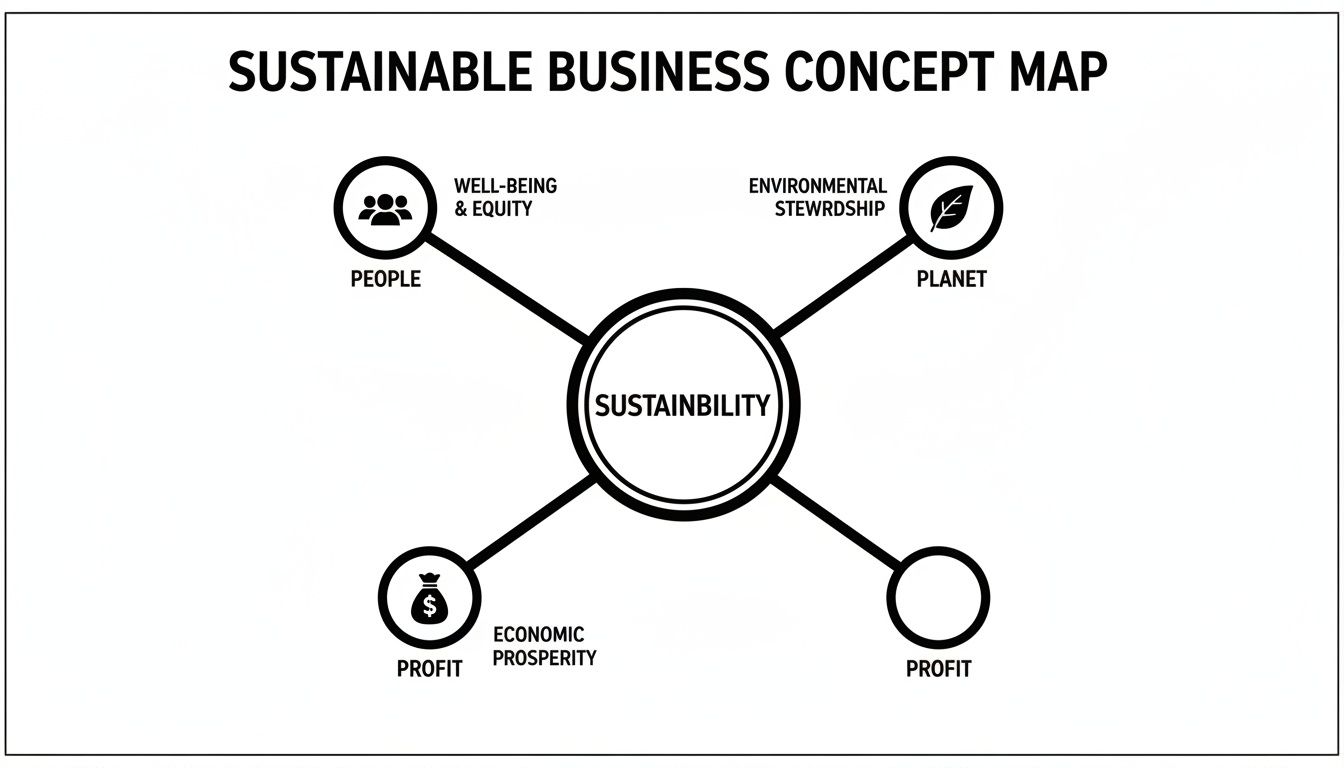
As you can see, none of these pillars can truly stand alone. They support each other, creating a much stronger foundation for the business.
To see how this works in the real world, let's break down what each pillar actually means for a business, whether it's in the United Kingdom, United States, Australia, Canada, India or Africa. Each one has a distinct focus, but they all contribute to the overall strength of the company.
The Triple Bottom Line provides a clear roadmap. Here’s a simple breakdown of what each pillar covers.
| Pillar | Core Focus | Business Examples |
|---|---|---|
| People (Social) | Prioritising the well-being of employees, customers, and the wider community. | Fair wages, robust diversity and inclusion programmes, ethical supply chain sourcing, and community volunteering days. |
| Planet (Environmental) | Actively minimising the company's negative impact on the natural world. | Reducing carbon emissions, cutting down waste through recycling, conserving water, and switching to renewable energy sources. |
| Profit (Economic) | Achieving long-term financial stability without sacrificing the other two pillars. | Strong governance, proactive risk management, ethical financial practices, and investing in innovation for sustainable growth. |
Adopting this model is far more than an ethical box-ticking exercise; it's a strategic move that future-proofs a business. For instance, a key part of the 'Planet' pillar is managing physical assets responsibly. This includes understanding practices like IT Asset Disposition (ITAD), a crucial process for reducing electronic waste and handling old tech ethically.
By weaving these three pillars into its DNA, a business shifts from simply following the rules to proactively building a positive legacy. It becomes a force for good—building trust with customers, attracting the best talent, and ensuring its own survival in a world that increasingly values purpose just as much as profit.
Not too long ago, "sustainability" was a term you'd mostly hear from big corporations. Now? It's a powerful engine for success for businesses of every shape and size. For companies in the United Kingdom and across the globe, making sustainability a core part of the plan—not just a nice-to-have—delivers real, tangible advantages that go way beyond a bit of good PR. It’s about building a business that's more resilient, efficient, and genuinely appealing for the long haul.
More and more, savvy leaders are realising that what’s good for the planet is also fantastic for business. The benefits aren't just fuzzy feelings; they're clear, measurable wins that impact everything from your brand’s reputation to your monthly outgoings. In a packed marketplace, a true commitment to sustainability makes you stand out and forge a much deeper connection with people.

Today’s workforce, particularly the younger generations, isn't just looking for a paycheque. They want to work for companies that actually stand for something. A solid sustainability programme is a massive magnet for talent that wants to make a difference, giving you a serious edge in hiring and keeping your best people. When employees are proud of their company's impact, they’re more engaged, motivated, and often become your most passionate advocates.
And that same principle applies to your customers. People are smarter and more conscious than ever. They actively look for and reward businesses that are transparent about their environmental and social responsibilities. Being open about your sustainability efforts builds trust and nurtures a loyal following that sticks with you for your principles, not just your prices.
When you weave sustainability into your brand’s DNA, you’re not just selling a product or service. You’re inviting customers and employees to join a positive movement, creating a powerful emotional bond that goes far beyond a simple transaction.
Perhaps one of the most compelling reasons to go green is the direct impact it has on your bottom line. At its heart, sustainability is about being smart with resources, which naturally leads to some pretty significant savings.
These aren't abstract ideas; they come from practical, everyday changes:
Even small, thoughtful shifts add up. Think about the waste from traditional office celebrations. Our guide on eco-friendly group greeting cards shows how simple digital swaps can cut down on both waste and costs.
Let's be honest, the rulebook is changing. Regulations are tightening around environmental accountability, especially with net-zero targets firmly on the horizon for many countries. Businesses that get ahead of the curve and adopt sustainable practices now will be much better prepared for future laws. You'll avoid the panic and expense of trying to comply at the last minute. This kind of foresight makes your whole operation more resilient and less vulnerable to things like supply chain hiccups or volatile energy prices.
In the UK, small and medium-sized enterprises (SMEs) are a huge part of this picture, producing around 37% of the country's greenhouse gas emissions. While more and more SMEs are starting to measure their carbon footprint, the most common actions are still the basics: 59% are focusing on energy efficiency, 55% on reducing waste, and 33% are switching to renewable energy suppliers. Getting this right isn't a burden; it's a strategic move that secures your company’s place in the world for years to come.
Turning big sustainability goals into everyday actions is where the real magic happens. It’s all about weaving greener habits into the very fabric of your company, making them a natural, almost automatic, part of every decision. This isn’t about huge, disruptive overhauls overnight. Instead, think of it as a series of smart, practical adjustments across your entire organisation.
The aim is to shift sustainability from a separate, siloed project to simply "the way we do things around here." When it’s integrated properly, your environmental and social commitments become stronger, more consistent, and far more effective. It creates a positive impact that grows right alongside your business. Let's look at how to bring this mindset to life in three key areas: operations, procurement, and company culture.
Your daily operations are a goldmine for sustainability wins, and the best part is they often save you money. The trick is to look at your existing processes through a lens of efficiency. Ask yourself: where can we cut waste, save energy, and shrink our environmental footprint?
A great place to start is with an energy audit. This doesn't have to be complicated. It could be as simple as looking over your utility bills to spot peak usage times, or you could bring in a professional to pinpoint exactly where you're losing energy. The results often point to quick fixes with a surprisingly fast payback.
Common wins include:
Beyond electricity, a proper waste reduction programme is a must. This means going further than just putting out a few recycling bins. Take a look at what your company is actually throwing away. You might find that most of your waste is from single-use coffee cups or unnecessary printing, which immediately shows you where to focus—like providing reusable mugs or championing a digital-first policy for documents.
Your company's footprint doesn't stop at your front door. It extends to every single partner and supplier you work with. Building a sustainable supply chain means making a conscious choice to partner with businesses that share your values on environmental and social responsibility.
This is often called green procurement, and it means looking beyond the price tag when vetting suppliers. You have to dig a little deeper into their own practices. Are they open about their labour standards? Do they use recycled materials or have their own carbon reduction targets? Just asking these questions sends a powerful message to the market that you take this seriously.
A truly sustainable business understands its interconnectedness. By choosing partners who uphold high ethical standards, you not only reduce your own risk but also contribute to a ripple effect of positive change throughout your industry.
A supplier code of conduct is a fantastic first step. This document clearly lays out what you expect when it comes to environmental care, fair labour, and ethical sourcing. It sets the standard for anyone who wants to work with you and makes it easier to keep everyone accountable.
At the end of the day, your people are the ones who will make or break your sustainability programme. When you build an eco-conscious culture, your employees stop being passive observers and become active champions for green initiatives—because they genuinely believe in the mission. Your Human Resources or People team is right at the heart of this.
Training sessions can be more than just dry policy updates. Think interactive workshops that show people how sustainability connects to their actual jobs. You could show the sales team how virtual meetings cut down the company's travel emissions or teach the marketing team about planning zero-waste events.
Small perks can also nudge behaviour in the right direction. Try offering benefits for employees who use public transport, cycle to work, or set up a carpooling scheme. You could also launch a volunteer "Green Team" made up of people from different departments to brainstorm and lead new projects. This gives them a real sense of ownership. A brilliant way to embed these values is by digitising old workplace traditions. Looking into the digital transformation in HR shows how moving things online—including team celebrations—is a win for both efficiency and the planet. All these little changes add up to create a workplace where the green choice is the easy and celebrated choice.
In our increasingly connected and often remote working world, technology is one of our best allies for sustainability. Digital tools give us powerful ways to shrink a company's environmental footprint, and the best part is, they often boost efficiency and team morale at the same time. Moving away from physical-first processes is a huge step towards building a truly sustainable business.
This isn't just about cutting down on travel for meetings. It’s about completely rethinking how we work, communicate, and celebrate together. By leaning into digital solutions, businesses can make serious cuts to paper waste, office energy use, and the carbon emissions that come with commuting and business trips. This is especially true for organisations with teams spread across the United Kingdom, United States, Canada, Australia, India and Africa.

One of the easiest places to start is with team culture and celebrating milestones. Traditional office parties, while fun, often carry a hidden environmental cost. Think about it: disposable decorations, food waste, and the production and transport of physical greeting cards all add up.
Digital platforms offer a much smarter, greener way to connect. A simple but incredibly effective switch is moving from paper cards to a group online card. This small change immediately gets rid of the need for paper, ink, and the carbon footprint of posting it. It’s a tiny adjustment with a surprisingly big impact.
For instance, when a valued colleague is moving on, a virtual leaving card lets everyone, no matter where they are, share messages, photos, and memories without creating any physical waste. This modernises a lovely tradition, making it more inclusive for remote workers and much kinder to the planet. It's a fantastic solution for businesses looking for a thoughtful and eco-conscious Kudoboard alternative.
By digitising employee recognition and celebration, companies can significantly reduce their material consumption. This shift not only supports sustainability goals but also aligns with the expectations of a modern, environmentally aware workforce.
Choosing digital tools isn't just an environmental statement; it's a smart business move. For businesses globally, the road to net zero has its bumps. While commitment from large firms is high (93%), economic pressures mean only 64% of SMEs feel the same, and just 36% of all companies have set clear reduction targets. You can dive deeper into how UK businesses are tackling their net-zero goals by checking out the latest findings on business sustainability commitments.
This is where digital-first solutions really shine. A simple ecard, for example, completely bypasses the costs of materials, printing, and postage that can make physical options a tough sell for budget-conscious SMEs. It makes digital solutions an easy first step into wider sustainable practices.
When you're trying to build a business case, the numbers speak for themselves. The table below shows just how different the environmental impact is between a traditional card passed around the office and a digital alternative.
| Factor | Traditional Card | Digital Ecard (Firacard) |
|---|---|---|
| Material Use | Paper, ink, plastic wrap, envelopes. | None. Entirely digital. |
| Production | Industrial printing, manufacturing. | Minimal server energy. |
| Carbon Footprint | Physical transport, postal delivery. | Negligible data transfer. |
| Waste | Card and packaging end up in landfill. | Zero physical waste created. |
| Inclusivity | Difficult for remote/hybrid team members. | Accessible to anyone, anywhere. |
The takeaway is pretty clear: digital recognition isn't just a "nice-to-have" green initiative; it’s a more efficient, inclusive, and cost-effective way to operate.
Consider these knock-on benefits:
Switching to a group greeting card or sending a personalised birthday ecard is a clear, doable first step. It's your company's values in action, plain and simple. You can get more ideas on making this work for your team by reading our guide on using digital cards for work. Ultimately, these small digital shifts are what help embed sustainability into the very culture of your workplace.
You’ve probably heard the old saying, “what gets measured gets managed.” It’s a classic for a reason, and it’s especially true for sustainability. To prove your commitment is more than just talk, you need to track your progress and be open about your journey. This turns vague goals into tangible wins, building real trust with your customers, team, and investors.
The good news is you don't need a team of data scientists to get started. It’s all about picking a few clear Key Performance Indicators (KPIs) that actually make sense for your business goals. These numbers give you a starting point, a baseline to work from, so you can set realistic targets and celebrate genuine progress over time.

Choosing the right KPIs isn’t about measuring everything under the sun. It's about focusing on what's most relevant and achievable for your organisation right now. You can start small and add more metrics as your sustainability programme grows.
Here are a few core areas to get you thinking:
Once you have some data, the next step is to share it. Transparent reporting isn’t just for giant corporations anymore. It's a brilliant way for businesses of any size to show they mean business, building a strong, trustworthy brand in the process.
This is a fast-growing trend, especially in the UK. Sustainability reporting is gaining serious momentum, with 69% of senior sustainability leaders now backing some form of mandatory disclosure. And it’s working—UK companies' average sustainability score has climbed 4.8 points since 2020, and over 80% of small businesses now have eco-friendly practices baked into their strategies. You can dig into more UK sustainability trends on osapiens.com.
Transparent reporting transforms your sustainability efforts from an internal project into a public commitment. It tells a compelling story of your journey—the successes, the challenges, and the unwavering dedication to making a positive impact.
To properly show your commitment to environmental, social, and governance principles, getting to grips with the latest ESG reporting requirements is key. But don't let that intimidate you. Even a simple, honest report on your company blog can be incredibly effective. It's not about being perfect from day one; it's about showing you’re taking action. Start by sharing your baseline KPIs and what you’re aiming for next year. That simple act of communication builds huge credibility and shows everyone you’re serious about sustainable growth for the long haul.
Alright, let's move from ideas to action. Going green doesn't mean you have to flip your entire business upside down overnight. Real, lasting change comes from small, consistent steps that build on each other. This 90-day plan is designed to do just that, breaking down your first three months into clear, manageable phases.
Think of it like tending a garden. Month one is about preparing the soil. Month two is for planting the seeds. And month three is all about nurturing that new growth.
The first 30 days are purely about getting a lay of the land. You can't improve what you don't measure, so this is your chance to gather some baseline data and make a few simple, foundational changes. The goal here is to get an honest picture of your company's current environmental footprint.
Your Checklist:
Now that you know your starting point, it's time to get things moving. This month is all about rolling out high-impact, low-cost changes and, crucially, getting your team involved. Focus on things people can see and easily get on board with.
A great place to start is by adopting a digital-first policy for internal comms and celebrations. It's a simple switch that dramatically cuts paper waste while also being more inclusive for remote and hybrid team members.
Meaningful change is the sum of small, consistent actions. By focusing on practical swaps and digital solutions, you empower your team to become active participants in your sustainability journey, creating a ripple effect of positive impact.
For team events, swapping to a sustainable recognition platform like Firacard is a no-brainer. Whether you're sending a group birthday ecard or a collective sorry for leaving card, you completely eliminate material waste. It's one of the easiest and most impactful changes you can make. You can find more ideas in our guide on easy eco-friendly swaps for your workplace.
This final month is about making these new habits stick and starting to think bigger. You've laid the groundwork and kicked off some great initiatives; now it's time to build on that success and share the story.
Your Next Steps:
By following this simple plan, you'll have made tangible progress towards a more sustainable business. Remember, every ecard sent and every piece of paper saved adds up, contributing to a healthier planet and a stronger, more purpose-driven company.
Taking the first steps toward sustainability can feel a bit daunting, and it’s only natural for some practical questions to pop up. Let’s tackle some of the most common worries we hear from businesses, giving you straightforward answers to help you get started with confidence.
Not at all. There’s a common myth that going green costs a fortune. While big-ticket items like installing solar panels do have an upfront cost, many of the most effective sustainable actions actually save you money. Think about it: reducing your energy use, cutting down on waste, and going digital all directly trim your operational bills.
A brilliant, simple example is switching to an online leaving card instead of constantly buying physical ones. The smartest way to start is with these low-cost, high-impact changes. You can then reinvest the savings back into bigger green projects down the line.
Remote teams are not just included in a modern sustainability strategy—they're central to it! You can kick things off by encouraging greener home office habits, like using energy-efficient equipment or committing to being paperless. As a company, making digital-first processes the standard is a huge win.
A really easy and engaging way to bring everyone together is by adopting eco-friendly platforms for team celebrations. Using a digital leaving card or a group ecard for birthdays are perfect examples. Your distributed team can cut its collective environmental footprint while actually building stronger connections. It’s exactly why Firacard is such a great GroupGreeting alternative for businesses that care.
The key is to start small and track what you can easily measure. Don't try to boil the ocean. Begin by keeping an eye on your monthly utility bills, weighing your recycling against your general waste, and logging any business travel. There's absolutely no need to overcomplicate it from the get-go.
The goal is to build a baseline you can improve upon, not to be perfect from day one. Even reporting on these basic metrics demonstrates a commitment to transparency and improvement, which builds significant trust with your customers and employees.
Ready to take your first easy step towards a greener, more connected workplace? With Firacard, you can send a beautiful, collaborative group greeting card in minutes, completely eliminating paper waste and your carbon footprint.


Stuck in a rut writing the same old birthday message? This year, ditch the clichés and learn how to create genuinely funny rhymes for birthdays th
Saying goodbye to a teacher is a really big deal, and goodbye teacher cards are a fantastic way to show them how much you appreciate everything the
Graduation marks a monumental milestone, a culmination of years of dedication and hard work. But finding the right words to capture your pride and