8 Unforgettable Styles of Funny Rhymes for Birthdays (2026 Edition)
Stuck in a rut writing the same old birthday message? This year, ditch the clichés and learn how to create genuinely funny rhymes for birthdays th


Jan 13, 2026 | 26 Min Read
Retirement is a monumental milestone, and finding the right words to celebrate a colleague, friend, or family member can feel daunting. Wondering what to write in a retirement card to truly honour their contributions and wish them well? This guide moves beyond the generic "Happy Retirement" to offer a curated collection of eight distinct message styles, from heartfelt and humorous to professional and personal. We’ll break down the strategy behind each approach, providing actionable tips and real-world examples to help you craft a memorable and impactful tribute.
The goal is to provide specific, replicable strategies you can use immediately. Whether you're signing solo or organising a group farewell, you'll find the perfect sentiment here. For collaborative goodbyes, platforms like Firacard, a leading kudoboard alternative, make it simple for everyone to share their appreciation in one beautifully organised space. Whether you're in the United Kingdom, United States, Australia, Canada, India, or Africa, a group online card from a service like Firacard bridges the distance. Mastering the art of sincere communication is a valuable skill, and to further hone your skills, you might find inspiration in guides on crafting meaningful messages for various life events, focusing on thoughtful phrasing.
This article is your comprehensive resource for leaving a lasting, positive impression. You'll learn how to articulate gratitude, share a cherished memory, or offer a funny send-off that perfectly captures your relationship with the retiree. Let's explore the messages that will make their farewell truly special.
One of the most powerful and meaningful approaches for what to write in a retirement card is to focus on heartfelt gratitude and the retiree's lasting impact. This message type moves beyond generic well wishes to express genuine appreciation for their specific contributions, accomplishments, and the positive influence they've had. It's about articulating the legacy they leave behind, making it a deeply personal and affirming tribute.

This method is particularly effective for collaborative group cards where multiple contributors can highlight different facets of the retiree’s career. By combining various perspectives, you create a comprehensive picture of their professional journey and its effect on colleagues and the organisation. This is where a virtual leaving card excels, allowing teams to build a rich, multi-layered tribute. A sincere impact message reinforces that their work mattered, which is a core tenet of effective employee appreciation.
Let's break down two examples to see why they are so effective.
Example 1:
"Over the past 15 years, your mentorship shaped how we approach client relationships. Your legacy of integrity and innovation will continue guiding our team long after you've gone."
Example 2:
"Thank you for building a culture of inclusivity here. You didn't just do your job-you transformed how we work together, and we are all better for it."
Another popular and optimistic approach for what to write in a retirement card is to focus on warm wishes for the retiree's next chapter. This message style shifts the focus from the end of a career to the exciting beginning of a new phase of life. It’s about celebrating their future adventures, hobbies, and personal goals, conveying genuine excitement for the joy and fulfilment that awaits them.
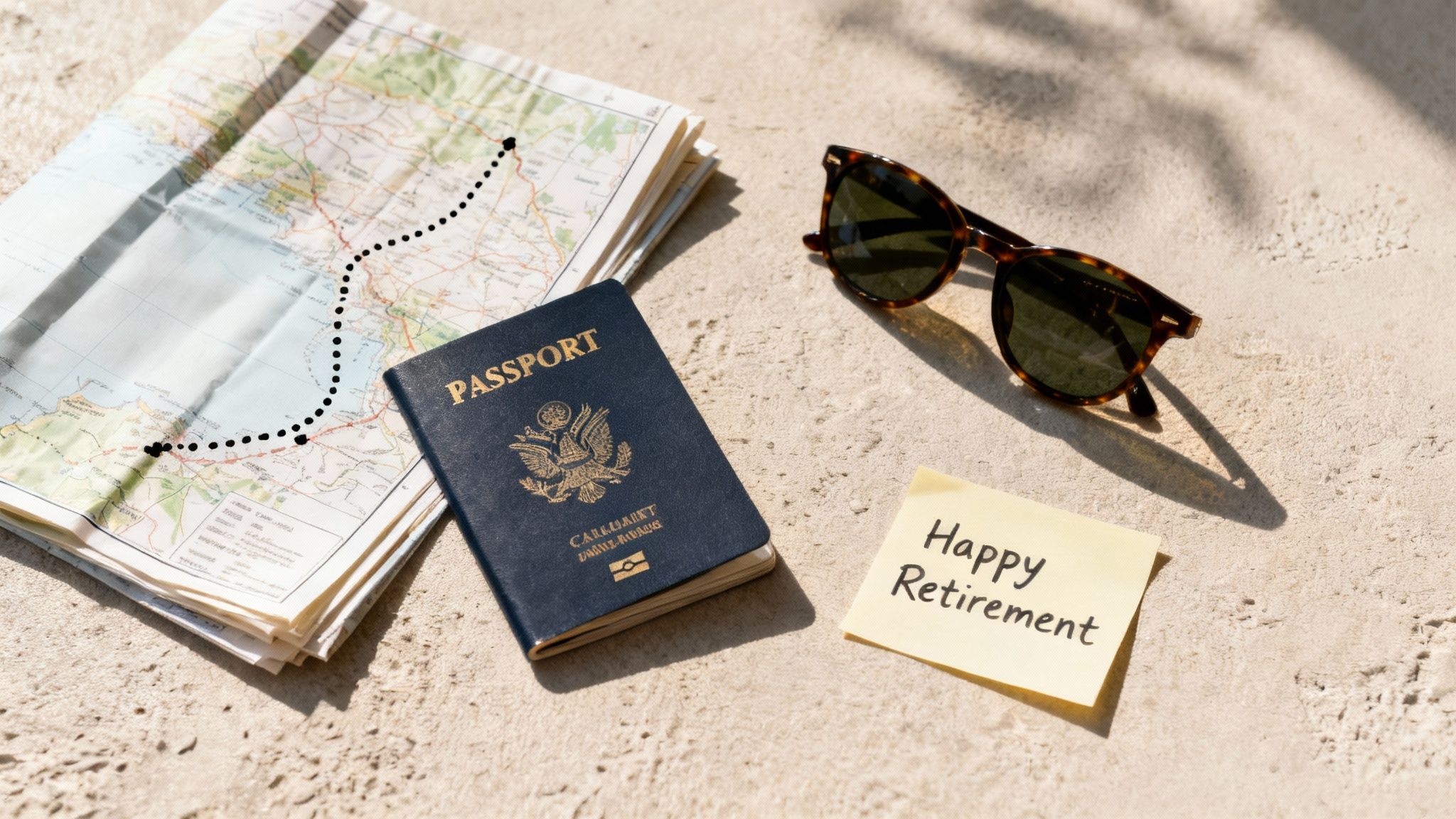
This forward-looking tone is perfect for colleagues, friends, and family who want to express happiness for the retiree's well-earned freedom. It acknowledges their hard work while framing retirement as a rewarding new journey. This positive perspective is key to a supportive retirement transition and helps make the celebration feel uplifting and joyful. When crafting these wishes, you might also consider exploring thoughtful retirement gift ideas that complement your message and their upcoming plans.
Let's break down two examples to see why this forward-looking approach is so effective.
Example 1:
"Retirement isn't an ending-it's your opportunity to write a whole new chapter. Here's to more golf games, globetrotting, and time with your grandchildren. You've earned every moment!"
Example 2:
"Enjoy every moment of this newfound freedom! You've more than paid your dues. May your days be filled with adventure, relaxation, and everything you've been looking forward to."
Injecting humour and a gentle, lighthearted roast into what you write in a retirement card can create a truly memorable and joyful tribute. This approach moves beyond traditional sentiments to celebrate the retiree’s unique personality, quirks, and the funny moments that defined their time with the team. It is perfect for a colleague with a good sense of humour, turning the card into a keepsake filled with laughter and affection.
This style thrives in a group card format, as it allows different colleagues to share their own inside jokes and funny anecdotes. A virtual leaving card makes this easy, creating a collaborative space where the team can build a collection of warm-hearted jests. When done right, humour reinforces camaraderie and shows the retiree how much their personality, not just their work, will be missed. For more inspiration, explore these funny sorry you're leaving card messages in a sorry for leaving card.
Let's break down two examples to see why they land so well.
Example 1:
"Finally, the office will be quiet during meetings. And the coffee machine might actually survive a full day. Enjoy the peace-you've earned it!"
Example 2:
"We're not sure what we'll do without your legendary 2 PM energy crashes. The break room will feel so empty (and alert). Happy retirement!"
Recognising a retiree's role as a mentor is a profound way to frame what to write in a retirement card. This approach focuses on their human legacy: the skills they taught, the confidence they built, and the careers they shaped. It shifts the emphasis from professional achievements to the lasting personal influence they had on their colleagues, making the tribute exceptionally personal and affirming.
This type of message is particularly powerful in a collaborative setting, where multiple mentees can share their unique stories. A group greeting card provides the perfect platform for this, allowing individuals to collectively paint a picture of the retiree's widespread impact as a teacher and guide. It celebrates the wisdom they shared, which is a legacy that will continue to benefit the organisation for years to come. This approach pairs well with finding the right farewell gifts for a manager who has been a mentor.
Let's dissect two examples to understand their effectiveness.
Example 1:
"You taught me that leadership means listening first and deciding second. I see your influence every time I mentor others, and I hope to pass on your wisdom with the same patience you showed me."
Example 2:
"The confidence you instilled in me during my early career changed my entire trajectory. Your belief in my potential made all the difference, and I am where I am today because of you."
A powerful way to articulate what to write in a retirement card is by crafting a message that celebrates career milestones. This approach traces the retiree's professional journey, highlighting key accomplishments, pivotal projects, and organisational changes they witnessed or led. It transforms a simple farewell into a narrative, providing context for their entire career arc and celebrating the impressive scope of their contributions over time.
This method is uniquely suited for a group tribute, where different colleagues can contribute memories from various phases of the retiree's career. Using a group greeting card allows you to build a comprehensive timeline, with each entry adding a new layer to their professional story. This chronological narrative helps to organise a memorable and respectful workplace retirement celebration.
Let's examine two examples that effectively capture a career journey.
Example 1:
"2008: You joined as a junior analyst. 2012: Led the first major client initiative. 2016: Built and mentored the analytics team. 2024: We celebrate your legacy spanning 16 transformative years. Thank you for everything!"
Example 2:
"From the old office on Main Street to our new headquarters, you've been here through every evolution. Thank you for your consistency, wisdom, and growth throughout it all."
Focusing on a retiree's contribution to workplace culture is a modern and profoundly meaningful approach for what to write in a retirement card. This message type looks beyond project successes to celebrate their role in building an inclusive, supportive, and positive environment. It acknowledges their impact on the human side of work: fostering a sense of belonging, psychological safety, and genuine community.
This method is especially powerful in organisations that prioritise diversity, equity, and inclusion. It validates the often-unseen emotional labour that goes into creating a space where people feel valued. A group greeting card, especially from a groupgreeting alternative like Firacard, is ideal for this, as it can gather testimonials from a wide range of colleagues, showing the breadth and depth of the retiree’s cultural influence. This approach reinforces that their legacy is not just in what they did, but in how they made people feel.
Let's examine two examples to understand their effectiveness.
Example 1:
"You made this office feel like a community, not just a workplace. Every person-regardless of background or role-felt genuinely seen and valued by you. Thank you for championing a culture of belonging."
Example 2:
"Your quiet leadership in standing up for what's right showed us that integrity matters more than convenience. You modelled the courage and compassion we all aspire to, and our team is stronger because of it."
A lighthearted and engaging approach for what to write in a retirement card is to offer funny predictions about the retiree's future. This message style blends humour with genuine affection by playfully imagining what their newfound freedom will look like, often by extrapolating their well-known workplace habits and personality traits. It creates an entertaining and memorable tribute that celebrates their character in a unique way.
This method thrives in a collaborative setting, making it perfect for a group greeting card where colleagues can build on each other's jokes and predictions. Using a virtual leaving card allows team members to create a fun, interactive thread of humorous well-wishes. The key is to ensure the humour is rooted in warmth and respect, making the retiree feel celebrated for the person they are.
Let's break down two examples to see how this humorous style works effectively.
Example 1:
"Retirement Prediction for Sarah: Within 3 months, you'll have called the office asking what day it is. By month 6, you'll have a golf handicap lower than your old email response time. We'll miss your lightning-fast replies!"
Example 2:
*"Your Official Retirement Survival Kit includes:
- An industrial-sized tub of coffee to replace the office brew.
- A map to somewhere warm (that isn't the server room).
- Official permission to do absolutely nothing.
- New business cards that say 'Professional Relaxer'."*
Focusing on how a retiree inspired personal and professional growth is a profound way to articulate their influence. This approach goes beyond job duties to celebrate the retiree as a role model, mentor, and source of strength. It highlights the life lessons, values, and resilience they demonstrated, especially during challenging times. This message is perfect for acknowledging a leader who shaped not just what you do, but who you are at work.

When considering what to write in a retirement card, an inspiration-focused message transforms a simple goodbye into a tribute to a lasting legacy. It affirms that the retiree's influence will continue through the actions and mindsets of those they inspired. A group greeting card becomes a powerful vehicle for this, collecting multiple stories of personal growth and creating a rich tapestry of their impact on the entire team. A personalized ecard can capture this sentiment beautifully for any occasion, including an ecard birthday or farewell.
Let's explore two examples to understand their effectiveness.
Example 1:
"Watching you navigate the 2020 transition with grace and optimism taught me that leadership is about steadying others, not having all the answers. Thank you for showing me what resilience looks like."
Example 2:
"You showed me that it's possible to be ambitious AND kind, to be successful AND humble. You expanded what I thought was possible in how to show up at work."
| Message type | Implementation complexity | Resource requirements | Expected outcomes | Ideal use cases | Key advantages |
|---|---|---|---|---|---|
| Heartfelt Gratitude and Impact Message | Medium — thoughtful composition and editing | Time from contributors; optional photos/videos; multimedia tools | Strong emotional connection; validated legacy; lasting keepsake | Group cards honoring long-tenured contributors or key projects | Personalized recognition, team bonding, multimedia-capable |
| Warm Wishes for the Next Chapter | Low — simple, forward-looking phrasing | Minimal: templates, images; brief contributor input | Uplifting, optimistic tone; encouragement for future plans | Formal or friendly settings celebrating transition to retirement | Broadly appropriate, adaptable, creates positive momentum |
| Humor and Lighthearted Roasting | Medium — requires careful tone calibration | GIFs/memes, moderation, trusted contributors | Memorable, laughter-filled keepsake; stronger team rapport (with risk) | Close-knit teams where retiree appreciates joking | Highly memorable, authentic, strengthens bonds when appropriate |
| Mentor and Legacy Recognition Message | Medium–High — coordinate multiple testimonials | Time from mentees, video/photo collection, curation | Deeply meaningful keepsake documenting influence and development | Farewells for mentors, leaders, or people-development champions | Tangible evidence of impact, supports succession and culture |
| Milestone Celebration and Timeline Message | High — research, organization, chronological curation | Archival photos, dates, contributors across eras, slideshow tools | Comprehensive career narrative; historical record; shareable | Long-tenured retirees or organizational retrospectives | Engaging timeline, clear demonstration of career scope |
| Inclusive Team and Workplace Culture Message | Medium — gather diverse perspectives and examples | Cross-department contributors, video testimonials, specific examples | Validates cultural contributions; reinforces belonging | Organizations prioritizing DEI and employee well‑being | Amplifies diverse voices, celebrates intangible culture work |
| Funny Predictions and Well-Wishes for Retirement | Low–Medium — creative prompts and brief curation | Prompts, GIFs, light editorial oversight | Entertaining, shareable keepsake; playful engagement | Teams wanting light humor without sharp roasting | Creative, low-risk humor, interactive and quotable |
| Personal Growth and Inspiration Message | Medium–High — prompts for deep reflection | Time for thoughtful testimonials, video capture, curation | Emotionally resonant keepsake highlighting lessons and values | Retirees who served as role models during change or challenge | Profound impact, documents life lessons and inspiration |
Figuring out exactly what to write in a retirement card can feel like a significant task, but as we’ve explored, it’s an opportunity to honour a person’s career and celebrate the exciting new chapter ahead. It’s less about finding the "perfect" words and more about conveying genuine sentiment. The most memorable messages are rarely generic; they are rooted in specificity, authenticity, and a clear understanding of your relationship with the retiree.
Throughout this guide, we've broken down numerous approaches, from heartfelt gratitude and humorous anecdotes to reflections on legacy and mentorship. The central thread connecting all these effective strategies is personalisation. A simple "Happy Retirement" is fine, but a message that recalls a specific project, a funny moment, or a piece of valuable advice is what transforms a standard greeting into a cherished keepsake. This is your chance to make the retiree feel truly seen and appreciated for their unique contributions.
To ensure your message resonates, let’s distil the key principles we've covered. Think of these as your final checklist before putting pen to paper or fingers to keyboard.
For teams, especially those spread across different locations from the United Kingdom to Australia, coordinating a farewell can be complex. This is where the true value of a well-organised group greeting card becomes clear. It’s not just about collecting signatures; it’s about curating a collective experience. Imagine the retiree opening a digital card filled with not just text, but photos from team outings, short video messages from colleagues, and even GIFs that reference inside jokes.
Using an online leaving card like a Firacard allows a team to build something far more impactful than a traditional paper card. Each contribution adds another layer to the story of the retiree's time at the company, creating a comprehensive and heartfelt tribute that they can revisit long after their last day. It ensures that everyone, whether in the office or working remotely, has an equal opportunity to share their appreciation. A well-crafted ecard serves as a lasting digital keepsake.
Ultimately, the effort you put into crafting your message is a direct reflection of the value you place on the person retiring. Your words have the power to validate a career’s worth of dedication and to send someone off into their next great adventure with a profound sense of accomplishment and affection. Embrace the opportunity, draw from the examples and strategies we've discussed, and write a message that truly honours their journey.
Ready to create a memorable and collaborative farewell? With Firacard, you can easily collect messages, photos, and videos from the entire team into one beautiful digital leaving card. Start creating a heartfelt tribute in minutes and give your retiring colleague the send-off they truly deserve.


Stuck in a rut writing the same old birthday message? This year, ditch the clichés and learn how to create genuinely funny rhymes for birthdays th
Saying goodbye to a teacher is a really big deal, and goodbye teacher cards are a fantastic way to show them how much you appreciate everything the
Graduation marks a monumental milestone, a culmination of years of dedication and hard work. But finding the right words to capture your pride and