50th Birthday Wishes: 8 Meaningful Templates
Finding the right words for a 50th birthday can feel oddly difficult. You want to honour a major milestone without making the message sound like a


Oct 4, 2026 | 16 Min Read

You've just heard that someone you care about has lost a parent. The funeral is approaching, friends are scattered across cities, and nobody wants to add another phone call to a family already dealing with arrangements. Someone suggests flowers. Someone else asks whether a group WhatsApp message is enough. It isn't, but a paper card passed around in person may not be practical either.
An online sympathy card gives you a thoughtful middle ground. People who can't attend can still sign it, the organiser can bring messages together without chasing everyone through several chats, and the recipient can open it privately when they have the emotional space. The important part is treating the card as a small act of care, not as a link to send and forget.
On Monday morning, a colleague learns that her close friend's father died over the weekend. The funeral is on Thursday in another city. Their old university group wants to send something together, but nobody knows whether to message the family, wait until after the service, or ask someone else to organise it.
The practical pressure arrives quickly. She needs to contact the inner circle without making the bereaved family answer questions. She has to collect contributions from people in different places. She wants to send something more substantial than a group WhatsApp message, but flowers might be intrusive, expensive, or unsuitable for the family's circumstances.
A collaborative card fits the situation because it travels easily and gives contributors room to write in their own words. It also lets the recipient read the messages privately rather than receiving a stream of notifications while managing immediate arrangements. A carefully timed card can feel present without demanding a response.

The UK has a strong culture of sending cards. Industry reporting describes nearly 879 million cards sold each year, a sector valued at £1.6 billion in 2018, and an estimate of about 33 cards sent per person each year in the UK. That established card-sending culture makes a digital condolence card feel familiar, even when the format is new.
The words still matter, but they're only one part of the decision. You also need to decide who should sign, when the card should arrive, what media belongs in it, and who should be allowed to see it. If you're stuck on the wording itself, this guide to what to say in a sympathy card can help you find a plain and personal starting point.
The first decision is the platform. Choose a service designed for a group online card, rather than a generic e-card page that leaves one person responsible for collecting, editing, and forwarding everything. A collaborative workflow allows each contributor to add a message directly, which reduces copying errors and stops the organiser becoming an unpaid administrator.
Start with a restrained design. Muted colours, simple typography, and a still image usually suit bereavement better than bright artwork, animated effects, or celebratory graphics. The cover should communicate calm before anyone reads the first message.
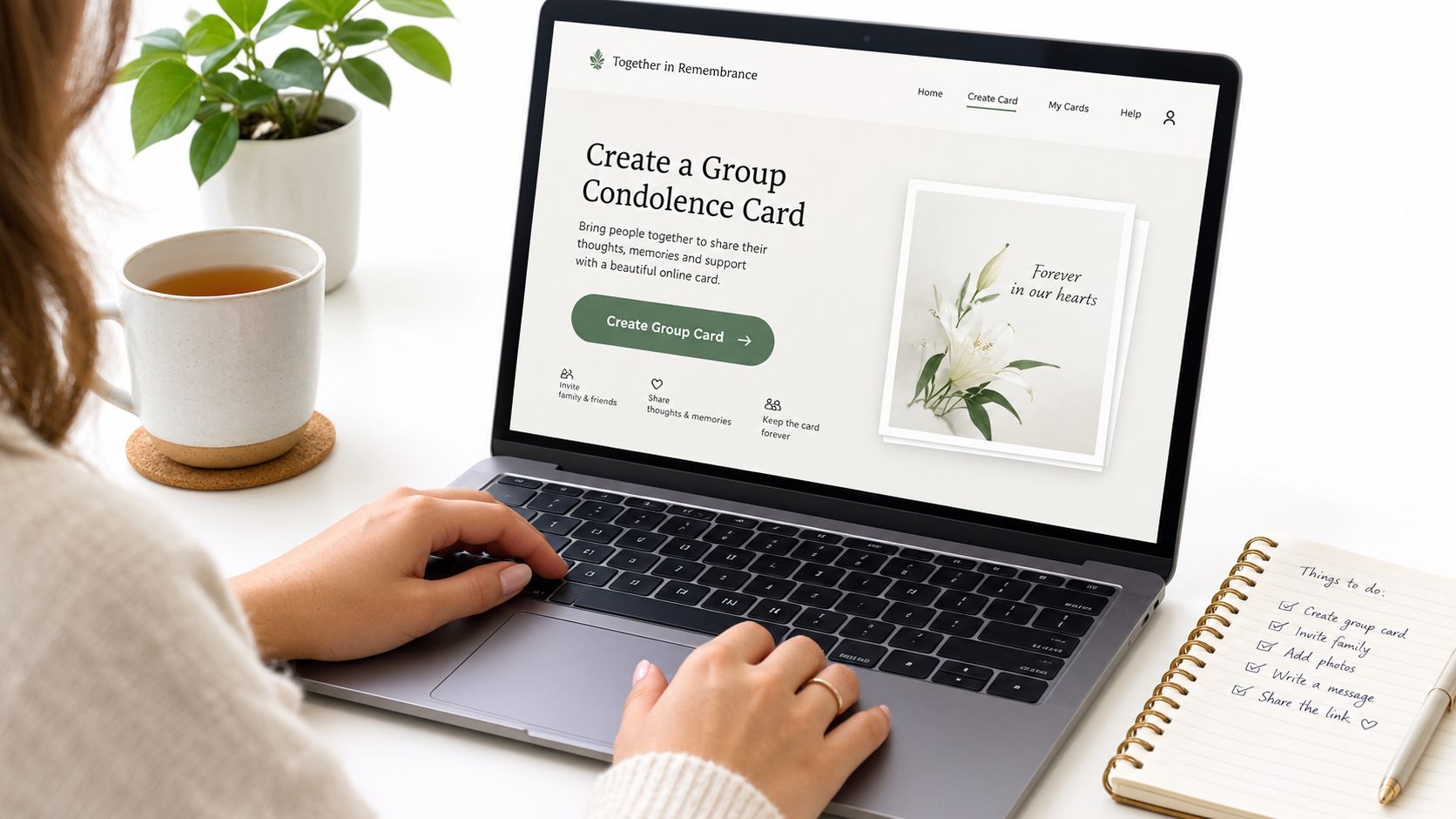
Name the card after the person who died, not after the group sending it. “For Daniel's family” is immediately recognisable. “University friends card” makes the recipient work out what the message concerns, which is an unnecessary burden.
Set a contribution deadline that relates to the funeral or memorial, but don't treat it as a hard test of affection. People may be travelling, working, or unsure what to write. The organiser's note should explain who the card is from and why it's being sent. Keep it short:
Organiser's note: We're putting together a private card from Daniel's university friends. Please add a message if you'd like to, and don't feel pressured to write more than a few lines.
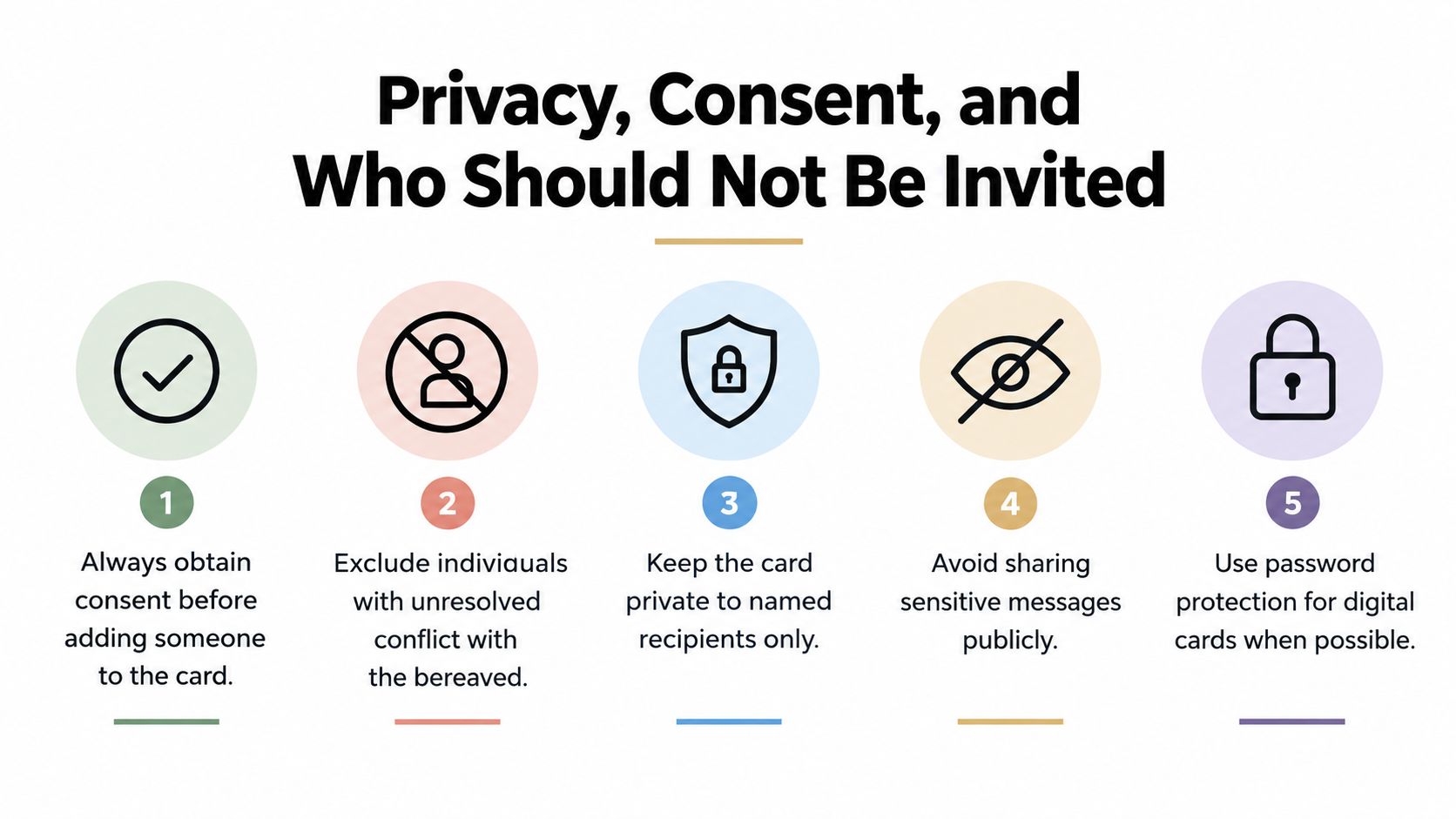
Invite people through a private link and name the individuals you're contacting. Don't paste the link into a huge group chat where people outside the intended circle might forward it. A controlled invitation protects the family's privacy and makes it clear that signing is optional.
Before sending the invitation, check the recipient's preferred email address or contact route. A beautifully written card sent to an old inbox, a shared workplace account, or the wrong family member can create distress rather than comfort. This practical guide to creating a group greeting card online is useful for checking the workflow before you invite contributors.
Ten careful minutes at the start prevent most problems later. You'll know what the card is called, who can access it, when contributions close, and who is responsible for the final delivery.
Sympathy messages should sound like people, not greeting-card copywriters. Use plain language, write in the first person, and name the loss directly when you're comfortable doing so. “I'm so sorry about your dad” is kinder than an elaborate phrase that avoids saying what happened.
Keep each contribution brief. One to three sentences is enough for most signatures. A longer story or letter can be sent separately, where the recipient can give it proper attention.
Avoid euphemisms such as “passed on” if they don't sound natural to you. Don't offer unsolicited grief advice, make claims about how the person must be feeling, or mention the cause of death. Religious language belongs only when you know it will comfort the recipient and reflects their faith.
A close friend might write:
I'm so sorry about your dad. I remember how warmly he welcomed all of us, and I'm thinking of you every day. I'm here, without any pressure to reply.
A work colleague should keep the tone supportive but not overly intimate:
I'm very sorry for your loss. Everyone on the team is thinking of you, and we'll give you the time and space you need.
A neighbour can make the connection practical:
We're so sorry to hear about your loss. Please know that we're nearby and happy to help with shopping, meals, or anything else that would make the next few days easier.
For a non-religious family, simple remembrance often works best:
We're thinking of you and remembering your mum with great affection. Her kindness made a lasting impression on all of us.
The organiser's cover message should name the loss directly, identify the group, and avoid promises nobody can keep. “We are so sorry about your dad. This card is from your university friends, who are all thinking of you” is enough. Don't write “we're always here for anything” unless the group has agreed what practical support it can genuinely offer.
This resource on condolence messages from a company can help workplace organisers find the right level of warmth. Every contributor should sign with the name the recipient recognises. A full name is often better than a nickname from ten years ago, particularly when several people in the group share a first name.
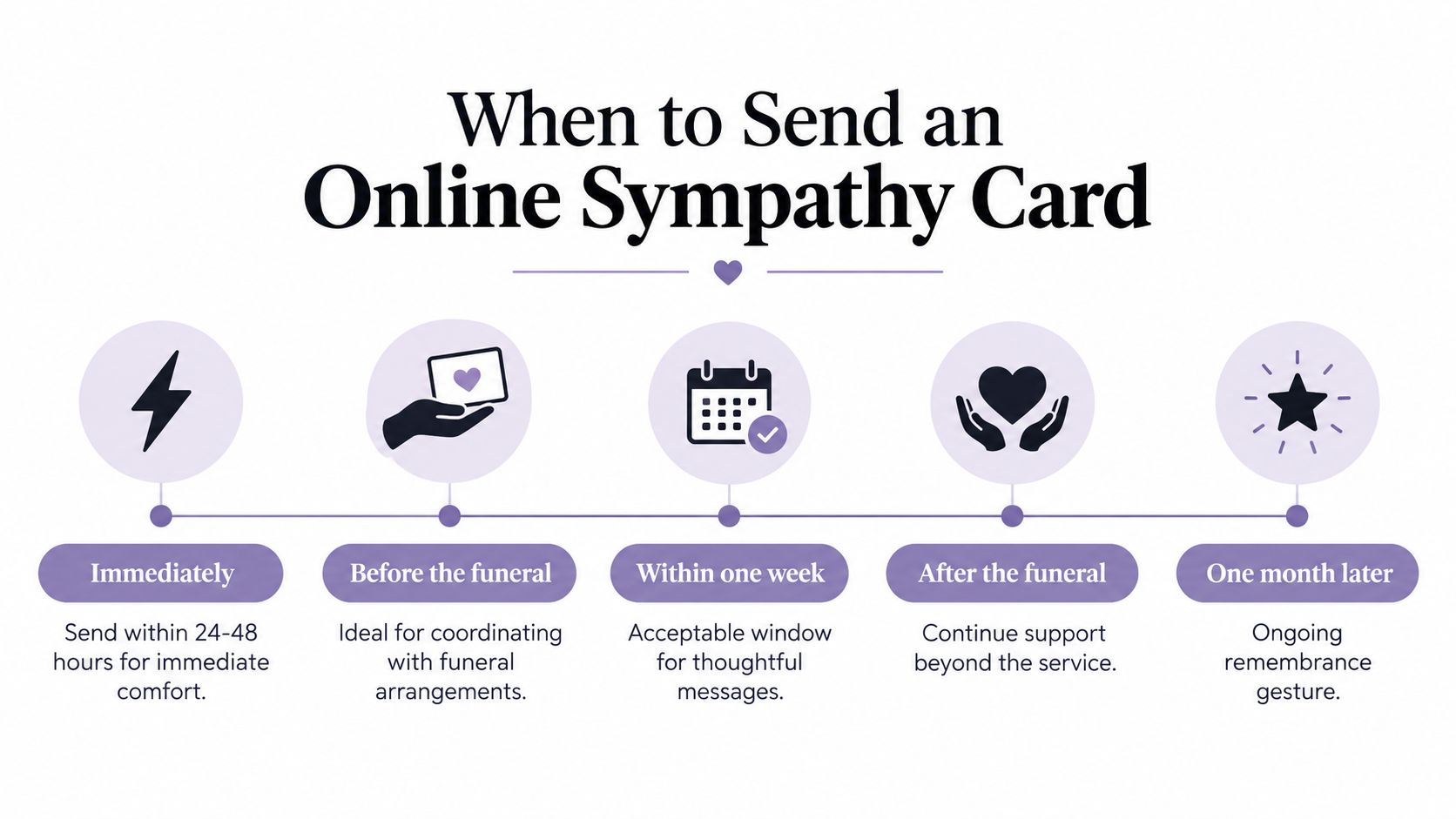
Timing deserves more thought than “send it when it feels right”. A message can be welcome before the funeral, when the family is coordinating arrangements, or after the service, when visitors have gone and the quiet becomes more noticeable. The right moment depends on the family, the relationship, and what else is happening around them.
Don't assume the first possible delivery is automatically the most compassionate. A card sent immediately may arrive while the family is answering urgent calls and organising practical details. A card sent later may land more gently, particularly if the recipient needs time before opening messages.
UK bereavement services have already shown that remote support can operate at scale. In a survey of 805 hospice, community, and hospital staff across the UK and Ireland, 90% reported changes involving telephone, video, and other remote support during the pandemic, according to the BMJ Open survey. Digital contact is now a workable part of bereavement support, but workable doesn't mean thoughtless.
If there's any uncertainty, schedule the card for a considered time rather than sending it as soon as the last person signs. Morning delivery is usually less intrusive than a late-night notification. A private note can explain why the group chose that day, but don't make the recipient feel obliged to appreciate the timing.
Avoid birthdays, anniversaries of the death, and major religious observances unless someone close to the family has indicated that contact would be welcome. Those dates can carry deep significance, and an unexpected group card may feel jarring.
Practical rule: If you can ask a close friend or family member whether the timing works, ask. A quiet check is more respectful than confident guesswork.
The UK also has a public precedent for digital condolence. Government guidance records that an online book of condolence was made available through The Royal Family website and the Church of England during a national mourning period. That doesn't make every digital message appropriate, but it confirms that online sympathy messaging is an accepted public and personal mechanism.
For a practical explanation of delivery options, see this guide to scheduling an ecard.
Multimedia can make a group card feel personal, but sympathy isn't the place to add every file the group can find. Choose material that helps the recipient remember the person warmly without turning the card into an archive they have to manage.
A meaningful photograph usually works better than a polished portrait. Look for a candid moment at a wedding, on holiday, at a work milestone, or with people the recipient associates with the deceased. Avoid photographs taken close to the end of an illness unless the family has specifically shared or requested them.
Short videos can be moving because the recipient hears a familiar voice. Keep each contribution concise and make sure the speaker says their name if they aren't known to the recipient. Voice notes can feel even more intimate, but they also require the recipient to press play, so use them sparingly.
| Media type | Best use | Skip if… |
|---|---|---|
| Photo | A warm, recognisable memory of the person who died | It shows illness, private distress, or an event the recipient may not want revisited |
| Short video | A calm personal message from someone who can't attend | It includes loud music, forced cheerfulness, or a long introduction |
| Voice note | A familiar voice offering sympathy or sharing one sincere memory | The recording is difficult to hear or creates pressure to respond |
| Shared memory | A specific story that shows what the person meant to the group | The joke excludes the recipient or depends on background only the group understands |
Skip surprise party footage, loud laughter, and inside jokes that could make the recipient feel like an observer of someone else's social world. A memory should invite recognition, not require explanation.
On a collaborative card platform, you can combine text, photos, and short videos on one page and place the most grounding message first. Keep the total collection manageable. The recipient shouldn't have to scroll through an endless multimedia project before finding the words that matter most.
One thoughtful photograph and a few sincere messages can be enough. The aim is not to prove how much content the group collected. It's to give the bereaved person something they can return to when they choose.
An online sympathy card isn't automatically appropriate just because it's convenient. A paper card can be handed to one person and put away. A digital card can be forwarded, screenshotted, indexed, or opened by someone who was never meant to see it.
Set the default as private access for the named recipient and immediate family. Before collecting contributions, decide whether the finished card will arrive by email, through a private link, or somewhere visible on social media. Tell contributors what the audience will be. People write differently when they believe twenty acquaintances will read their words rather than one grieving friend.
Don't invite everyone who knew the deceased. An estranged relative, former partner, or person the bereaved has deliberately cut out of their life may have a legitimate connection to the person who died, but that doesn't give them automatic access to the recipient.
Ask someone close to the family before inviting a complicated relationship. If you don't know whether a person belongs, leave them out until you have consent. A group card isn't a referendum on who deserves to grieve.
Workplace organisers need to clarify whether the card is a personal gesture from colleagues or something the recipient may want to show a manager. HR shouldn't be added as a courtesy if the recipient hasn't indicated that workplace involvement is welcome. The same principle applies to public posts. Don't turn a private loss into a social update without permission.
Privacy isn't a technical extra. It changes what people feel safe writing and protects the recipient from having to manage an audience while grieving.
Look for access controls such as a single email address, a private link with a passphrase, or a named list of viewers. Give the recipient control over whether they download, retain, or delete the card after reading it. These are sensible transparent privacy practices for any digital space where personal messages and memories are collected.
A later UK survey of 147 bereavement services found that online peer group meetings rose from 3.4% before the pandemic to 33% during it, while online one-to-one support rose from 8.8% to 83%. The same study reported that 67.3% of services saw groups with unmet needs not accessing support, including minoritised ethnic communities at 49%, sexual minority groups at 26.5%, deprived areas at 24.5%, and men at 23.8%, as reported in the UK bereavement services study. Digital access helps, but it does not remove social or cultural barriers. Ask what the recipient wants rather than assuming an online format solves everything.
For more detail on handling personal information responsibly, see Firacard's data protection guidance.
A good card can still go wrong at the final stage. The organiser mistypes the email address, forgets that the card is public, sends it at an awkward hour, or keeps waiting for one last contribution until the moment has passed.
Save this checklist in your phone or print it before the delivery day.
The final review shouldn't become an invitation to rewrite everyone's feelings. Correct clear mistakes, remove anything harmful, and leave sincere personal wording alone. A message doesn't need to sound polished to be valuable.
Send the card at the agreed time. If the family has indicated that the recipient may not want digital notifications, ask a trusted person to alert them gently or wait for a better route.
Watch for a bounced email or failed delivery, but don't ask the recipient to confirm that they received the card. Grief creates enough obligations without adding “please reply to say this arrived”. If a quiet follow-up is needed, send it to a close friend or relative rather than the bereaved person.
The group's follow-up should be practical and low-pressure. One person might send a private message saying, “No need to reply. We're thinking of you and wanted to make sure the card reached you.” That's kinder than asking whether they liked it.
Archive the card securely for the group, respecting any request to delete it. If the contributors have more memories, ask whether the family would like them collected into a printed keepsake. Don't create a second project without permission.
Check in personally without referring to the card. A message about a meal, a lift, childcare, or a quiet visit often does more than another general expression of sympathy. The card marks your support, but it shouldn't be the only support you offer.
The UK online greetings-card market shows why these digital habits are becoming normal, even though the category isn't moving in a single direction. It was estimated at £338.7 million in 2026, with a reported -1.9% CAGR between 2021 and 2026. The market overview also describes businesses selling both greeting cards and e-cards online. Separate Moonpig investor materials report 446 UK online greeting-card retailers, with the number of retailers growing at an average annual rate of 6.0% between 2021 and 2026. Those figures point to a well-established supplier market, not a temporary workaround.
The message remains more important than the platform. A UK consumer-card benchmark puts online card sales at about £212 million in 2023, up roughly 7% versus 2022, while singles account for about £1.4 billion of UK market sales, according to Moonpig-related UK card market data. Use those figures as market context, not as a reason to make the card busier or more commercial.
The worst online sympathy card is the one that stays unsent because the organiser is waiting for perfect wording, perfect attendance, or one final contributor. Set a respectful boundary, protect the recipient's privacy, write something honest, and send it.
Firacard lets friends, families, colleagues, and distributed teams create a collaborative digital card with messages, photos, GIFs, and videos, then deliver it privately or on schedule. Visit Firacard to create an online sympathy card that brings everyone's condolences together without asking the bereaved person to manage the process.


Finding the right words for a 50th birthday can feel oddly difficult. You want to honour a major milestone without making the message sound like a
You can have hundreds of friendly contacts and still feel unsure who would answer when life gets messy, so what makes a friendship good, and how ca
A couple realises that their 15th wedding anniversary is only weeks away. The restaurant they meant to book is full, the obvious gift ideas feel re