50th Birthday Wishes: 8 Meaningful Templates
Finding the right words for a 50th birthday can feel oddly difficult. You want to honour a major milestone without making the message sound like a


Sep 18, 2026 | 14 Min Read

You're trying to organise a farewell for a colleague who works from another country. One person has the message, another has the photographs, someone else is waiting for a signature, and the paper card is stuck on a desk your recipient may never visit. By the time everyone's ready, the moment has nearly passed.
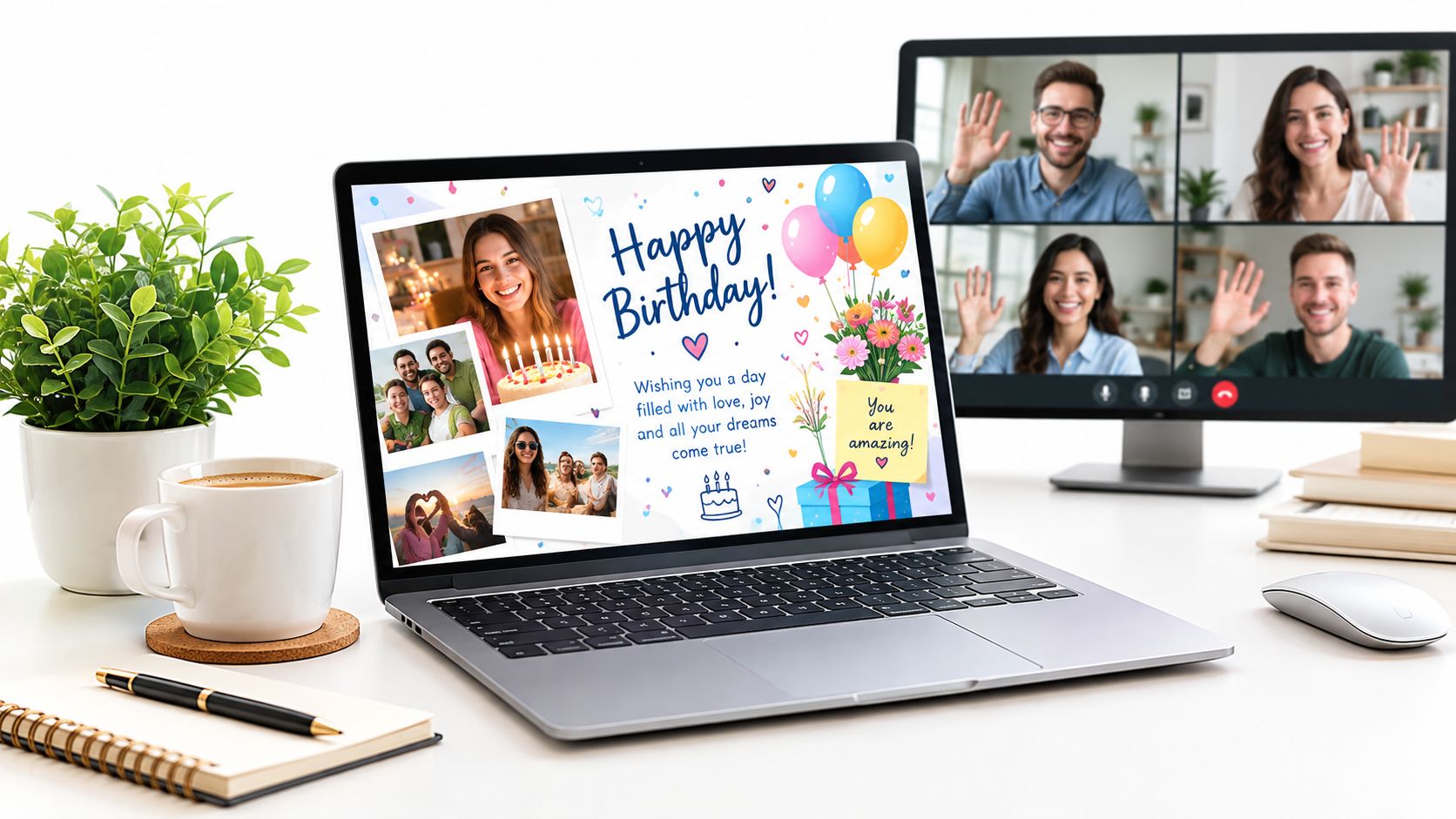
Digital greeting cards online solve that problem without reducing a celebration to a bland email. A shared card can become a small memory space, filled with messages, photos, GIFs and videos from people who couldn't be in the same room. It can arrive instantly, or at the exact moment you want it to.
That makes online cards useful for HR and People teams, remote colleagues, schools, families and friends across the United Kingdom, United States, Australia, Canada, India and Africa. If you're comparing an ecard guide, planning a birthday, or arranging a leaving card, the important question isn't whether a card is digital. It's whether the experience feels personal, inclusive and worth keeping.
A digital card starts with a familiar human need. Someone has reached a birthday, promotion, retirement, new job, anniversary or departure, and the people who care about them want to say something meaningful. The difficulty is coordinating those people when they're spread across offices, cities or continents.
A paper card depends on physical access. Someone must buy it, find it, pass it around, remember who has signed it and return it before the deadline. A digital card replaces that chain of handovers with a shared online space. Contributors open an invitation link, add their own words and media, and leave the organiser to send the finished card.
That difference matters for remote teams. A colleague in London can write beside a teammate in Toronto, while a family member in Sydney adds a photograph from a completely different time zone. Nobody needs to wait for the post, and nobody has to squeeze a thoughtful message into a tiny corner of a card.
Practical rule: The best online card is easy to contribute to, but personal enough that the recipient feels every message came from a real person.
The UK market shows why this format has room to grow. Online transactions represented 10% of total UK greeting-card value in 2019 and 15% by 2023, while online sales accounted for 6% of volume in 2023, according to Moonpig's UK market overview. The same overview says 37% of UK adults bought at least one card online in 2023, including 50% of adults aged 18–34, 44% aged 35–54 and 28% aged 55 and over.
Those figures describe a broad shift towards online purchasing, but a collaborative card offers something more than convenience. It lets a group create a shared keepsake, rather than sending a single message that disappears in an inbox. By the end of this guide, you'll know how the format works, which features deserve attention, where it fits different occasions and how to choose a provider with confidence.
Think of a collaborative digital card as a shared digital noticeboard that travels instantly. A physical card gives each person one small area for a note. An online board gives contributors a common space where words, images and movement can sit together.
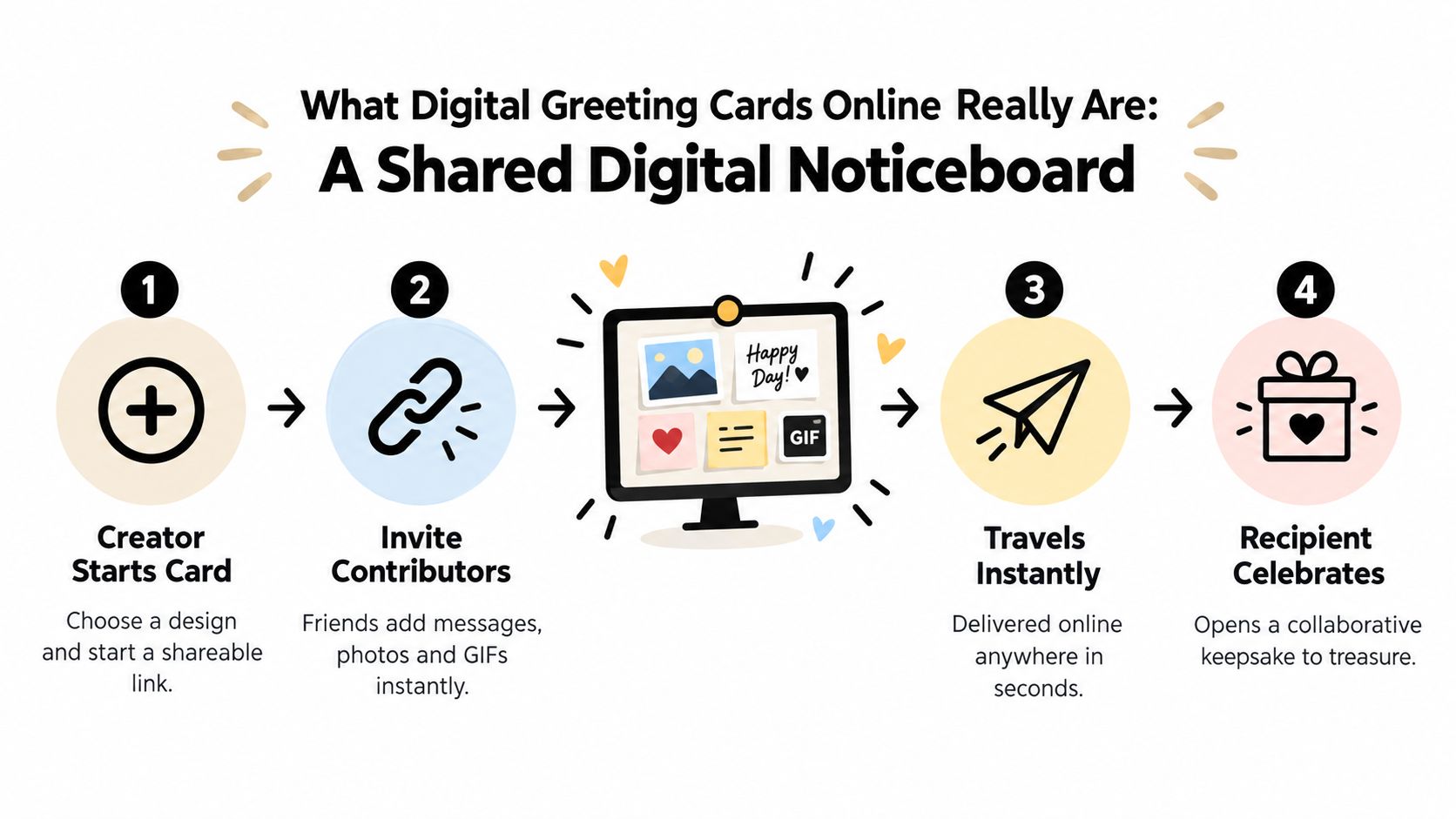
The experience usually follows a straightforward sequence:
A traditional ecard normally comes from one sender to one recipient. It can be polished and convenient, especially for a quick birthday wish or personal greeting. A group greeting card, sometimes called a group online card, is built by several people before delivery.
That distinction affects the emotional experience. One sender communicates a message. A group card gathers a roomful of voices, even when the room itself doesn't exist. A departing colleague might find a note from a manager, an inside joke from a close teammate, a photograph from a team event and a short video from someone working abroad.
Delivery is only part of the experience. A card that can be downloaded in high resolution or preserved as a PDF has a life after the email arrives. The recipient can save it, revisit it and keep the collection of messages with other personal memories.
This is why digital cards shouldn't be treated as paper cards with the paper removed. Their strength comes from combining collaboration, multimedia, controlled delivery and preservation in one place. The format feels immediate for the sender and substantial for the recipient.
Digital cards improve celebrations because they remove practical barriers without removing participation. A colleague doesn't need to be in the office to sign a farewell card. A relative doesn't need to post a card across borders. A school or organisation can invite many people to contribute through one organised workflow.
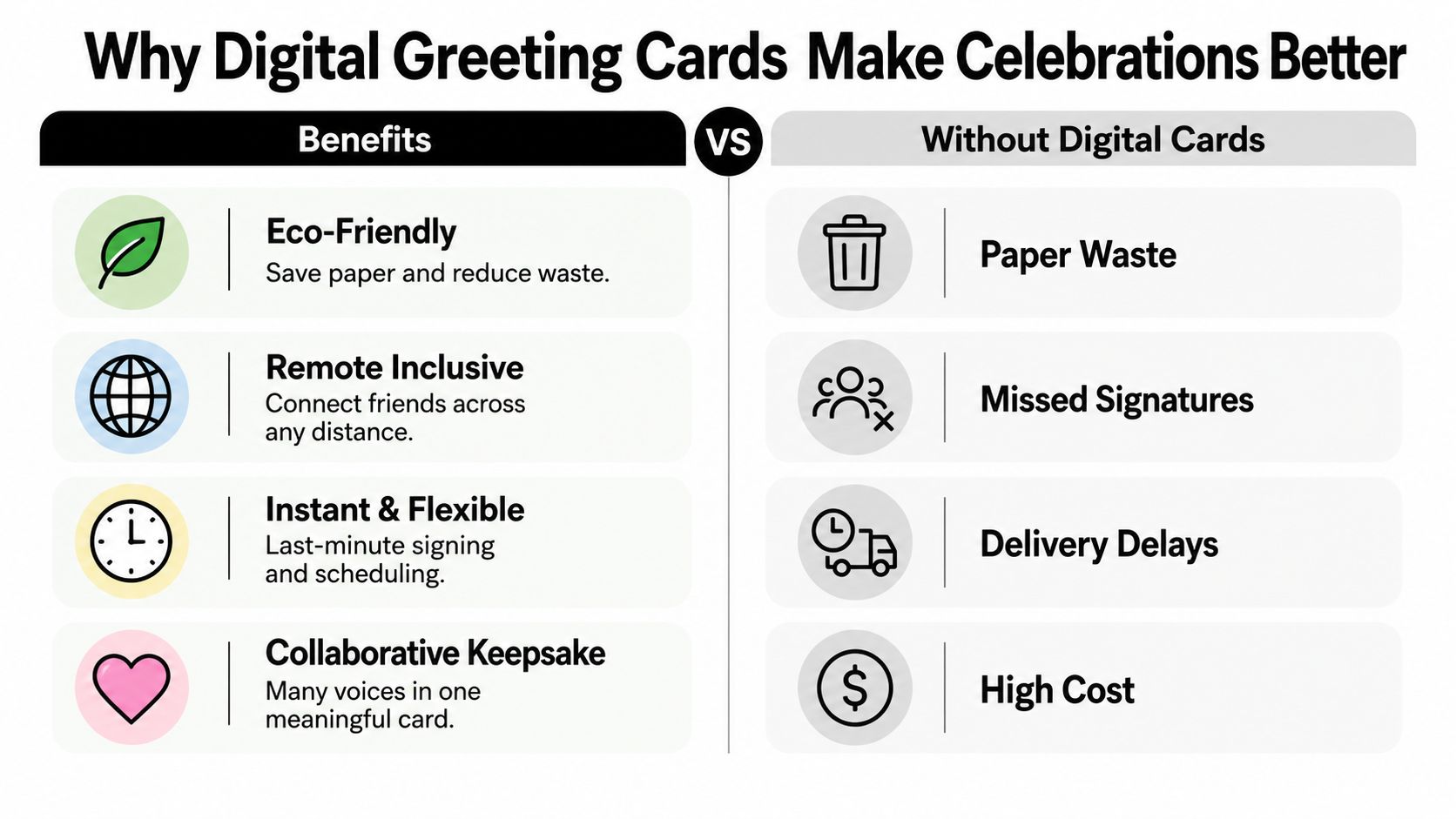
A shared link gives people more flexibility than a card left in a communal area. Contributors can add their messages when they have a suitable moment, while the organiser retains control over the final delivery. That works especially well for shift-based teams, distributed companies and families living across different time zones.
Scheduled delivery also protects the occasion itself. An organiser can prepare a card early and set it to arrive on a birthday morning, during a leaving presentation or after a recognition announcement. Instant delivery remains useful when a celebration is spontaneous or the deadline is close.
The environmental case is practical too. Choosing a digital format avoids the paper, printing and physical delivery associated with a traditional card. It doesn't make every digital activity impact-free, but it can reduce the material handling involved in passing a paper card through a group.
Firacard also states that each paid card supports tree planting through its partnership with One Tree Planted. That adds a tangible environmental contribution to a digital gesture, particularly for organisations that want recognition activities to reflect their wider values.
A short message in a chat can be kind, but it's easy to lose among routine updates. A collaborative card creates a dedicated moment. Photos, GIFs and videos give contributors more ways to express affection, humour or gratitude than text alone.
The market context supports this focus on perceived value. Moonpig's 2024 market update estimated UK online card sales at about £212 million in 2023, roughly 7% higher than in 2022, with growth mainly linked to average selling price increases. Its materials also describe online penetration rising from 10% in 2019 to 15% in 2023.
That value-over-volume pattern suggests an important product lesson. People may pay for an online card when personalisation, presentation and preservation make it feel more valuable than a basic digital message. A multimedia board that can be exported and revisited becomes a collaborative memory keepsake, not merely a paper substitute.
For more context on why these gestures matter emotionally, explore the psychology of gifting. The central idea is simple: convenience gets people into the card, while personal effort and shared memories make it meaningful.
A platform can look attractive and still create work for the organiser. Before choosing one, test the complete journey from card creation to recipient download. The strongest option is the one that makes participation obvious and gives the organiser enough control to protect the final experience.
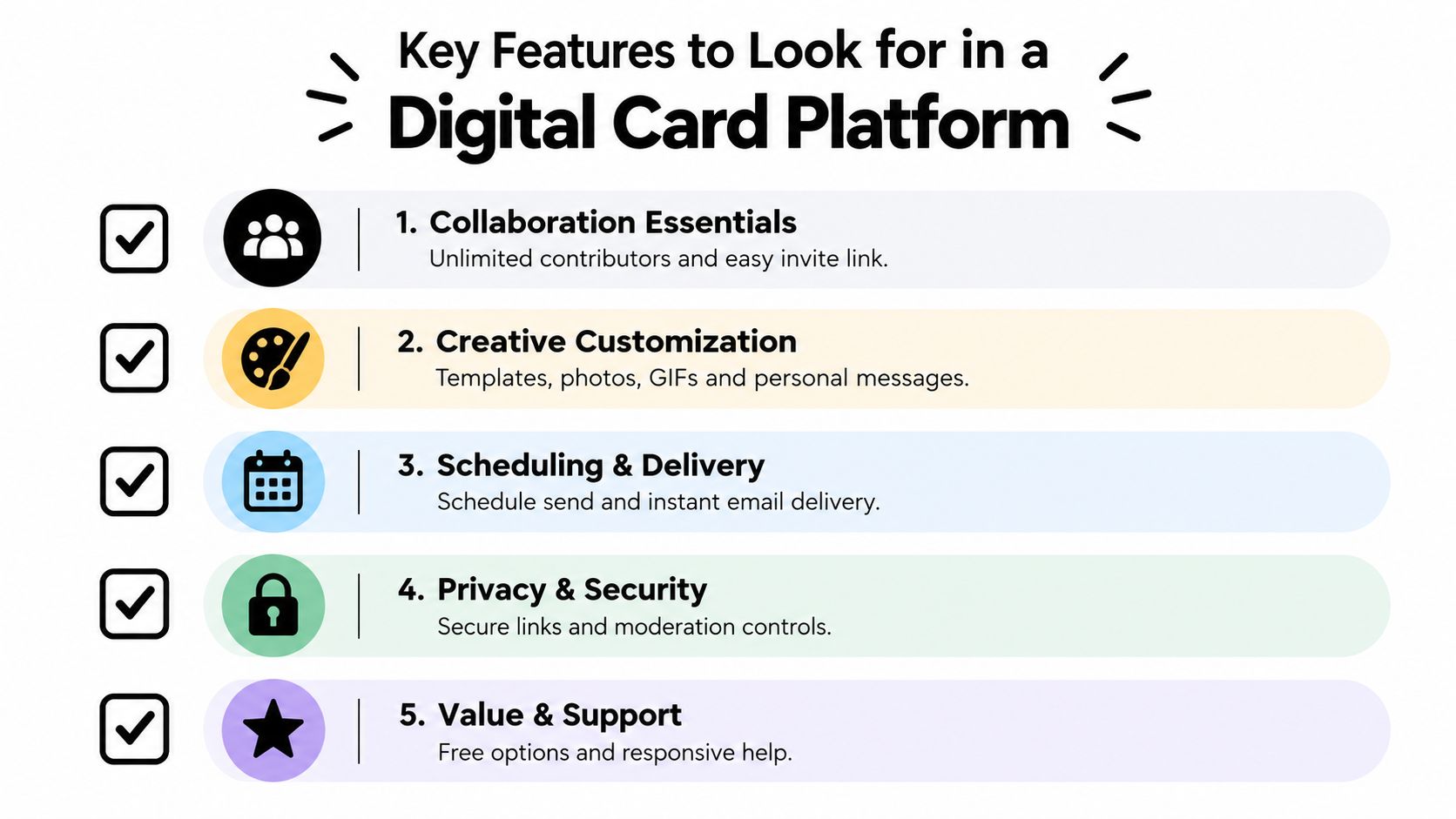
Start with the invite flow. Can you create a card quickly, copy a shareable link and send it through the channels your group already uses? Check the contributor limit too. A small family card and a company-wide appreciation board have very different requirements.
Entry management is just as important as entry access. The organiser may need to review contributions, remove duplicates or control who can add content. A platform that combines broad participation with moderation makes the card easier to manage.
Templates provide a useful starting point, but personalisation gives the card its character. Look for custom backgrounds, personal messages, photographs, GIFs and video support. These features help a card match the occasion rather than forcing every celebration into the same visual format.
A birthday card might use bright colours and photographs from childhood. A farewell card could include team memories and short video messages. Creative flexibility should serve the recipient, not distract from them. More options aren't automatically better if contributors can't use them intuitively.
The design flexibility guide is useful when you're deciding how much creative control your group needs.
Scheduling matters when the card is tied to a specific moment. Instant email delivery suits a quick thank-you, while scheduled sending helps organisers prepare ahead of time. Multiple-recipient delivery can also reduce repetitive work for enterprise, school or family campaigns.
Privacy features deserve equal attention. Password protection, secure invitation links and moderation controls help prevent unwanted access or unsuitable entries. Finally, ask how the finished card can be preserved. Slideshow export, high-resolution downloads and PDF files give the recipient something lasting.
Check the recipient's experience: A creator may value speed, but the recipient values a card that opens smoothly, looks considered and remains available as a keepsake.
The right format depends on the relationship, the occasion and the number of contributors. A personal ecard may need only one thoughtful message. A group board needs a clear invitation, a deadline and enough room for everyone's voice.
A manager creates a virtual leaving card for a colleague moving to a new role. They choose a farewell design, share the invitation with the team and ask people to contribute memories rather than generic good wishes. One teammate adds a photograph, another records a short video and the manager schedules delivery for the final team meeting.
The result is more personal than a single announcement in a workplace chat. It gives the departing colleague a collection of messages they can revisit after leaving. Search for a digital cards for work resource when you're building a repeatable recognition process for remote or hybrid teams.
People often use the terms online leaving card, digital leaving card, sorry for leaving card and virtual leaving card for this type of occasion. The wording varies, but the workflow remains the same: create, invite, review and send.
A family member starts an ecard birthday board for someone living abroad. Relatives in India, Canada and Australia add personal notes, old photographs and playful GIFs. The organiser schedules the birthday ecard so it arrives at the beginning of the recipient's day.
This approach avoids asking one person to represent the whole family. Each contributor can sound like themselves, and the recipient sees the different relationships gathered together. A personalized ecard is particularly effective when the organiser chooses details that belong to the recipient, rather than relying only on a standard greeting.
A team can use a group greeting card to recognise a successful project, a promotion or an anniversary. The organiser might ask each contributor to mention one specific action they appreciated. That prompt produces richer messages than a general request to “sign the card”.
Schools, universities, charities and larger employers may need bulk group greeting cards for recurring campaigns. In that setting, consistent templates and an organised workflow help people celebrate without creating a separate process for every recipient.
Price should be considered alongside scale and control. A free plan may suit a small personal card, while a paid plan can make sense when multimedia, scheduling, presentation quality or a larger contributor group matters. For HR and education buyers, bulk discounts may be relevant when cards form part of a recurring recognition programme.
Firacard offers a Free plan for up to 10 contributors, a Premium plan for up to 100 contributors with multimedia, no ads, slideshow export, multiple recipients and scheduling, and an Infinity plan with unlimited contributors. These are product inclusions, so compare them with the way your group celebrates rather than choosing solely by headline price.
| Plan Tier | Best For | Key Inclusions |
|---|---|---|
| Free | Small personal greetings and compact groups | Up to 10 contributors |
| Premium | Teams and occasions needing richer presentation | Up to 100 contributors, multimedia, no ads, slideshow export, multiple recipients and scheduling |
| Infinity | Large organisations, schools and broad campaigns | Unlimited contributors |
A private card should feel private to the organiser and the recipient. Password protection can add a layer of access control, while entry management lets the creator review contributions before delivery. Those controls matter when a card includes personal photographs, internal workplace messages or content intended for one individual.
The wider category is established but competitive. IBISWorld's UK industry data places online greetings-card retailers at £338.7 million in 2026, with 446 businesses in the sector. It also reports average business-count growth of 6.0% from 2021 to 2026 and a negative 1.9% CAGR over 2021 to 2026, pointing to a market where operators need to compete through product quality and efficient distribution.
For a one-to-one greeting, prioritise ease and design. For a departing colleague, check contributor access, privacy and keepsake export. For an organisation, assess bulk support, recurring administration and whether the platform can handle different group sizes without forcing every buyer into the same plan.
The best choice gives contributors a low-friction way to participate while giving organisers enough control to protect the recipient's moment.
A digital greeting card online can begin with a practical problem, but it ends as something more human. The organiser avoids chasing paper signatures, contributors participate from wherever they are and the recipient receives a collection of individual messages in one place.
The format works because it combines several small advantages. A shareable link makes collaboration accessible. Photos, GIFs, videos and personal messages add texture. Scheduling protects the timing, while a slideshow, high-resolution file or PDF gives the finished card a life beyond its first opening.
Choose the occasion and decide whether the card should feel playful, formal, affectionate or reflective. Start with a design that supports that mood, then write a short invitation explaining what contributors can add and when the card will be sent.
Invite people through one clear link. Encourage specific memories, photographs or short videos, and review the entries before delivery. If the occasion has a fixed date, schedule the send early enough to avoid a last-minute scramble.
For a practical walkthrough, follow how to create a group greeting card online. The process is simple, but the prompts you give contributors will shape the quality of the final keepsake.
A long list of identical greetings won't necessarily make a card memorable. A smaller collection of distinct messages can feel much more personal when each person shares a real memory, a precise thank-you or a detail the recipient will recognise.
That's the lasting advantage of collaborative cards. They don't just digitise the act of signing. They gather people who are physically apart and turn their separate contributions into one shared object, ready to open now and keep later.
Firacard lets you create collaborative group greeting cards and ecards with messages, photos, GIFs and videos, then send them instantly or on schedule. Visit Firacard to start a card for a birthday, farewell, appreciation moment or family celebration and invite everyone who should be part of it.


Finding the right words for a 50th birthday can feel oddly difficult. You want to honour a major milestone without making the message sound like a
You've just heard that someone you care about has lost a parent. The funeral is approaching, friends are scattered across cities, and nobody w
You can have hundreds of friendly contacts and still feel unsure who would answer when life gets messy, so what makes a friendship good, and how ca