50th Birthday Wishes: 8 Meaningful Templates
Finding the right words for a 50th birthday can feel oddly difficult. You want to honour a major milestone without making the message sound like a


Sep 27, 2026 | 22 Min Read

A sustainable workplace isn't shaped only by energy bills, commuting patterns and procurement contracts. It's also shaped by the small rituals people repeat every week, including how teams welcome colleagues, recognise contributions, celebrate milestones and say goodbye. In the UK, office buildings rated F or G fell from 17.2% to 14.1% since 2023, while A to C-rated buildings rose to nearly 38% of stock, yet almost two-thirds of office space remained below the proposed 2027 Minimum Energy Efficiency Standards threshold, according to UK office sustainability analysis. The message is clear. Organisations need both major estate decisions and better everyday systems.
This guide focuses on practical sustainable workplace practices for HR, People Operations and culture teams. You'll find ways to reduce paper, unnecessary travel and duplicated resources while making recognition more accessible across remote, hybrid and office-based teams. That includes using a guide to sustainability from Reworx Recycling, improving measurement, and replacing physical rituals with group greeting cards, online leaving cards and personalised ecards where they make sense.
The strongest programmes don't ask employees to carry sustainability alone. They combine efficient buildings, responsible policies, inclusive communication and visible evidence of progress. They also make it easy for people to participate without travelling to the office, passing around a paper card or printing another announcement.
Digital recognition works best when it becomes part of the normal employee experience rather than an occasional campaign. A project lead can open a group online card after a difficult delivery, colleagues can add messages asynchronously, and a distributed team can celebrate together without shipping paper or arranging a face-to-face event.
The environmental benefit is straightforward. A digital card removes physical materials and avoids the handling involved in passing a card between desks or sending it between locations. The cultural benefit depends on execution. A generic automated message won't create belonging, but a personalised note that names a specific contribution can make recognition feel timely and credible.
A software team might use an online card for work after a sprint, while a school could coordinate a group greeting card for teacher appreciation. A multinational organisation can also give people in different time zones a fair opportunity to contribute, rather than limiting recognition to whoever happens to be in the office.
People managers need clear prompts and simple standards. Ask contributors to describe the behaviour or result they're recognising, connect it to a team value, and avoid making participation compulsory. HR can schedule reminders around birthdays, anniversaries and project completions, then provide templates that still leave room for personal messages.
Useful operating choices include:
The trade-off is that digital recognition can become noisy if every small action triggers a public card. Reserve group cards for moments that benefit from collective appreciation, and use a short private message for routine thanks.
A departure is a people-operations moment, not just an administrative task. A well-organised virtual leaving card gives colleagues, clients and collaborators a structured way to share memories, thanks and good wishes, even when they've never worked in the same building.
This approach can replace a paper card passed around an office and reduce the need for a travel-based farewell event. It also protects inclusion. Remote colleagues, part-time workers and people on different shifts can contribute when they're available, rather than missing the ritual entirely.
Use a virtual farewell card that strengthens workplace relationships as the central keepsake, then add a live video call when the departing person wants one. Text, photographs, voice messages and short videos can give the card more emotional range than a collection of hurried signatures.

Start early enough for colleagues to contribute, set a firm deadline and nominate one organiser. The organiser should explain how to add a message, offer optional prompts and check that the departing person is comfortable with the format. A sorry for leaving card can work for a close team, while a larger organisation may prefer separate spaces for colleagues, customers and senior leaders.
Practical rule: The keepsake should belong to the departing person. Confirm what can be shared publicly, and deliver the completed card promptly after the deadline.
Archive the card only with appropriate consent. An organisational memory can be valuable, but a farewell message may contain personal information that shouldn't remain accessible indefinitely. A sustainable ritual still needs sound privacy and offboarding controls.
Paper reduction should begin with an audit, not a slogan. Identify where teams print most often, such as onboarding packs, internal announcements, meeting materials, celebration cards and approval documents. Then replace the highest-volume uses with secure, mobile-friendly digital workflows.
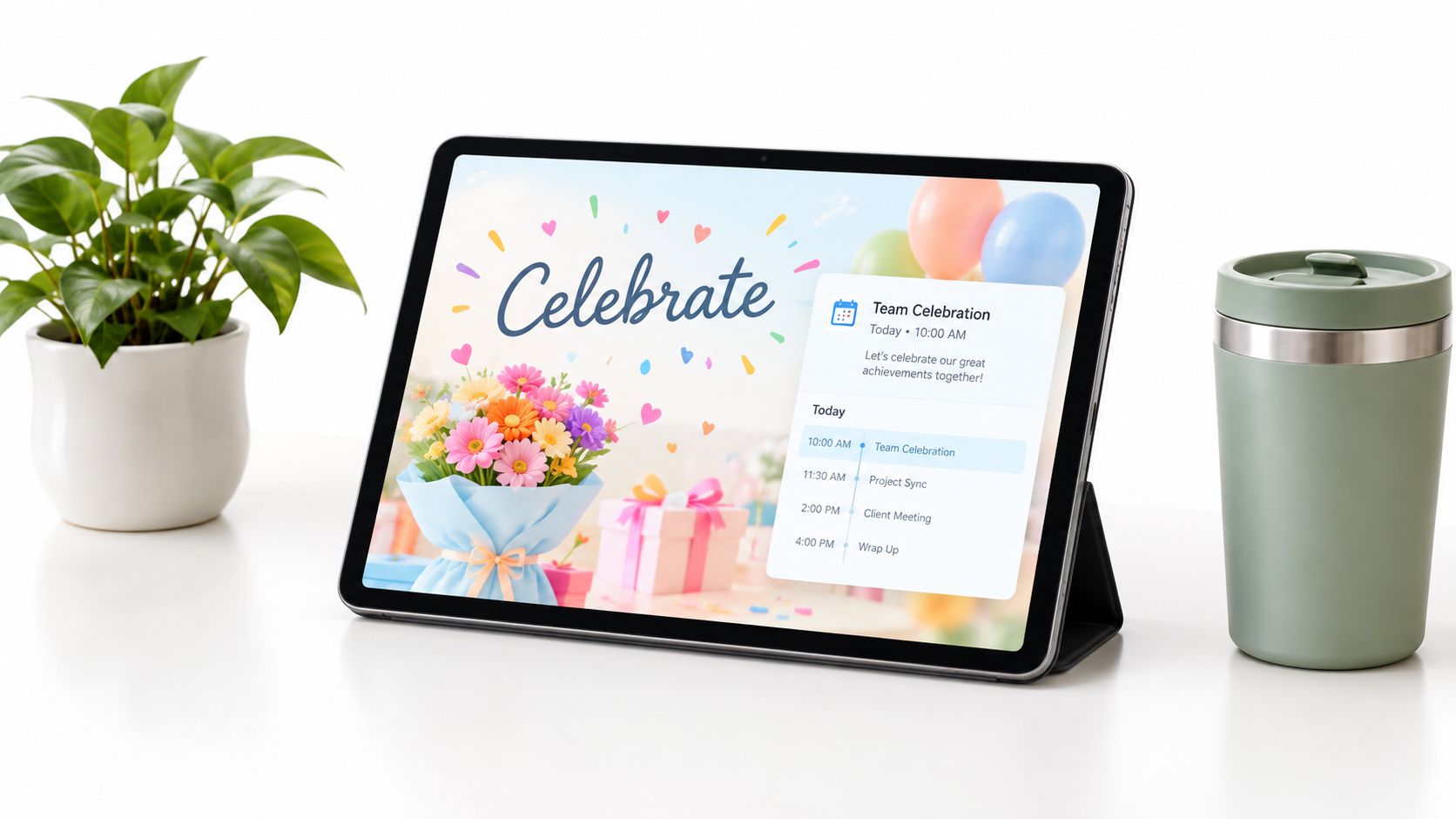
A paperless celebration system might use a digital announcement board for birthdays, an ecard for client appreciation and a paperless office solution for team milestones. The purpose isn't to remove warmth. It's to move warmth into formats that remote and office-based employees can access equally.
A digital-by-default policy needs a practical exception process. Some legal, accessibility or operational documents may still require printing. Employees also need training, reliable document management and a clear way to find archived information. Without those foundations, paper reduction can shift frustration into duplicated files and unnecessary screenshots.
A useful sequence is:
Teams shouldn't claim environmental progress merely because a message moved online. Digital services also consume energy and create data-storage needs. The sensible test is whether the new workflow removes material, transport and disposal requirements while remaining usable and secure.
Hybrid working can reduce work-related emissions by as much as 70% in the UK when employees split time between a local workplace and home instead of commuting daily to a city-centre office, according to written evidence submitted to the UK Parliament. That benefit isn't automatic. If employees travel more often to compensate for weak culture, or if offices remain fully heated and powered regardless of use, the environmental case becomes less convincing.
Culture teams should design rituals around the way people work. A remote-first startup might run a birthday ecard celebration asynchronously, while a hybrid department could use a group online card for a project completed across several locations. The card is a small intervention, but it prevents recognition from becoming dependent on physical proximity.
Create a shared calendar of milestones, provide a dedicated budget for digital culture tools and train managers to host virtual gatherings with a clear purpose. Don't turn every social moment into another mandatory video meeting. A short asynchronous contribution often suits employees better than a call scheduled across inconvenient time zones.
A practical hybrid culture system includes:
UK office occupancy evidence reported national average occupancy at about 37% across the working week, with peaks around 45% mid-week, about 30% on Mondays and roughly 20% on Fridays, according to Parliamentary written evidence on office occupancy. Facilities teams can use this type of pattern to review space, heating and cleaning schedules, while People teams ensure lower-occupancy days don't become lower-belonging days.
Celebrations can carry a social or environmental contribution when the organisation chooses a platform and partnership carefully. A paid card on Firacard supports tree planting through its partnership with One Tree Planted, giving a recognition activity an explicit environmental element. That doesn't make every card a complete sustainability strategy, but it can connect an ordinary people ritual with a broader organisational value.
The important word is transparent. Explain what the partnership does, what the card supports and what the organisation can verify. Don't turn a tree-planting message into a substitute for reducing energy use, waste or travel. Employees are more likely to trust the programme when leaders show how celebration-based giving sits alongside operational action.
A company could pair a birthday ecard campaign with volunteering information, recognise a departing volunteer with a digital farewell card, or invite a team to celebrate a project milestone while supporting a relevant environmental cause. A corporate volunteering programmes guide can help connect recognition with more structured community activity.
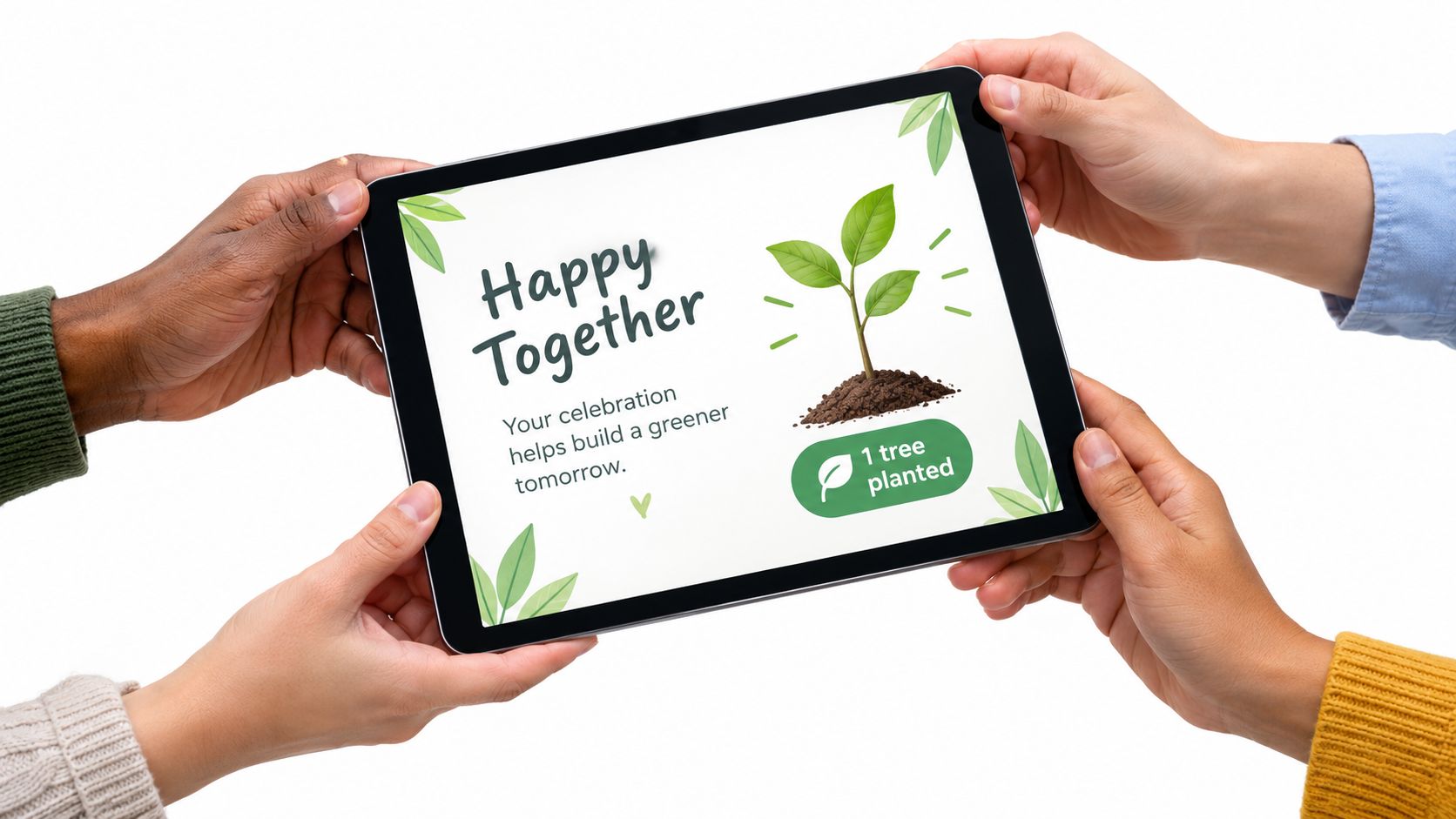
People teams should maintain a simple record of cards sent, participation and the environmental contribution attached to the programme. Use plain language in invitations and follow-ups. Avoid unsupported claims about carbon neutrality or wider ecological outcomes unless a credible partner provides the relevant evidence.
Small celebrations can support a wider purpose, but they shouldn't distract from the changes that reduce operational impact.
The best CSR approach makes participation voluntary, celebrates collective effort and aligns with the organisation's existing sustainability priorities. If the company is working on biodiversity, a nature-related partnership may fit. If its main challenge is waste, a paperless recognition programme may be the more relevant first step.
A physical card assumes people share a location, a schedule and a preferred way of communicating. Those assumptions exclude employees who work remotely, use assistive technology, have limited connectivity or prefer not to write public messages. Digital recognition can remove some barriers, but only if organisers design the process deliberately.
Offer several ways to participate, including text, voice, video and reactions. Provide written instructions as well as a short tutorial, and give people enough time to translate or contextualise a message. A global team may need culturally aware templates rather than a single calendar of celebrations based on one country's observances.
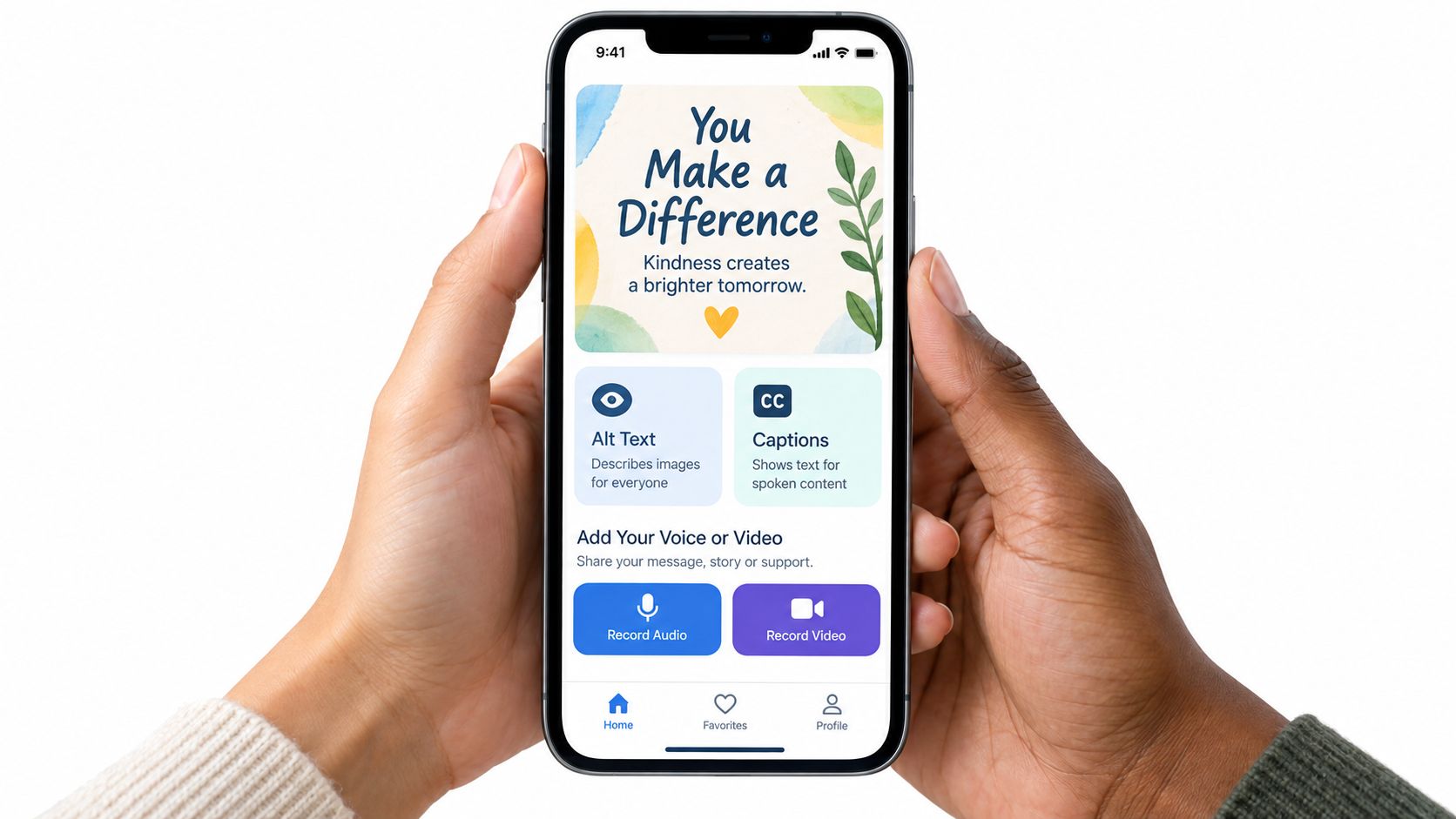
Ask whether the platform works on the devices employees use, whether text can be read by assistive technology and whether video contributions include captions or a written alternative. Aim for WCAG 2.1 AA compliance when selecting a platform, and verify the provider's accessibility information rather than treating a checklist as proof of an inclusive experience.
An accessible recognition process should include:
A team might use a group online card for a colleague returning from leave, but it shouldn't assume that the person wants public details about their circumstances. Inclusion means offering recognition without requiring disclosure. It also means allowing someone to decline without having to explain why.
Peer recognition broadens how teams identify valuable work. Managers may see outcomes, while colleagues notice the troubleshooting, knowledge sharing and quiet coordination behind them. A digital kudos process lets employees acknowledge those contributions without waiting for a formal review or approval.
Begin with a small pilot. Choose a few behaviours linked to organisational values, such as customer care, responsible decision-making or sharing useful knowledge. Give contributors prompts that encourage detail. “Thanks for helping” is friendly, while “Your handover notes helped the evening team resolve the issue without another meeting” shows the practical effect.
A structured peer-to-peer recognition programme can combine group online cards, individual notes and a monthly values spotlight. Teams that want collaborative contributions without a physical board might choose a kudoboard alternative. The platform still needs clear expectations, moderation and trust to work well.
Set participation principles before launch. Explain what belongs on the system, how inappropriate content will be handled and whether messages are public. Review participation across roles, shifts and locations, since a process built around office hours can overlook distributed or frontline employees.
Use these operating practices:
Recognition should reinforce meaningful work, not reward constant visibility. Avoid tying every message to money, or employees may compete for attention instead of supporting colleagues. Set a review point to examine participation patterns, employee feedback and whether the process is replacing older paper-based habits.
A peer system can support sustainability by reducing printed kudos cards, unnecessary meetings and physical reward logistics. Track those practical changes alongside the quality and reach of recognition, rather than treating message volume as success.
Wellbeing recognition works only when employees control what they share. A team can celebrate participation in a mental health workshop, thank wellbeing volunteers with an online greeting card, or recognise colleagues who protected focus time. Keep diagnoses, treatment details and private experiences out of public praise. Visible enthusiasm is not a reliable measure of mental health.
People teams can use this company wellness programme examples guide to develop activities, then test each idea against consent, accessibility and professional guidance. Recognition should support practical conditions for wellbeing, including flexible scheduling, adequate time off, manageable workloads and access to an Employee Assistance Programme.
A remote team might send a digital card to colleagues who supported a wellbeing initiative. An office team could acknowledge people who helped maintain meeting-free time. The same ritual should work across locations without requiring employees to disclose personal information.
Build the practice around these safeguards:
Sustainability and wellbeing reinforce each other when organisations reduce unnecessary travel, meeting overload and material waste. The trade-off matters: an energy-saving policy can still fail if it increases isolation or pressure. Review employee feedback, participation patterns and engagement measures to see whether each ritual strengthens connection without creating another obligation.
For broader context on healthy boundaries, see this guide to burnout for Florida adults.
Milestone recognition should run on a clear process, not personal memory. Birthdays, work anniversaries, promotions, welcomes and departures are easy to miss as teams grow, reorganise or work across countries. A shared workflow gives the organiser time to respond thoughtfully while reducing paper, duplicate reminders and last-minute purchasing.
A digital reminder can prompt the right organiser without printing a calendar or asking HR to track every date manually. A team might send a birthday ecard or a virtual leaving card, depending on the occasion and the recipient's preferences. The same system can support recognition across offices and remote teams, provided employees control how their information is used.
Connect milestone data to the HRIS only when the integration is secure and proportionate. Employees should choose whether their birthday, anniversary or another life event is visible, and they should be able to correct outdated details. Automation should create a prompt. A manager or colleague should still review the message and add specific appreciation.
Set the workflow around five practical controls:
Milestone systems reduce administration and make paperless recognition more consistent. They can also expose exclusion, such as contractors or international colleagues missing from celebration calendars. Check participation across employment types and locations before calling the programme fair.
Keep incentives separate from celebration activity. Executive bonuses should not depend on a milestone-card programme merely because its policy uses sustainability language. Recognition can strengthen belonging, while measurable organisational outcomes should carry accountability.
Employees can't judge a sustainability programme if leaders report only intentions. People teams should connect each initiative to a small set of measures, establish a baseline and explain what the data can and cannot prove.
For a digital recognition programme, useful measures may include paper purchasing, printed-card use, participation by location, accessibility feedback and employee experience responses. For facilities, the relevant measures may include energy use, waste streams, building performance and occupancy patterns. A UK workplace survey found 63% of workers said their companies had environmental and sustainability goals, while 36% said their employer operated under an ESG framework or guidelines, and 27% didn't know what ESG frameworks were, according to UK and Ireland workplace sustainability research. Clear reporting helps close that awareness gap.
Use dashboards that employees can understand, and pair totals with explanations. If a card platform reports tree planting through a partner, state the partner and the activity. Don't convert a number of cards into an unsupported carbon-saving claim.
Measure the practice you changed, not the outcome you wish it had produced.
The UK government's ICT example shows what measurable reporting can look like. Its ICT carbon emissions fell 13% year on year to 294,654 tonnes in 2024 to 2025, while ICT waste fell 36% to 955 tonnes, according to the Greening Government ICT annual report. A workplace team shouldn't copy those measures without relevance, but it can adopt the same discipline of tracking a defined activity and publishing the result.
Report environmental, participation and employee-experience measures together. A paperless card programme with low participation may need better design. A highly popular campaign with no evidence of reduced physical consumption may need a different environmental measure. Transparent reporting makes those trade-offs visible.
| Practice | Implementation complexity | Resource requirements | Expected outcomes | Ideal use cases | Key advantages |
|---|---|---|---|---|---|
| Digital-First Employee Recognition Programs | Low–Medium, platform setup and adoption | SaaS platform, training, internet access | Increased participation, digital archives, reduced paper waste | Distributed or hybrid teams needing real-time recognition | Real-time peer recognition; measurable engagement; eco-friendly |
| Virtual Farewell and Exit Ceremonies | Low, coordination and contribution management | Contribution platform, organizer time, multimedia support | Inclusive goodbyes, lasting keepsake, lower travel emissions | Departures across time zones; remote-first organizations | Asynchronous participation; downloadable keepsakes; cost savings |
| Paperless Workplace Communication and Celebrations | Medium–High, policy and systems integration | Document management, security, change management, training | Large paper reduction, faster dissemination, compliance benefits | Organizations pursuing sustainability and cost reductions | Significant environmental impact; searchable archives; lower infra costs |
| Remote and Hybrid Work Culture Building | High, ongoing programs and facilitation | Collaboration tools, culture budget, manager training | Stronger belonging, reduced commuting emissions, broader talent pool | Remote-first or hybrid companies scaling culture efforts | Location-inclusive practices; lasting culture artifacts; flexible participation |
| Corporate Social Responsibility Through Celebration | Medium, partner integration and reporting | Partnerships (e.g., tree planting), budget, verification processes | Measurable environmental/social impact, improved reputation | Purpose-driven companies and CSR campaigns | Tangible impact (e.g., trees planted); aligns celebrations with values |
| Inclusivity and Accessibility in Workplace Recognition | Medium, design and continual refinement | Accessible platforms, translations, WCAG compliance, training | Higher participation, equitable recognition, DEI alignment | Diverse/global teams; accessibility-compliant organizations | Multi-format access; increases belonging; supports neurodiversity |
| Peer-to-Peer Recognition and Kudos Systems | Medium, governance and adoption required | Recognition platform, facilitation, engagement programs | More frequent recognition, improved engagement and retention | Collaborative organisations seeking peer-driven culture | Democratizes recognition; surface hidden contributions; actionable data |
| Employee Wellness and Mental Health Celebration | Medium, privacy and sensitive design | Wellness programs, privacy controls, EAP links, training | Reduced stigma, improved wellbeing, lower burnout and turnover | Organizations prioritizing employee mental health | Normalizes wellbeing; private/voluntary recognition; supports retention |
| Milestone and Life Event Celebration Systems | Low–Medium, automation and HR integration | HRIS integration, templates, scheduling and notification tools | Consistent recognition, fewer missed milestones, admin efficiency | Large organizations needing scalable celebration workflows | Automated coverage; low admin burden; predictable rituals |
| Transparent Impact Metrics and Sustainability Reporting | High, tracking, attribution and verification | Analytics dashboards, third‑party verification, data processes | Credible sustainability claims, employee engagement, continuous improvement | Companies pursuing ESG reporting, certifications or investor transparency | Verifiable impact; accountability; supports ESG and certification goals |
Sustainable workplace practices become credible when they change a routine, assign responsibility and produce evidence. A sustainability statement may express direction, but employees need to know what they should do, why it matters and how leaders will assess progress. That applies equally to building upgrades, flexible work, waste management and recognition rituals.
Start with one high-frequency activity. Paperless recognition is often a practical entry point because birthdays, farewells, welcomes and project celebrations already happen. A digital milestone system can reduce printed materials and make participation easier for remote colleagues, while a group greeting card can replace the physical card that once travelled from desk to desk.
Before launching, establish a baseline. Record how the current process works, how much paper it uses, how much staff time it requires and who can participate. You don't need a large dashboard on day one. A small, trusted set of measures is more useful than a long list that nobody updates.
Assign an owner in People Operations, HR, workplace experience or sustainability. That person should coordinate with facilities, IT, procurement, communications and employee resource groups. Recognition belongs to culture, but its environmental effect can depend on procurement choices, data retention, office attendance and the way teams communicate.
Track three categories:
Avoid treating participation as proof of impact. A full card may indicate strong connection, but it doesn't demonstrate that an organisation has addressed inefficient heating or a wasteful procurement process. Likewise, reducing office attendance doesn't automatically create a sustainable workplace if teams lose inclusion or employees travel longer distances on the days they do attend.
The UK evidence points to a wider implementation challenge. Almost two-thirds of office space remained below the proposed 2027 Minimum Energy Efficiency Standards threshold, so organisations need retrofit planning, heating upgrades and energy management alongside behaviour change, according to the UK office benchmark analysis. Employee expectations matter too. 42% of workers said they would accept lower pay to work for ethical, environmentally friendly organisations, rising to 66% among Gen Z, while 93% said feeling they contribute to climate action was important for motivation and wellbeing, according to UK workplace sentiment research. These figures suggest that sustainability needs both operational credibility and employee involvement.
Run the first programme with one team or one recurring ritual. Ask whether the process was easy, whether messages felt personal, whether anyone was excluded and whether the environmental measure was sensible. Then improve the workflow before extending it to every department, school, campus or region.
Firacard is one relevant option for teams seeking digital group greeting cards, online leaving cards and personalised ecards. Its platform supports collaborative contributions, downloadable keepsakes and paid-card tree planting through One Tree Planted, which can connect recognition with an explicit environmental contribution. Teams should still evaluate accessibility, privacy, participation and reporting requirements for their own context.
Sustainability also needs employee co-design. In a UK workplace survey, 21% of workers said senior leaders shouldn't introduce sustainability initiatives without wider staff buy-in, and 78% were willing to take more action at work to improve their organisation's climate impact, according to workplace sustainability and wellbeing research. Invite employees to shape the recognition calendar, choose participation formats and challenge weak claims. That approach creates accountability without making staff responsible for problems they can't control.
Choose a practice this month, name its owner, record the starting point and review the results with employees. Then expand from paperless recognition into inclusive culture, CSR, hybrid-work design, retrofit planning and transparent reporting. The strongest programmes don't ask people to perform sustainability. They make responsible choices easier, more visible and more connected to everyday work.
Firacard helps teams create collaborative group greeting cards, online leaving cards and personalised ecards with text, photos, GIFs and videos. Use it to replace paper-based recognition rituals and support tree planting through eligible paid cards, then visit Firacard to create a more inclusive, lower-waste way to celebrate colleagues.


Finding the right words for a 50th birthday can feel oddly difficult. You want to honour a major milestone without making the message sound like a
You've just heard that someone you care about has lost a parent. The funeral is approaching, friends are scattered across cities, and nobody w
You can have hundreds of friendly contacts and still feel unsure who would answer when life gets messy, so what makes a friendship good, and how ca