50th Birthday Wishes: 8 Meaningful Templates
Finding the right words for a 50th birthday can feel oddly difficult. You want to honour a major milestone without making the message sound like a


Sep 25, 2026 | 18 Min Read

A colleague has just solved a difficult problem, a manager has supported the team through a demanding deadline, or a remote collaborator has steadily kept a project moving while everyone else focused on the visible work. You want to say thank you, but “thanks for everything” feels too vague, and a long message may sound uncomfortable in a British workplace.
The strongest thank you messages to work colleagues name the contribution, show its effect and match the relationship. A note to a peer shouldn't sound like a message from a director. A public team post needs a different level of detail from a private message, while a distributed team may need an asynchronous format that lets everyone contribute.
This guide brings together eight practical collections for short, formal, casual, manager, peer, project, remote and group-card situations. Each example is designed to be adapted rather than copied without thought. You can use a short note for an individual contribution, or gather messages through Firacard when colleagues need to add photos, videos and personal memories to an online leaving card, group greeting card or personalized ecard. If appreciation leads to a shared celebration, keep the practical details together with your thank-you page booking confirmation site.
A shared card works best when one person's contribution has affected a whole team. Instead of sending several disconnected messages, colleagues can add their own perspective to a single group online card, creating a fuller record of the work and the relationships behind it.
A marketing team finishing a demanding campaign might include a screenshot of the final creative, a short note from the account lead and a video from the designer who worked remotely. A distributed sales team could recognise a regional manager before their departure, with colleagues contributing at times that suit their own working day. The format also suits a technology team celebrating a successful release across offices in different countries.

A board becomes meaningful when contributors receive a useful prompt. Ask, “What did this person do that helped you?” or “What moment from the project will you remember?” Those questions produce better messages than a blank box that invites generic praise.
Try messages such as:
Set a contribution deadline, password-protect sensitive boards and schedule delivery for the actual milestone or departure date. A slideshow export can also turn the board into a useful part of a virtual farewell or recognition event. For more ideas about workplace appreciation, see employee appreciation day ecard guidance.
A departing colleague may have worked with people they've never met in person. A physical card passed around one office can't represent that relationship, particularly when the team spans the UK, United States, Australia, Canada, India and countries across Africa. A virtual leaving card gives everyone a fair chance to contribute without asking the recipient to wait for several separate goodbyes.
Launch the board well before the final day and make the invitation easy to understand. Contributors can write a favourite memory, offer professional advice or explain what they learned from the departing colleague. Those prompts create variety and help people who want to contribute but aren't sure how to begin.
Practical rule: A farewell message should recognise what the person leaves behind, not only wish them luck with what comes next.
A consulting team might ask colleagues in different offices to describe one client lesson they learned from a departing partner. A university could invite colleagues, students and alumni to contribute to a retiring lecturer's card. A technology start-up might combine written messages with short videos from remote team members in a sorry for leaving card.
“Sorry you're leaving” can sound unintentionally negative if the message focuses only on loss. Pair it with a clear acknowledgement of contribution:
“We're sorry to see you go, but grateful for the knowledge, patience and good humour you've shared with the team. Your work on the service transition gave us a stronger foundation for what comes next.”
Ask contributors to keep private or sensitive details out of the board, and use reminders for people who haven't responded. A digital leaving card can be scheduled for the final day or delivered at a planned farewell event. The process and relationship benefits are explored further in guidance on virtual farewell cards.
A birthday can slip through the cracks in a hybrid workplace. HR may send an automated greeting while the colleagues closest to the recipient miss the occasion. A birthday ecard gives everyone a practical way to create a personal moment without requiring a meeting across regions or schedules.
Write one specific work-related observation alongside the birthday wish. Add a personal memory only when the recipient has shared it openly and would appreciate the reference. Avoid age, family circumstances and other private details.
“Happy birthday, Priya. Thank you for bringing calm thinking and generous support to the product team. We hope you get a proper break today and have a brilliant year ahead.”
Written notes work well for colleagues who want to contribute quickly. A short video can add warmth, while a photo or GIF may suit a close-knit team with an established sense of humour. Offer these choices instead of expecting everyone to record themselves. That balance helps distributed teams include more people without turning a greeting into an obligation.
For a milestone birthday, prompt contributors to share a career lesson, a memorable team moment or a hope for the year ahead. Assign regional organisers if the team spans offices, so colleagues can contribute during their own working hours while the final message still feels unified. Schedule delivery for the recipient's local morning, and send the card privately if they prefer not to receive public attention.
Use the Firacard birthday ecard template to gather written notes and multimedia contributions in one place. For guidance on coordinating video contributions, see this guide to memorable group birthday videos. The practical benefit is simple: colleagues contribute when available, and the recipient receives one considered message rather than scattered emails. A shared board also lets each region add its own voice while keeping the celebration together.
Recognition programmes work better when appreciation feels personal rather than administrative. A group greeting card gives colleagues across departments or locations one shared place to acknowledge a contribution, while the organiser retains a clear process.
Match the message to the occasion. A work anniversary might recognise steady support, while a promotion, difficult customer recovery or completed project calls for a different emphasis. Give contributors a short prompt, such as, “What did this colleague make easier for others?” The question keeps messages specific and helps avoid a page of identical praise.
For example, a professional services firm could invite peers and managers to mark a promotion. A nonprofit might thank staff and volunteers after a major event. An international organisation with teams in the UK, US, Australia, Canada, India and Africa can use one recognition format while giving each region room to express appreciation in its own voice.

Set participation rules before opening the card. Invite people from different roles, not only senior managers or highly visible colleagues. Check messages for privacy, tone and repeated wording, then preserve each contributor's natural voice rather than rewriting every note into the same style.
A simple structure helps contributors write with substance:
Use Firacard's bulk group greeting card option when recognition repeats across teams. Set board permissions, contribution deadlines and the choice between private or public delivery. For broader planning guidance, see employee recognition programme ideas.
A product launch ends, a colleague retires, or a promotion is announced. These moments benefit from a defined place for appreciation. A focused kudoboard alternative gathers messages around one occasion, giving contributors a clear recipient, purpose and closing point.
That structure suits teams that want a keepsake rather than another ongoing feed. In a continuous kudos stream, an important message can disappear among routine updates. A dedicated board keeps the contributions together and gives the recipient or team something to archive after the celebration.
Choose the format according to the relationship and event. A start-up might open one board after a product launch instead of keeping comments active indefinitely. A school could create separate boards for a retiring teacher, a student society committee and a volunteer campaign. An HR team might schedule recognition occasions throughout the year, using a different design or prompt for each group.
The board becomes more meaningful when contributors know what to write. Ask for a specific memory, result or example rather than general praise:
Ten considered messages may feel more personal than a crowded wall of repeated compliments. Set a contribution deadline, invite people across roles and retain each person's natural voice. For distributed teams, allow asynchronous participation so colleagues in different regions can add a note without attending the same celebration.
Use privacy controls if messages include personal information, then export the completed board as a lasting record. Teams comparing options can read about Firacard as a Kudoboard alternative for UK workplaces.
A team is preparing a farewell card for a colleague in another region. Some contributors want to write a note, others have a photo or short video, and the organiser needs the finished card delivered at the right time. The platform must make each action clear, or busy colleagues may skip participation.
A GroupGreeting alternative suits teams that want a more structured card for farewells, birthdays or appreciation moments. Use a simple shared message for a small, private occasion. Choose a richer group card when photos, GIFs, videos, scheduled delivery or multiple recipients add genuine meaning. The relationship and event should determine the format, rather than the feature list.
A mid-sized organisation replacing an older collaborative-card process could create templates for new starters, promotions and departures. Team leaders can launch each board from a familiar structure while still requesting personal contributions. Schools and nonprofits may prefer a focused format that keeps participation straightforward and spending predictable.
Changing platforms will not improve recognition if every message remains generic. Preserve the prompts that produce useful contributions, remove templates that invite empty praise and ask team leaders to write one specific sentence before inviting others to participate.
A practical invitation could say:
“Please add one moment when Alex made the project easier, or one quality you hope they carry into their next role. A sentence or two is enough.”
This prompt supports concise participation across regions and reduces pressure to produce polished prose. It also works for asynchronous contributions, so colleagues do not need to attend the same event. Use design templates to signal whether the card is celebratory, reflective or formal, and explain any process change before the first campaign begins.
Firacard supports group cards with written messages and multimedia contributions, making it a relevant GroupGreeting alternative for occasion-based recognition. A platform does not create better culture by itself. Results depend on an accessible workflow, fair invitations, specific prompts and delivery at a considerate time.
Some departures are happy, but they still carry emotion. A valued engineer changes roles, an executive leaves after years of service, an expatriate assignment ends, or a nonprofit team member moves to a new opportunity. A sorry for leaving card can acknowledge the relationship without turning the message into a dramatic goodbye.
The most useful approach is mutual appreciation. Ask colleagues what they learned from the person, which working habit they admired and which memory they'll keep. If the departing colleague wants to participate, invite them to add advice for the team or a note about what they hope the group continues.

Avoid phrases that imply the person owes the organisation a reconsideration. “We can't believe you're leaving” may sound affectionate among close colleagues, but it can place pressure on someone who has made a considered choice. Focus instead on the contribution and the ongoing connection.
Try:
“Thank you for the care you brought to the team and for the way you shared your knowledge. Your approach to solving difficult problems has influenced how we work, and we'll miss having you nearby.”
A private delivery before the final day can suit someone who dislikes public attention. A video message may capture warmth that written text cannot, but contributors should always have the option to write instead. For international teams, asynchronous contributions allow colleagues to participate without arranging one final meeting across every time zone.
A birthday, promotion or service anniversary can involve colleagues across offices, departments and time zones. A personalized ecard campaign gives HR and culture teams a repeatable structure for these occasions while preserving the personal detail that makes recognition credible. Individual notes, distributed teams and collaborative Firacard boards can all support the same milestone without forcing everyone into one meeting.
Set the consistent information first: the recipient's name, role, team and occasion. Then ask contributors to add one specific observation, memory or example that could not have been written for anyone else. This division keeps campaigns manageable without making every message sound alike.
The right contributors depend on the milestone. A healthcare organisation might coordinate appreciation across dispersed sites. A university could invite colleagues and students to recognise faculty promotions or service milestones. An international employer could schedule contributions across the UK, United States, Australia, Canada, India and Africa, while local managers add context that fits their region.
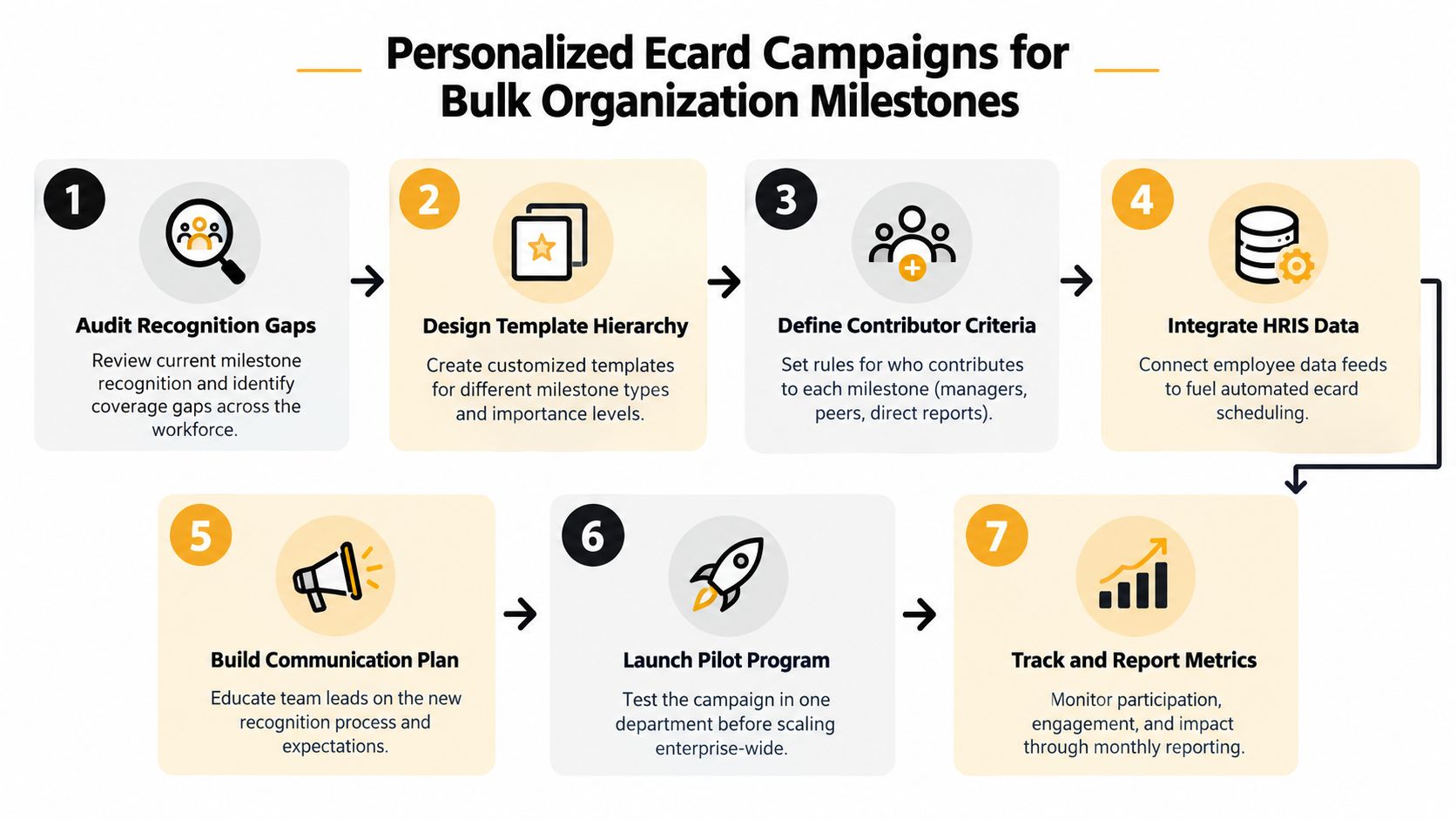
Use this sequence to run the campaign:
Adjust the language to the milestone. A promotion message can recognise leadership and future responsibility, while an anniversary message can acknowledge continuity and accumulated knowledge. A birthday template may provide a starting point, but it should not dictate the tone. Final checks should remove duplicated wording while retaining each contributor's voice.
| Example | Implementation Complexity | Resource Requirements | Expected Outcomes | Ideal Use Cases | Key Advantages |
|---|---|---|---|---|---|
| Digital Group Cards for Team Contributions | Low–Moderate | Contributor access, internet connection, coordinator, optional multimedia | Inclusive recognition and lasting digital keepsakes | Remote teams, project milestones, promotions, team appreciation | Global participation, multimedia support, flexible delivery, reduced administration |
| Farewell Cards Across Time Zones | Low–Moderate | Advance planning, contributor invitations, moderation, internet access | Coordinated and inclusive departures across locations | Global farewells, retirements, international team transitions | Removes time-zone barriers, supports asynchronous input, offers scheduled delivery and slideshow exports |
| Birthday Ecards with Multimedia | Low | Contributor participation, creative guidance, advance notice | Personalized and memorable birthday celebrations | Remote teams, employee birthdays, milestone birthdays | Multimedia personalization, scheduled surprises, team bonding, downloadable keepsakes |
| Group Greeting Cards for Recognition Programs | Moderate–High | HR ownership, templates, workflows, reminders, reporting processes | Consistent, measurable, organization-wide recognition | Promotions, anniversaries, project completions, enterprise programs | Scalable, trackable, repeatable, supports recognition analytics and bulk creation |
| Digital Kudos Walls as a Kudoboard Alternative | Moderate | Recognition calendar, board creation, privacy settings, coordinators | Focused and intentional celebration moments | Discrete milestones, structured recognition, privacy-sensitive occasions | Less notification noise, stronger content control, occasion-specific design, easy archiving |
| Collaborative Cards as a GroupGreeting Alternative | Moderate | Platform migration, user training, templates, adoption support | Modernized and consistent collaborative card experiences | Organizations replacing legacy card platforms, global teams, schools, nonprofits | Modern interface, flexible pricing, workplace-specific templates, enhanced multimedia |
| Sorry for Leaving Cards | Low–Moderate | Thoughtful prompts, genuine contributions, private delivery planning | More authentic and emotionally meaningful transitions | Executive departures, team changes, expat transitions, valued employee farewells | Supports mutual appreciation, preserves relationships, strengthens final impressions |
| Personalized Ecard Campaigns for Bulk Milestones | High | HRIS data, integrations, templates, program governance, analytics, communication plan | Scalable and consistent recognition across the employee lifecycle | Enterprise anniversaries, promotions, birthdays, global milestone programs | High coverage, automation, personalization at scale, measurable engagement and inclusion |
A useful thank-you message doesn't need to be long. It needs to help the recipient understand that someone noticed a particular action and understood its effect. That's why “Thanks for your help” is weaker than “Thank you for reviewing the client handover at short notice. Your questions caught a gap we could fix before the meeting.”
Use this personalisation checklist before sending:
The workplace setting should shape the delivery. A short private note is usually best for one colleague who has answered a question, covered a task or offered useful feedback. A public message can work for a visible contribution, but don't make public praise the only route to recognition. Some people value a quiet acknowledgement more than a team announcement.
For shared recognition, use a structured group online card with a clear prompt and deadline. It gives colleagues a simple way to contribute without requiring everyone to be available at the same time. A Firacard board is especially useful when contributors are spread across offices, working remotely or joining from different time zones. It can bring together text, photos, GIFs and videos, then deliver the finished card immediately or on schedule.
The UK workplace still has a clear appreciation gap. Reward Gateway's Appreciation Index research reported a UK score of 61.8 out of 100, below the global average of 65, and found that 80% of men compared with 70% of women felt appreciated at work. That difference makes consistency and visibility important. Recognition should reach people across roles, locations and working patterns, rather than relying on who happens to be in the office.
Other UK findings point in the same direction. Achievers' UK recognition reporting found that only 16% of UK employees felt regularly recognised by their leader, while People Management's report found that 19% had never been thanked by their employer for workplace achievements and 51% didn't feel valued at work. These figures don't mean every message must become formal or elaborate. They show why a timely, specific thank you remains a practical management and team habit.
For a farewell, use Firacard's farewell card collection. For a recurring recognition programme, consider bulk group cards. For birthdays, a birthday ecard can gather contributions without relying on one office celebration. The format is secondary to the message, but the right format makes it easier for more people to participate.
If you're sending a personal note, write it today while the details are fresh. If several colleagues should be involved, open a board, give them a specific prompt and set a delivery time that suits the recipient. A small act of recognition becomes more powerful when it's precise, inclusive and easy for others to join. You can also keep the follow-up experience organised through a post-purchase thank you.
Firacard helps teams create collaborative group greeting cards and ecards with text, photos, GIFs and videos for workplace appreciation, birthdays and farewells. Start a shared card for colleagues across locations or time zones, then invite contributors to add a message before delivering it on schedule. Visit Firacard to create a thoughtful thank-you card for your team.


Finding the right words for a 50th birthday can feel oddly difficult. You want to honour a major milestone without making the message sound like a
You've just heard that someone you care about has lost a parent. The funeral is approaching, friends are scattered across cities, and nobody w
You can have hundreds of friendly contacts and still feel unsure who would answer when life gets messy, so what makes a friendship good, and how ca